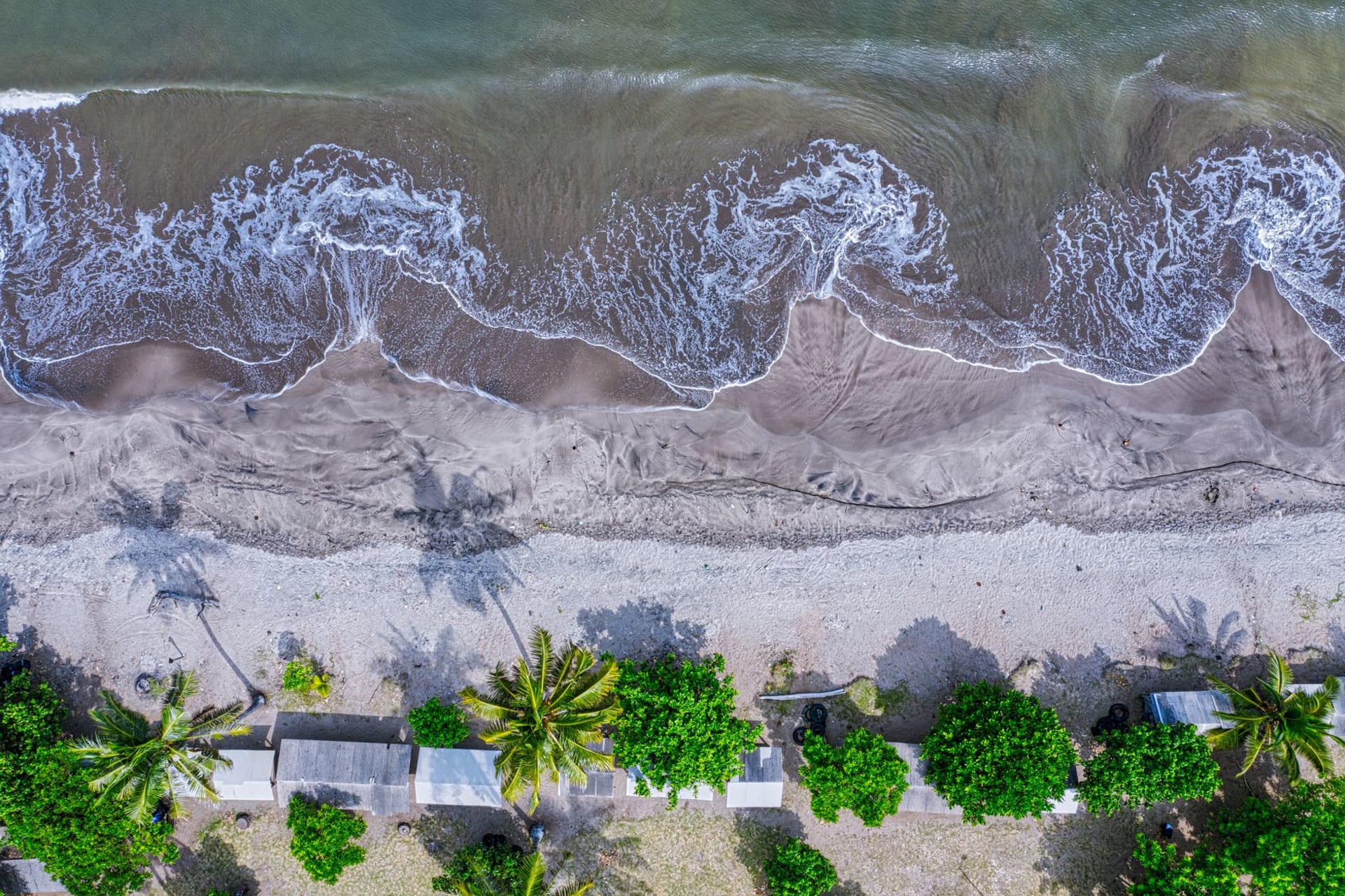
Richmond Beach
"Richmond's black sand holds the volcano's heat long after the sun goes down."
The road north from Kingstown along the Leeward Highway eventually runs out of ambition. At Richmond, about forty minutes past the city, the road ends at a small community, a rum shop, and a beach that the island has been keeping from the travel brochures through a combination of difficulty of access and a complete absence of infrastructure. There is no beach bar. There is no signage. There is a woman who sometimes sells cold drinks from a cooler on the path, and there is the beach itself: a wide sweep of black volcanic sand, maybe four hundred meters of it, backed by coconut palms and the steep green hillside that rises into the interior.
The sand is the thing. Black volcanic sand has a quality that white sand lacks entirely — it is denser, heavier, and it holds heat. Walk barefoot across Richmond Beach at four in the afternoon and you feel the stored warmth of the day in every step. The granules are larger too, with an almost metallic sheen when wet, like ground-up obsidian. The surf comes in hard from the northwest — the Leeward Coast here faces more open water than the sheltered southern bays — and breaks in long, powerful lines. Swimming is possible in the calmer sections near the headlands, but this is not the Grenadines’ turquoise paddling water. It has an entirely different temperament.
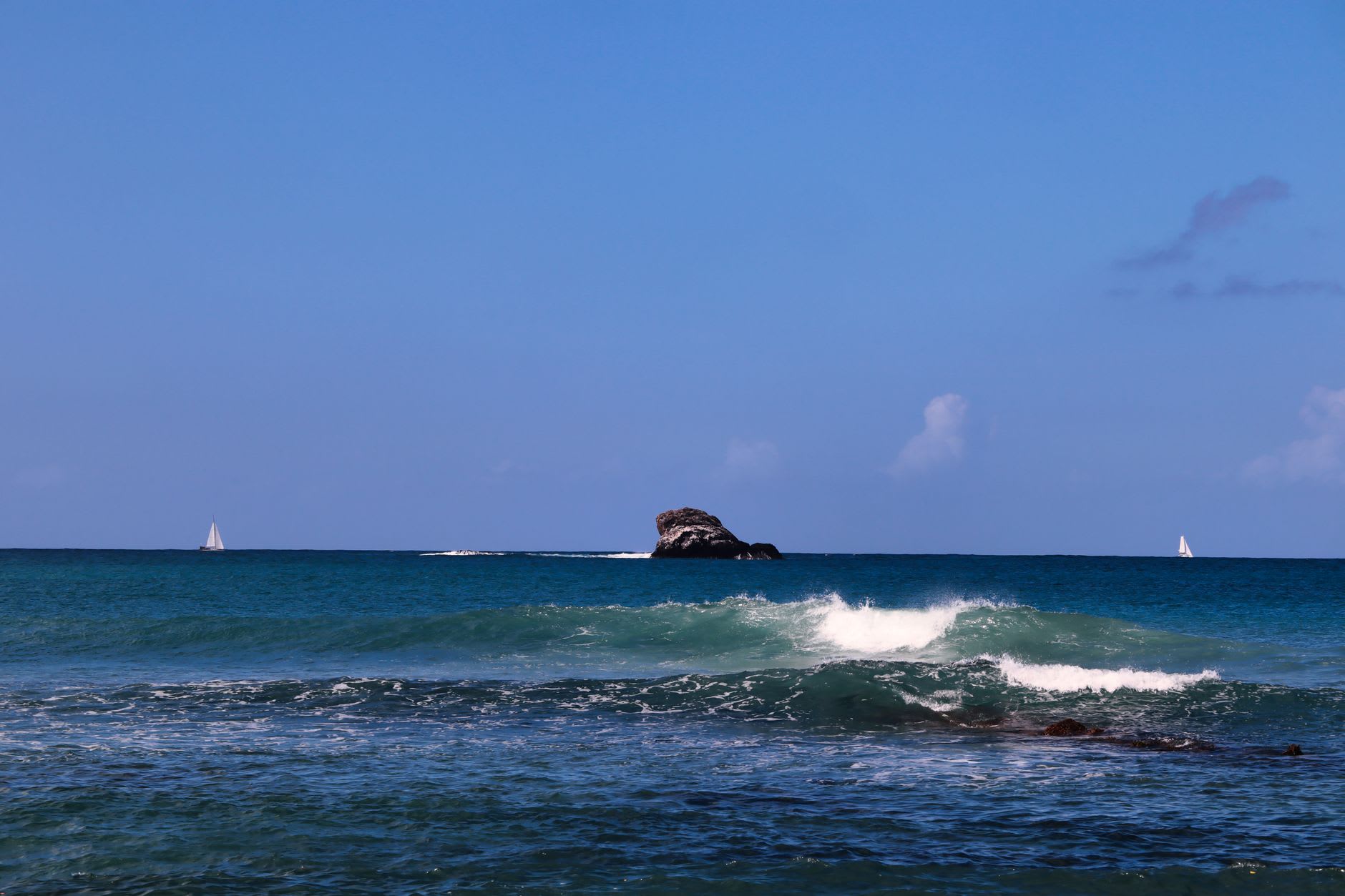
On very clear days — more common between December and March — La Soufrière is visible from the beach, its summit cone rising above the jungle ridge to the northeast. After the 2021 eruption, the upper slopes were marked with grey ash deposits even from this distance, the volcano’s signature written across the landscape in the only ink available. Standing on the black sand and looking north at the mountain that produced it, you understand the island in a way that no amount of geology reading quite conveys. Saint Vincent is a volcanic island in the active sense, not the historical one. The beach you are standing on exists because of the same process that emptied the northern villages in 2021.
The fishing community at Richmond is small and not oriented toward visitors. A few boats are pulled up on the beach most days, their owners variously repairing nets, cooking, or sitting in the shade discussing something with an animation that suggests the topic is important even if unknowable. They regard visitors with neither hostility nor particular interest. The rum shop at the end of the road serves cold Hairoun beer and fried chicken with the local banana ketchup that is the correct thing to eat after a long drive and a swim in powerful surf.
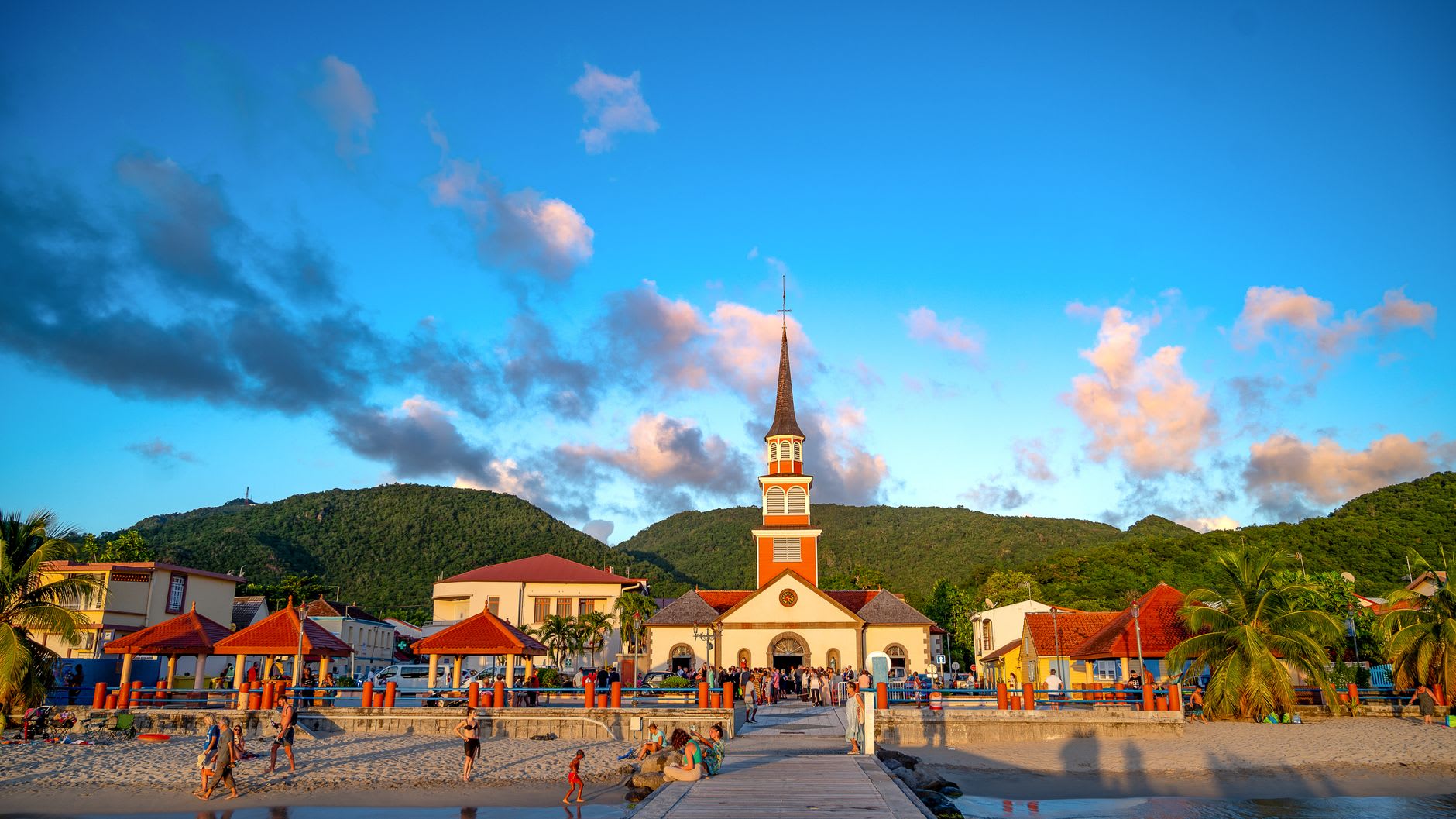
The drive back south along the Leeward Highway in the late afternoon has a particular quality — the light coming off the sea and hitting the road at an angle, the fishing villages getting smaller and then the city sprawl of Kingstown appearing around the last bend. It makes Richmond Beach feel more remote than it is, which is another way of saying it makes it feel exactly as remote as it should be.
When to go: December through April, when the leeward coast seas are calmer and the road north is in better condition. The beach is extraordinary in any season, but the northwest swell runs heaviest during hurricane season and the northern road can flood after heavy rain. Come early in the morning for the full spread of light on the black sand.