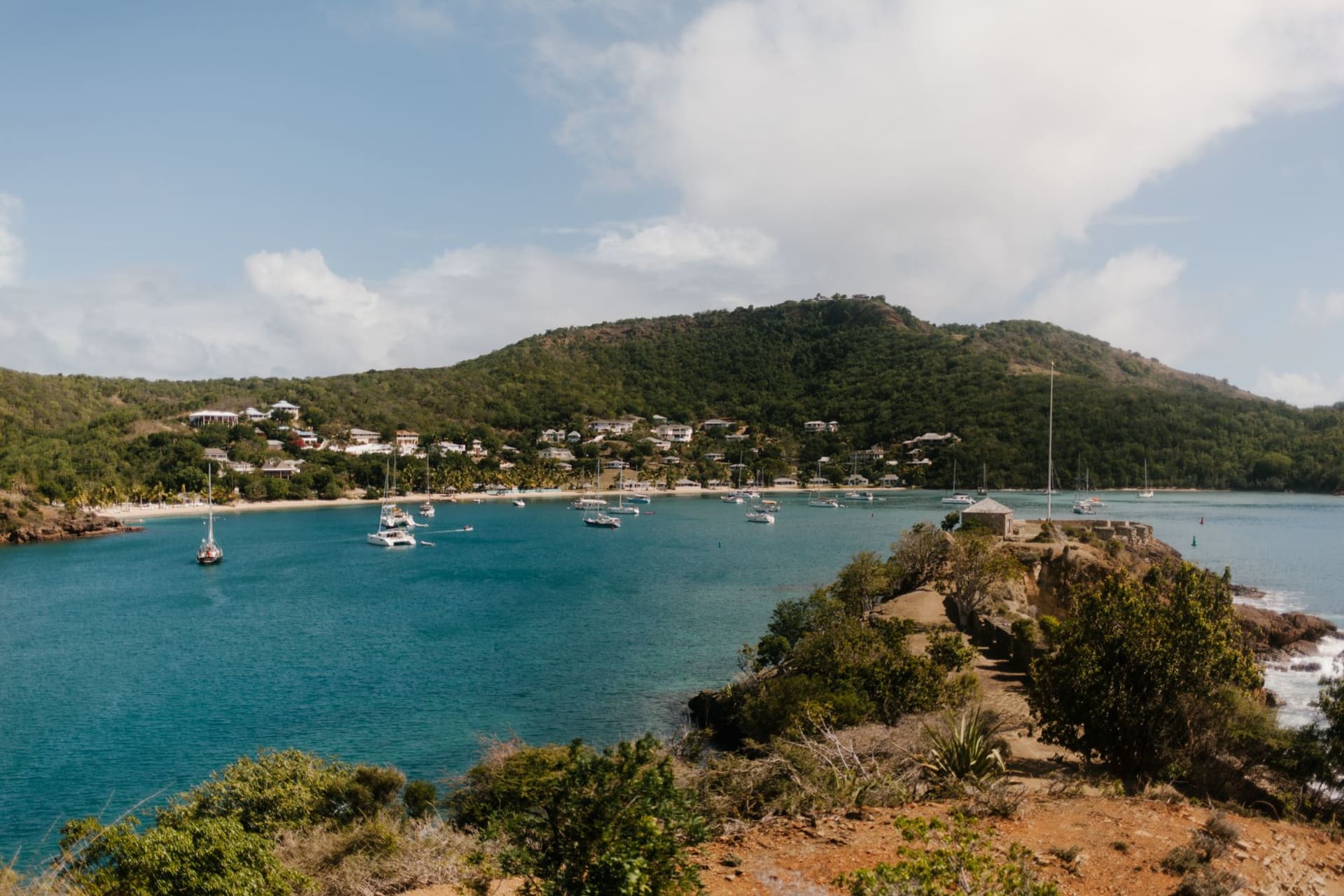
Mustique
"Mustique doesn't exclude you with a price tag — it excludes you with an idea of what a place should be."
The plane that takes you to Mustique is small, the runway short, and the island visible in its entirety as you bank into the approach — a green hump in the sea with two beaches white as salt on its windward side. You don’t so much arrive in Mustique as get deposited into it: a golf cart picks you up, someone takes your bag, and before you’ve quite processed the transition from the rattling prop-plane, you’re already somewhere completely different from everywhere else in the Grenadines.
Mustique is a company island in the most literal sense — the Mustique Company manages every villa, every footpath, every plot of cultivated garden. Cars are not permitted except for service vehicles; golf carts do the work. The original developer, Colin Tennant, bought the island in 1958 for £45,000 and spent two decades turning it into a refuge for a particular kind of wealthy British person who valued discretion over display. Princess Margaret came, then Mick Jagger, then David Bowie, then a long succession of people who either came here or owned villas here and rarely talked about it publicly, because the whole point was the not-talking-about-it.
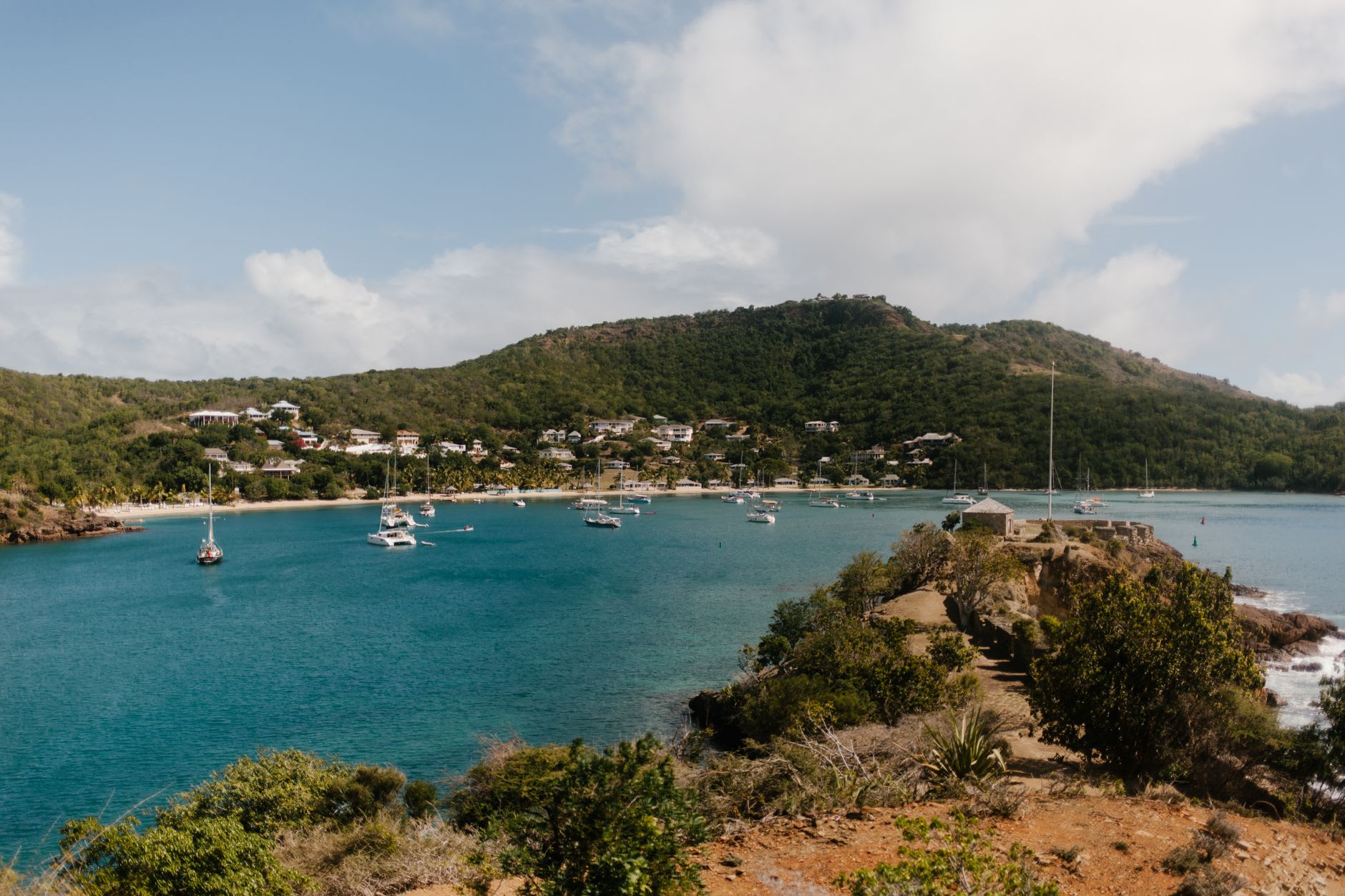
What this history has produced, practically speaking, is an island that is genuinely underdeveloped by the standards of Caribbean resort destinations. Macaroni Beach — the main public-access beach on the island — has no beach bar, no sun lounger rentals, no vendors. Just the beach, the break, and the horizon. It is one of the most beautiful beaches in the region, and its beauty is entirely contingent on the absence of the apparatus that most Caribbean beaches have allowed to accumulate. Basil’s Bar, built on stilts over the water at Britannia Bay, is the opposite case: it became famous precisely because of the famous people who drank there, but the rum punches are genuinely excellent and the atmosphere, in the off-hours, is strangely unassuming for somewhere so mythologized.
The Cotton House, the island’s only hotel (alongside villa rentals), occupies a converted plantation great house on a ridge with views over both coasts. The renovation preserved the stone walls and added wraparound verandas that catch the trade wind. In the evenings, you eat grilled local fish and drink Grenadinian rum and watch the light drain out of the sky over the Caribbean. It is, if you can afford it, an extremely well-executed version of exactly what it claims to be.
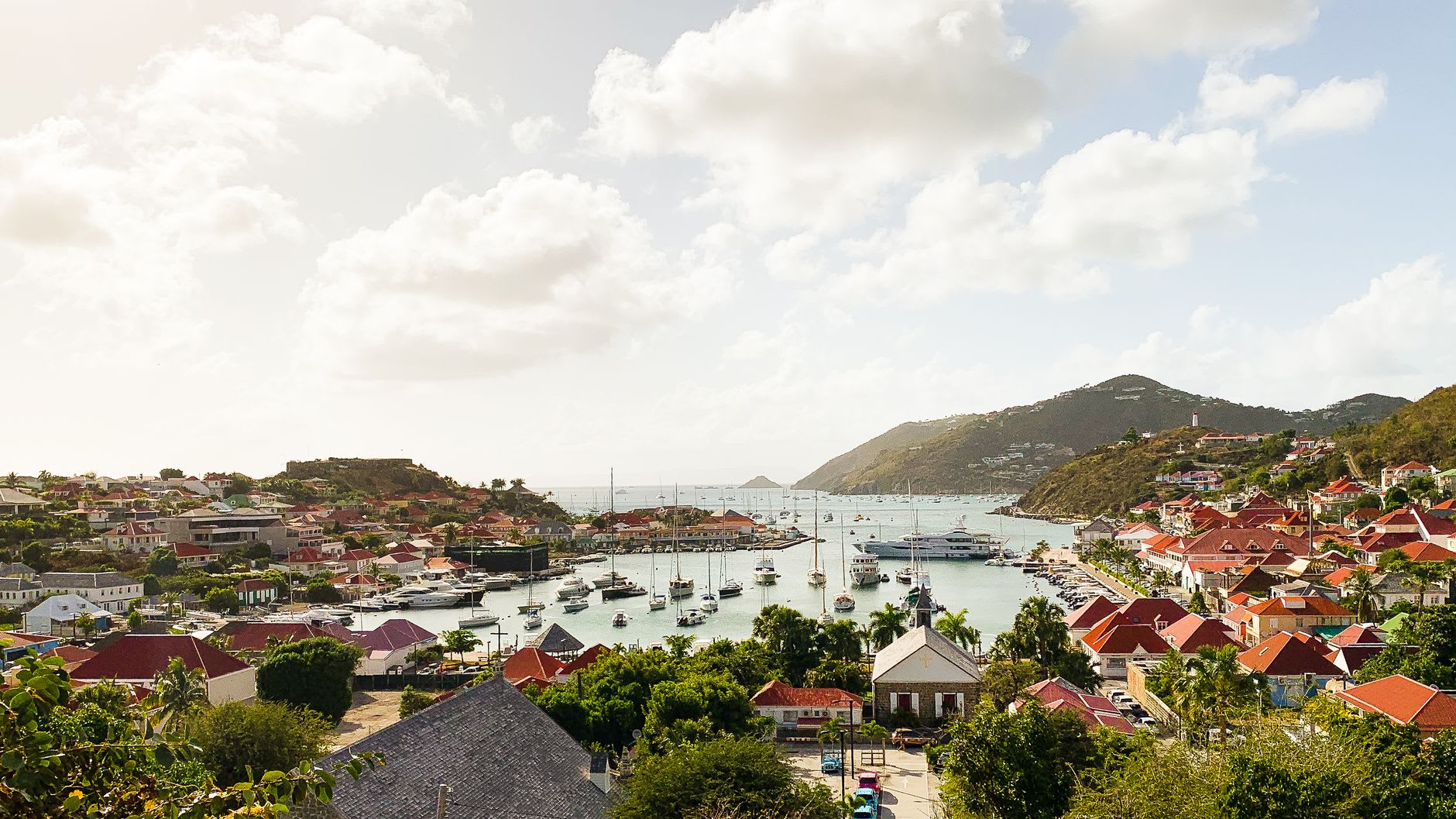
The question you arrive with — is the exclusivity justified? — dissolves somewhere around the second beach walk, when you realize that what you’re actually paying for isn’t the luxury. It’s the emptiness. The maintained emptiness, the curated absence. In a Caribbean that has been loved to death in most places, that has real value.
When to go: December through April, the dry season and peak season. The Mustique Blues Festival runs in late January or early February and draws an unexpectedly lively crowd to Basil’s Bar. Book well in advance for villa rentals during Christmas and New Year.