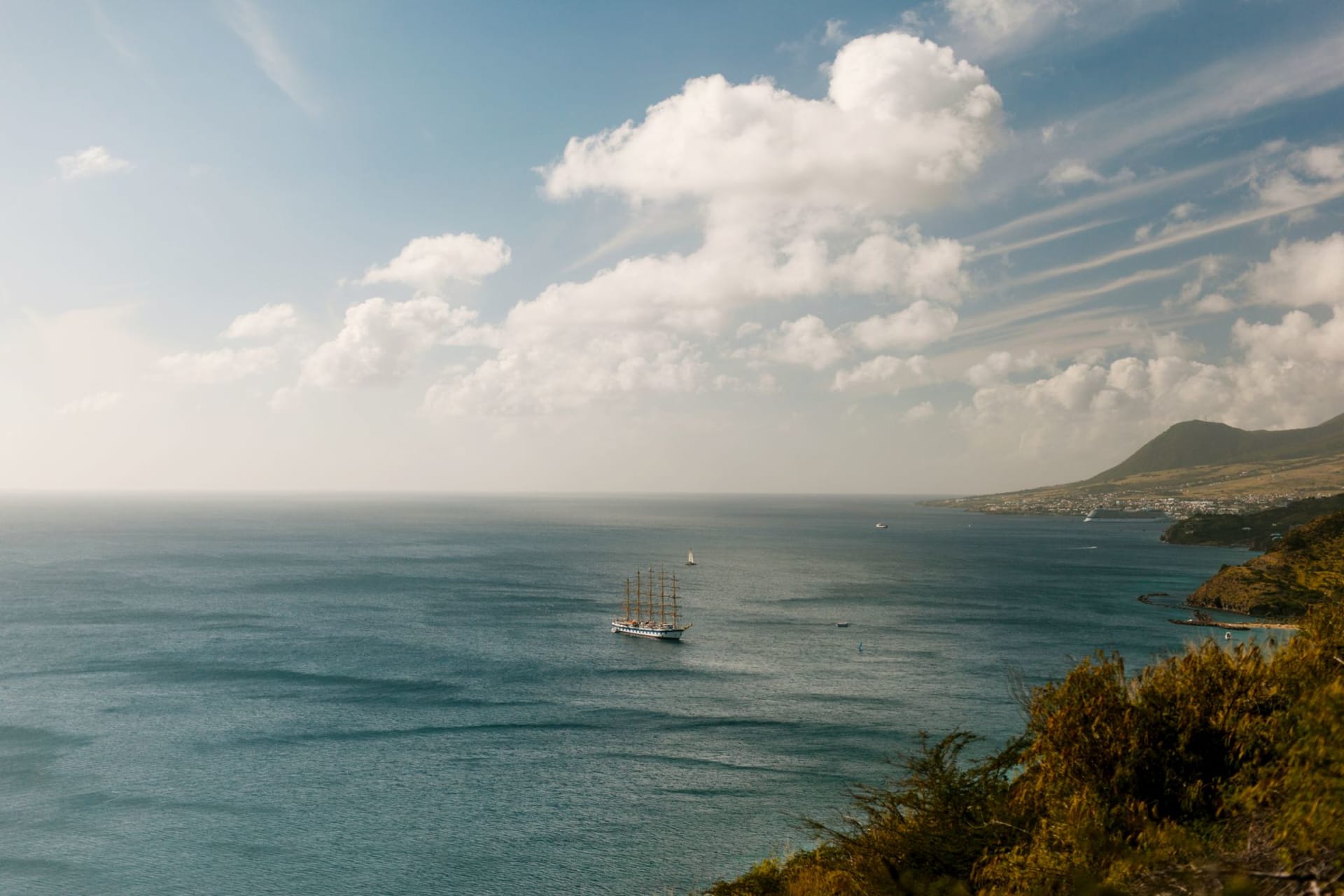
Old Road Town
"The English arrived here first in 1623. The Kalinago carved their marks on these rocks long before anyone arrived with a flag."
Old Road Town sits on Saint Kitts’ leeward coast about halfway between Basseterre and Brimstone Hill, and it announces itself without fanfare: a church, a small square, some old stone buildings, the sea beyond a low wall. The village has the particular quiet of a place that knows it carries significant history but has no particular interest in marketing itself on the basis of it. Thomas Warner arrived here on January 28, 1623, with a group of English colonists and established the first permanent English settlement in the Caribbean. That date is foundational to everything that follows — the whole apparatus of British Caribbean colonialism begins here, on this small stretch of coast between the green hills and the water.
The Thomas Warner Monument stands in the village, a modest marker for an outsized historical event. The church of St. Thomas — one of the oldest Anglican churches in the Caribbean, with sections dating from 1680 — holds the tomb of Thomas Warner himself. I found it on a quiet Tuesday morning with no other visitors, the church open and empty and smelling of old stone and candle wax, a ceiling fan turning slowly above the pews. The tombstone inscription is worn but still legible: he died in 1648, his work done and a new world begun — for some people.
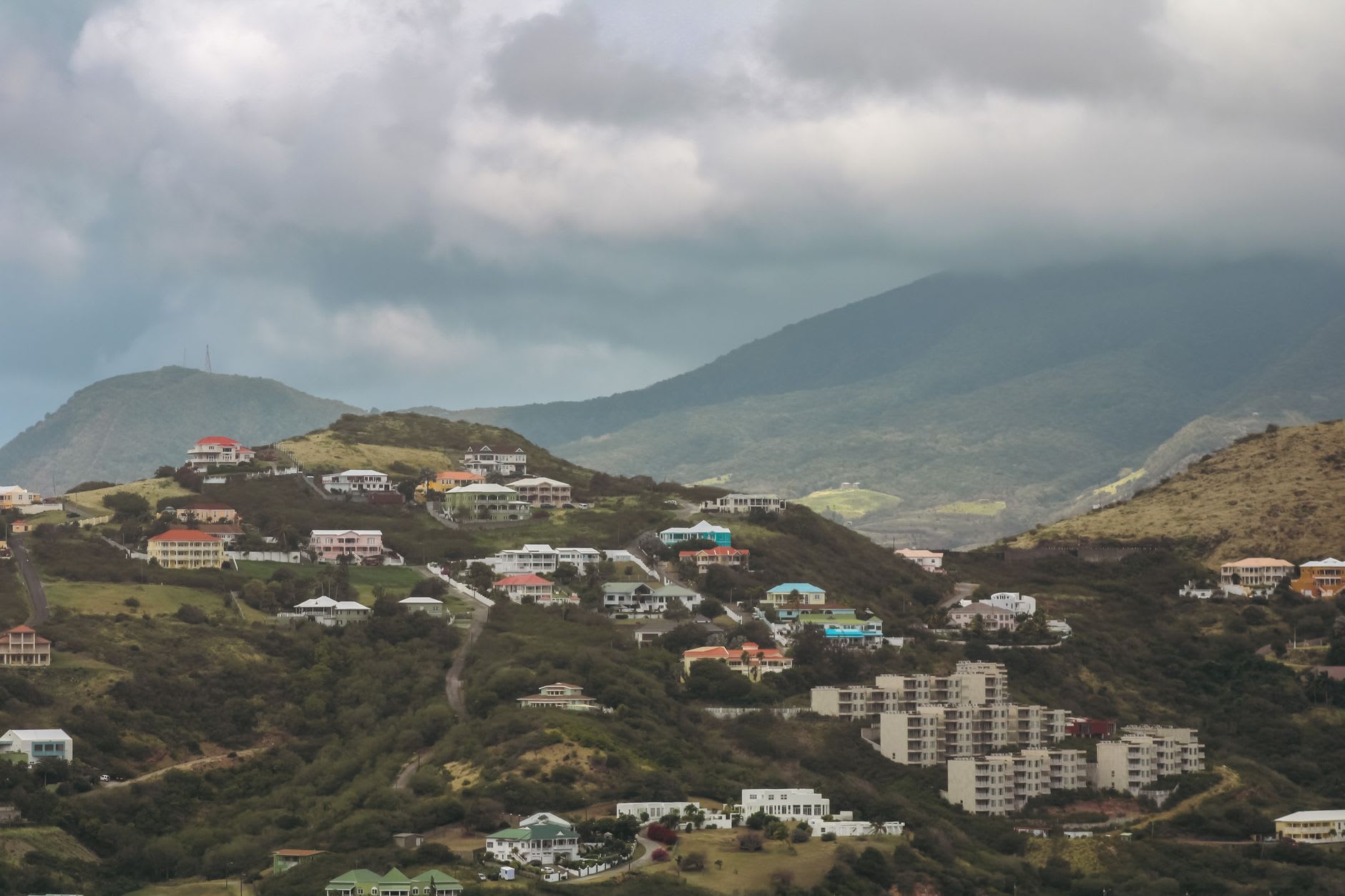
What I found more affecting was up the hill behind the village: the Kalinago rock carvings at Carib Rock, where the indigenous people who lived on the island before European arrival left petroglyphs carved into black basalt. The images — faces, figures, symbols whose meanings are not fully understood — are thought to predate the English colony by generations. They are carved into large boulders in a field above the town, and the surrounding landscape of green hills and blue water gives them a context that feels appropriate: these were made by people for whom this place was simply home, not a territory to be claimed and renamed.
The contrast between the church’s well-documented memorial and the petroglyphs’ unnamed, largely unexplained presence says something about whose history gets recorded in what form and with what care.
Romney Manor, a short drive from Old Road Town, occupies the land of a former sugar plantation and now houses Caribelle Batik, a studio producing hand-made batik fabrics since the 1970s. The gardens are worth stopping for regardless of whether you are buying fabric — a Saman tree in the courtyard reportedly 350 years old, its canopy spreading over most of the garden, has the presence of something that has been watching long enough to have opinions.
When to go: Year-round. The church and petroglyph site are best in the morning before the day’s heat builds. Combine with Brimstone Hill Fortress and Romney Manor for a full day along the leeward coast.