Middle Island
"The first European foothold in the whole Caribbean started right here, and almost nobody stops to notice."
A quiet village on the road between Basseterre and Old Road Town, marking the site of the very first English and French settlement in the Caribbean.
Middle Island is easy to drive through without registering it at all — a strip of houses along the coast road between Basseterre and Old Road Town, unremarkable at highway speed. I only stopped because a friend in Basseterre told me, almost in passing, that this was where it had all technically begun: the first permanent English colony in the Caribbean, founded by Sir Thomas Warner in 1623, with a French settlement established nearby not long after under Pierre Belain d’Esnambuc. Two colonial powers, sharing one small island, starting from more or less the same stretch of coast.
The site itself doesn’t announce this history loudly. St. Thomas Anglican Church, referred to locally as the oldest Anglican church in the West Indies (the current building rebuilt several times after hurricanes and fires), sits above the road with a small graveyard that includes the tomb of Sir Thomas Warner himself. I stood in front of it for a while, reading the worn inscription, thinking about how strange it is that the beginning of centuries of colonization, slavery, and sugar wealth across an entire region traces back to a specific patch of ground I could have walked past without noticing.
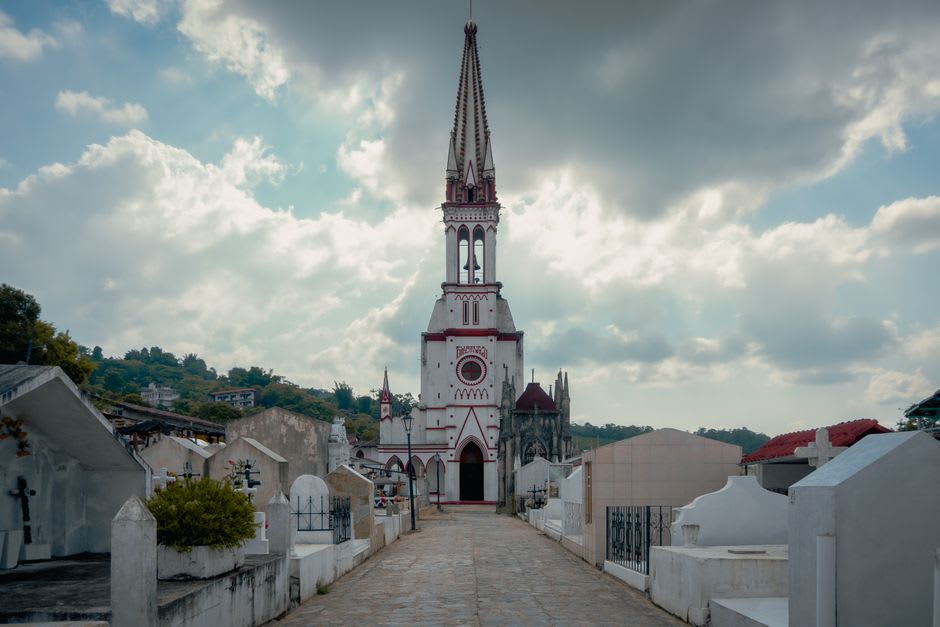
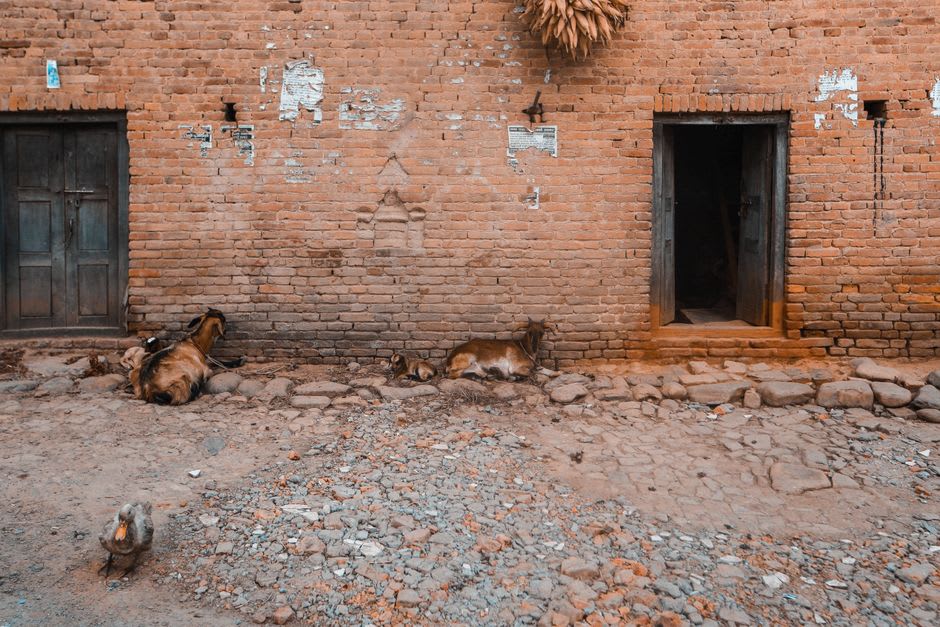
The village around the church is ordinary in the best sense — houses with laundry drying on lines, a rum shop with three men playing dominoes loudly enough that I could hear the slap of tiles from the road, goats tethered along the verge cropping the grass. Nobody there seemed particularly invested in the historical significance sitting in their churchyard; it’s just where they live, and the seventeenth century is one more fact of the landscape rather than a selling point.
I ended up buying a coconut from a roadside vendor who cut the top off with a machete in about four confident strokes and handed it over with a straw, and drank it sitting on a low wall across from the church, which felt like the correct way to sit with that much history without making a production of it.
When to go: Any time — this is a five-minute stop rather than a destination requiring planning. Combine it with a drive up to Brimstone Hill Fortress or Romney Manor, both close by on the same road.
Keep exploring
More from Saint Kitts and Nevis
 saint-kitts-and-nevis
 Mount Liamuiga
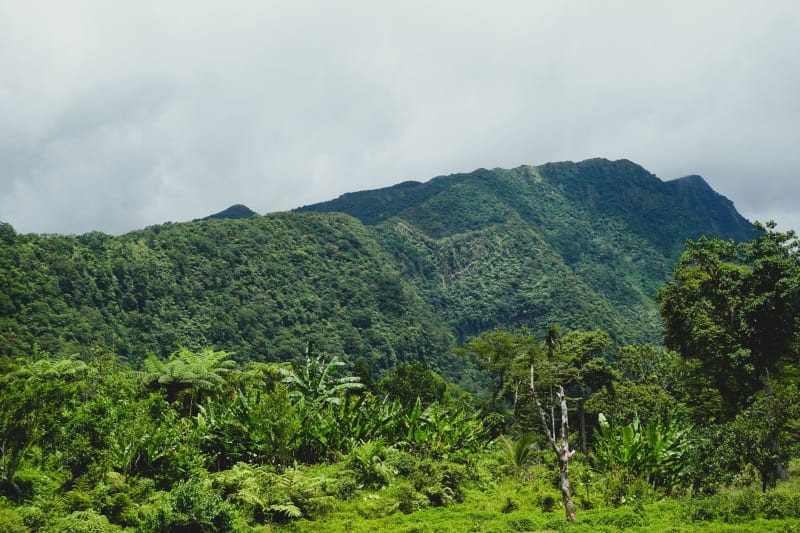
A dormant volcano with a crater lake at its summit, buried in cloud forest, and still called by its original Kalinago name — the Fertile Land.
Explore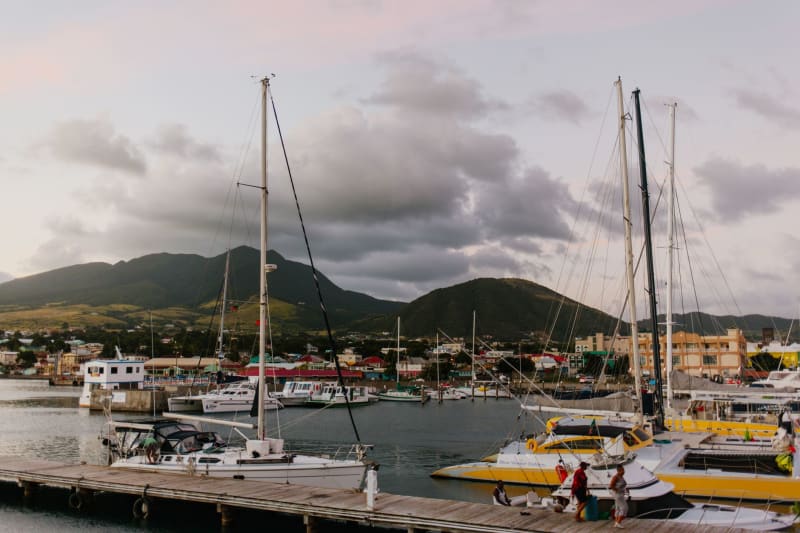 saint-kitts-and-nevis
 Nevis Peak
The cloud-capped volcanic cone that defines every view on Nevis — and one of the Caribbean's most atmospheric hikes through genuine rainforest.
Explore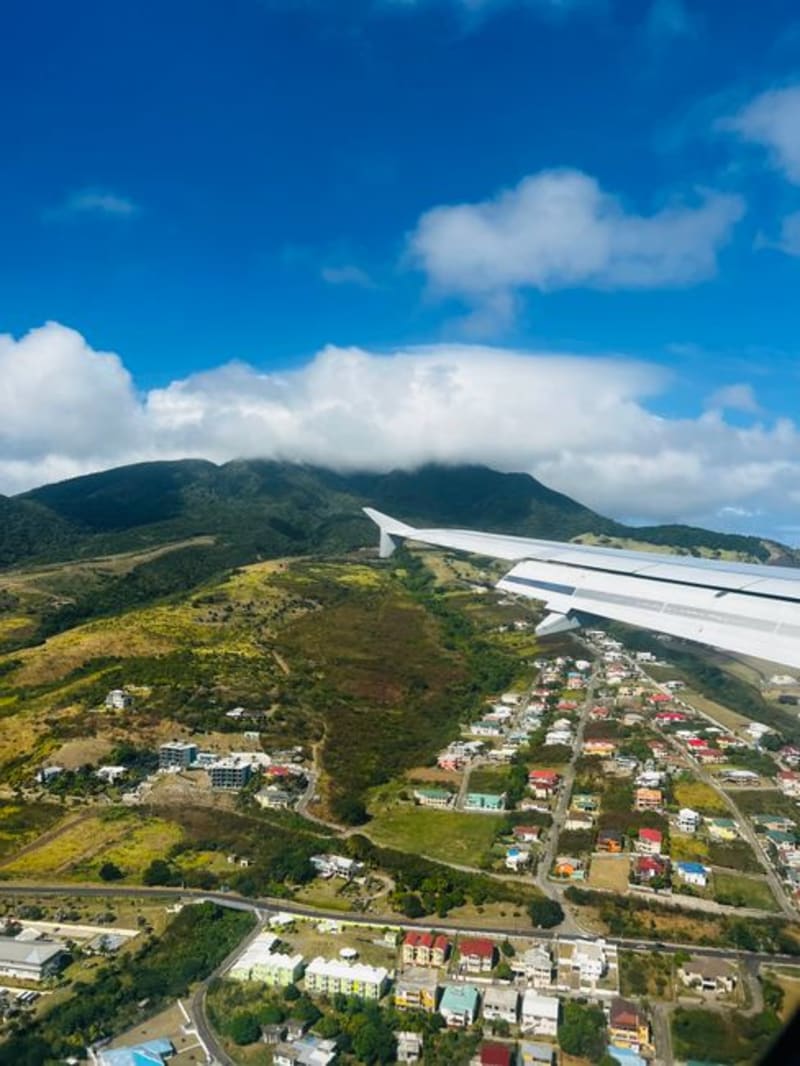 saint-kitts-and-nevis
 Newcastle Village
A pottery-making village at the northern tip of Nevis, home to the island's small airport and a beach that locals still consider their own.
Explore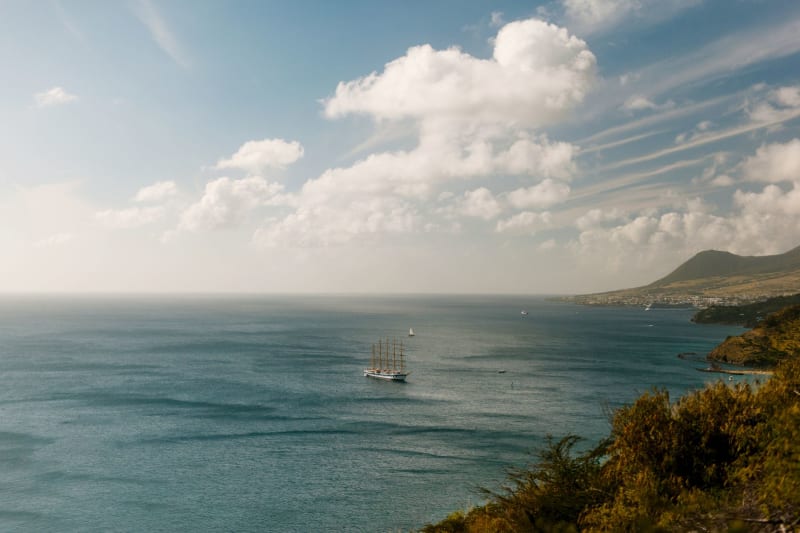 saint-kitts-and-nevis
 Old Road Town
The site of the first permanent English settlement in the Caribbean, where Kalinago petroglyphs carved into black basalt predate everything the colonizers left behind.
Explore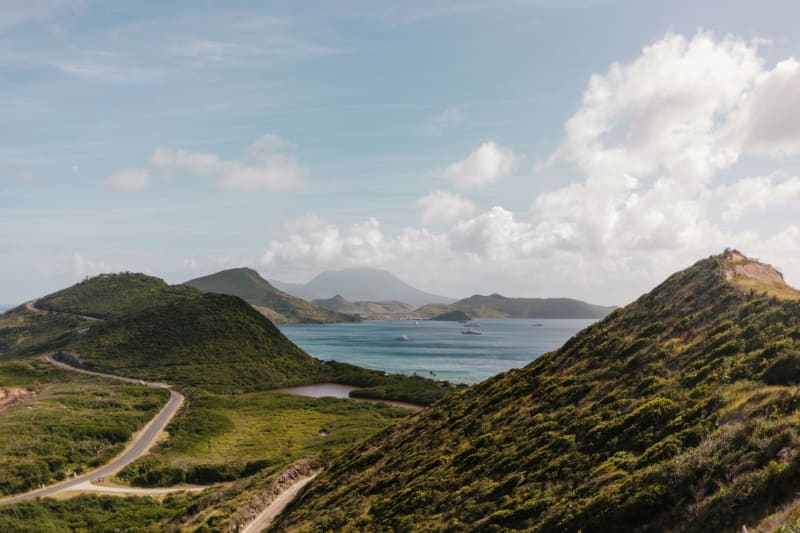 saint-kitts-and-nevis
 Pinney's Beach
Five kilometers of palm-shaded Caribbean sand on Nevis, where one end has a five-star resort and the other has rum punch served with no ceremony whatsoever.
Explore saint-kitts-and-nevis
 Romney Manor
A former sugar estate turned batik workshop, built around gardens and a five-hundred-year-old saman tree that predates the plantation itself.
Explore