Black Rocks
"The sea has been arguing with these rocks for ten thousand years, and neither side is winning."
The road north from Basseterre along the Atlantic coast runs through smaller villages and then past land that empties of almost everything except sugarcane and black cattle and the occasional goat standing in the middle of the road with the sovereign confidence of an animal that knows it has right of way. Somewhere north of the town of Cayon, past the textile factories and the decommissioned sugar mill that still dominates the skyline, you turn off toward the coast and arrive at Black Rocks.
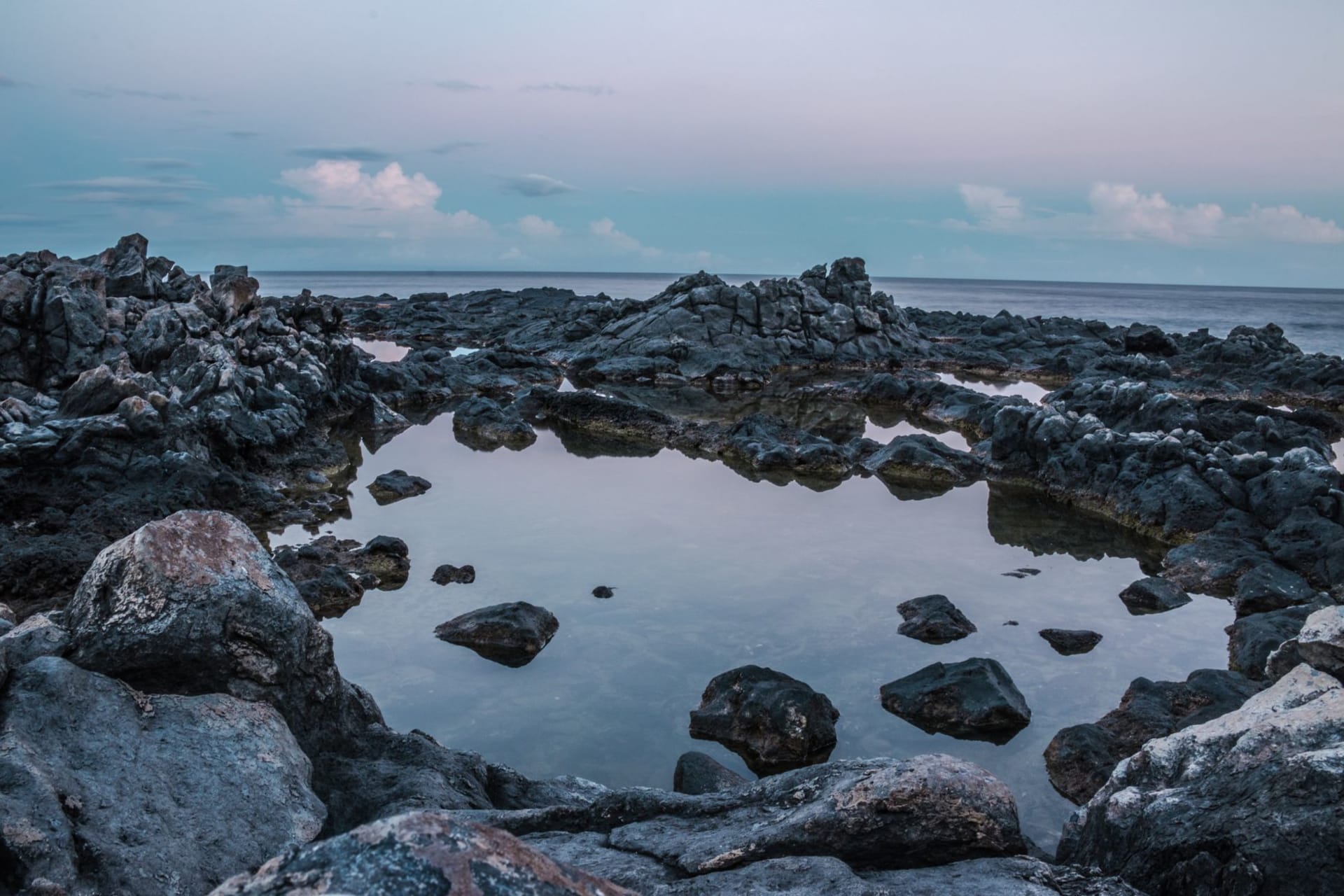
There is no gentle introduction. The road ends at a small parking area, then a few steps, and suddenly you are standing at the edge of a lava field meeting the Atlantic Ocean with a kind of geological brutality. These formations are the remnants of lava flows from Mount Liamuiga that reached the coast and cooled in the seawater, and the result is a coastline of extraordinary texture: black basalt columns, pillow lava shapes, tide pools the size of bathtubs, and the Atlantic doing what the Atlantic does, which is arrive in sets of swells and detonate against everything in its path.
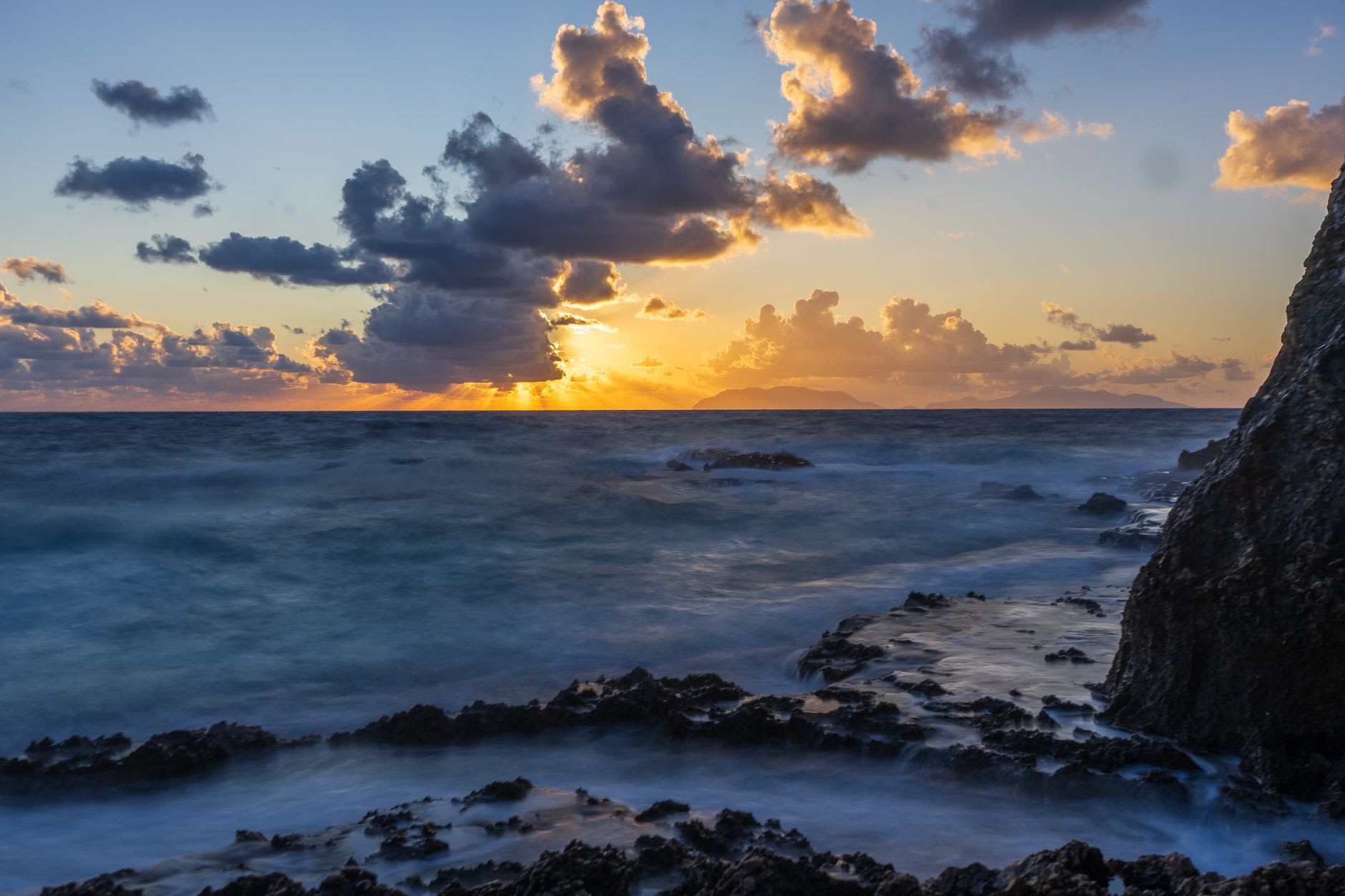
The spray on a windy day reaches well back from the shore. I stood as close as I could manage, watching the way each wave found new angles in the rock, filling the tide pools with a rush and then draining them, and I kept being surprised by how loud it was. The Caribbean coast of Saint Kitts is gentle — palm trees and clear water and all that. Over here, the ocean has a different register. The water is darker, the sky feels lower, and the sound is constant and layered, each wave laying down a percussion track over the one before it.
The lava formations themselves are worth examining closely when the tide allows. Pillow basalts — formed when molten lava meets cold seawater and the outer crust hardens faster than the interior — look exactly like their name: rounded, stacked shapes that are somehow both hard and soft in appearance simultaneously. The colors shift from black to rust-brown to greenish gray depending on what minerals are oxidizing where.

There is nothing to eat or buy here. A local woman sometimes sells cold drinks from a cooler near the parking area, which is either there or not depending on the day and the season. Most visitors are Kittitians on a Sunday drive who stop for ten minutes, take a photograph, and continue on. I stayed for an hour and still felt like I had not quite finished.
When to go: Any time, though morning light catches the black rock and dark water most dramatically. Windy days produce the best spray and the most theatrical ocean. Swimming is not advisable — the currents and the lava make it genuinely dangerous. Wear shoes with grip; the rock surface is uneven and slippery in the spray zone.