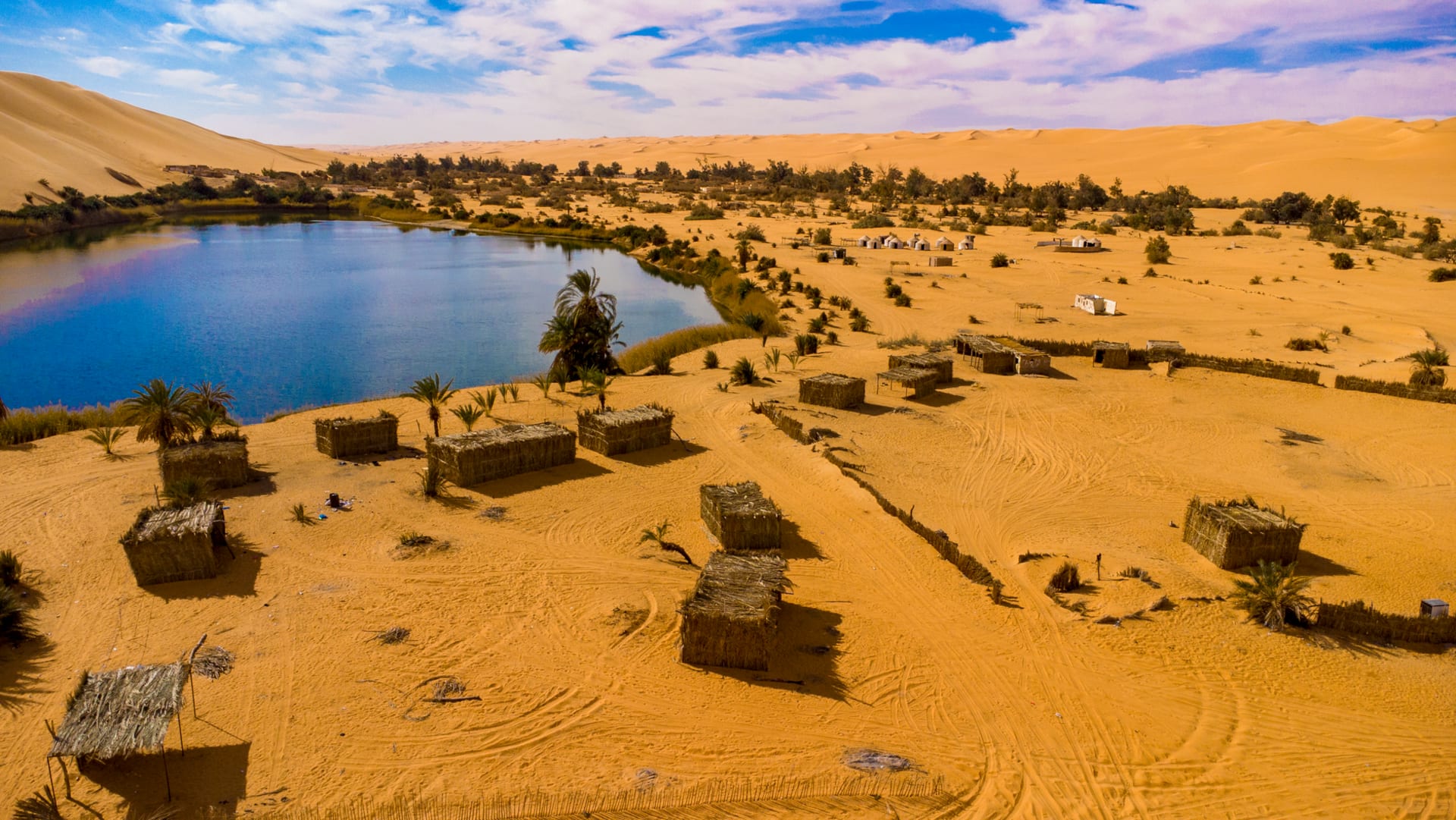
Lake Chad
"Lake Chad is what climate change looks like when it stops being a statistic and starts being a place."
The lake is always receding. That is the first thing you understand when you arrive at what used to be its shore — the waterline has moved, and in some places dramatically, leaving behind a pale crust of dried lakebed that in the right light looks like snow. Lake Chad, which once covered nearly 26,000 square kilometres and was one of the largest bodies of freshwater on the continent, has lost more than 90 percent of its area since the 1960s. The version that remains is fragmented into smaller pools connected by reed channels, and the communities that have lived along its margins for generations are still there, adapted to each new contraction, fishing different water than their parents fished.

I reached the lake from the Nigerien side, through the town of Diffa, and the approach across flat scrubland gave no hint of the water until it suddenly appeared — a wide gleam at the edge of visibility, then papyrus stands, then open water reflecting the sky. The Buduma people — also called the Yedina — have lived on the lake’s floating papyrus islands for centuries, building their settlements on dense mats of vegetation that rise and fall with the water level. Their canoes are made of papyrus bundle too, long and narrow, propelled with poles in the shallow margins and paddles in deeper water. Crossing between islands with a Buduma fisherman, the water the colour of weak tea, egrets landing on the papyrus around us, I understood the lake as a kind of vertical country: its territory is not horizontal but vertical, organized by depth and reed density and seasonal fluctuation rather than by fixed borders.
The birds are extraordinary. Pelicans move in groups across the open water with the leisurely confidence of creatures who have been here since before memory. African skimmers work the surface at dusk, their lower mandibles cutting the water. Marabou storks stand at the margins with the moral authority of creatures that have seen everything. Hippos are still present in the quieter reaches, though fewer than before, and crocodiles lie on the mudbanks in the morning looking like logs until they don’t. The biodiversity the lake supports seems improbable for a body of water that is visibly, measurably, year-by-year disappearing.

The fish market at the edge of the lake runs every morning and is the most direct way to understand what the lake still provides: catfish, tilapia, Nile perch in various states of fresh and dried, traded by women who carry the whole commerce of the water on their heads and in their accounting. The smoked fish has a particular intensity — a deep, almost medicinal smokiness that I have not tasted anywhere else — because it is smoked over reeds, which burn hotter and longer than wood in this environment. I ate it cold, with hard bread, sitting on a boat landing watching a herd of cattle cross a channel behind their Kanuri herder.
The tragedy of Lake Chad is visible and specific and refuses abstraction. You can stand where the lake used to be. You can ask the older fishermen where their fathers fished and they will point at dry land. What is left is still beautiful, still worth the considerable difficulty of reaching it — but the beauty has the quality of something in the process of being lost, and that awareness changes how you look at everything.
When to go: October through March is the practical window — dry enough to reach the lake, water levels stable after the rainy season, temperatures tolerable. Access requires passing through the Chad Basin, which encompasses parts of Niger, Chad, Nigeria, and Cameroon; check security advisories for each country’s relevant region carefully before traveling, as conditions vary significantly across the lake’s borders.