
Siwa Oasis
"Alexander came to consult the oracle here. I came to swim in a spring at midnight and arrived at more or less the same place."
You drive west from Marsa Matruh along the Mediterranean coast, then turn inland at a junction that marks the beginning of a different relationship with Egypt. The road south to Siwa crosses 310 kilometers of desert that is flat and pale and almost empty, the Great Sand Sea pressing in from the west like a slow geological thought. By the time the palm groves appear — suddenly, densely, impossibly green against all that beige — the oasis itself feels like something invented, like a rumor that turned out to be true.
Siwa is Egypt’s most remote inhabited oasis, 50 kilometers from the Libyan border and 560 kilometers from Cairo, and it has been isolated long enough to develop its own Berber language, its own dress codes, and a traditional architecture — the ancient fortified city of Shali, built from kershef, a salt-and-mud composite found only here — that exists nowhere else on earth. The fortress eroded severely after unusual heavy rains in 1926, and its ruins now form a dramatic amber hill above the town center, studded with palm wood and the ghosts of rooms where people once slept and argued and cooked and watched the desert light change.
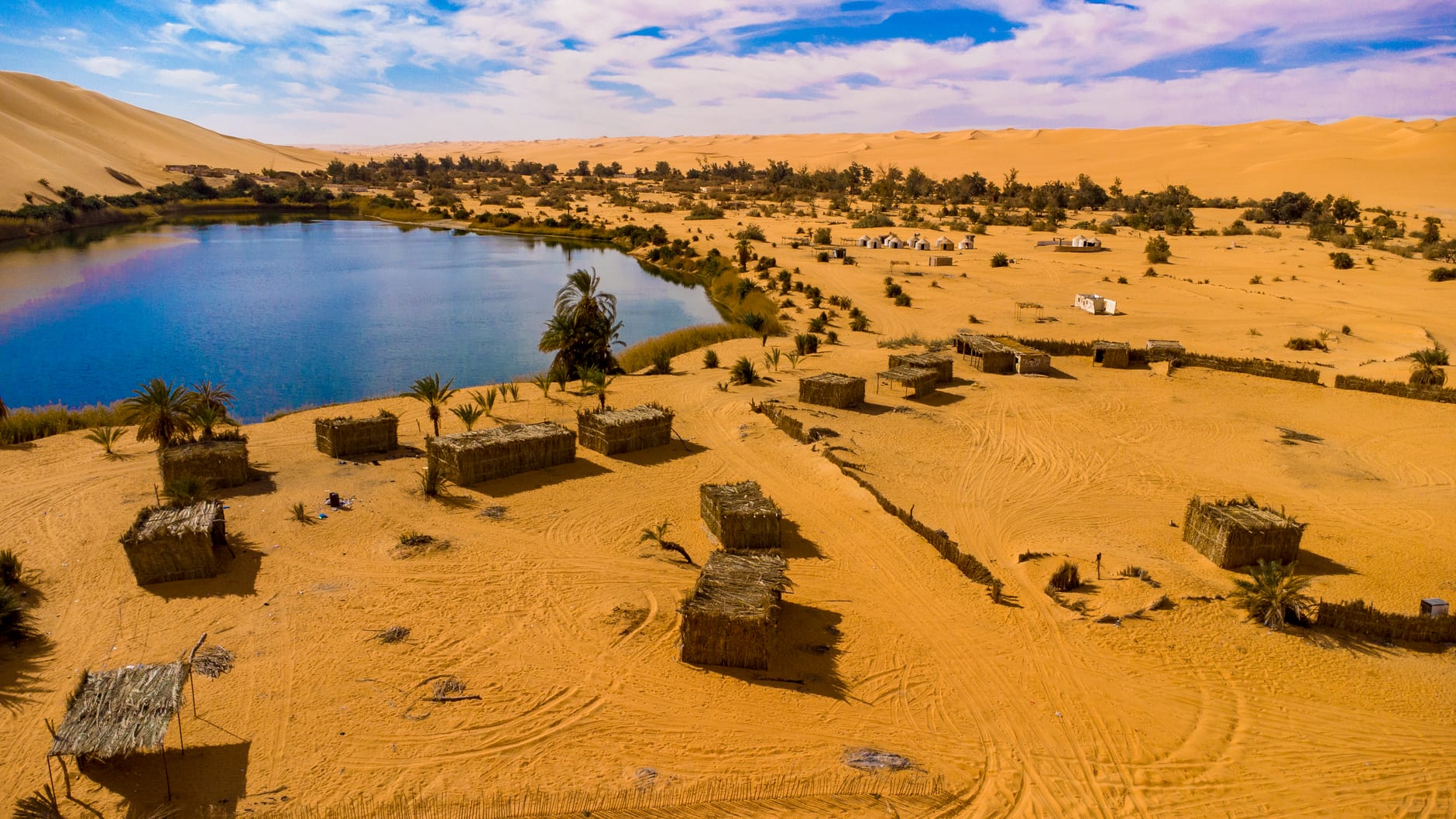
Alexander the Great came to Siwa in 331 BCE to consult the Oracle of Amun at the Temple of the Oracle, which still stands — mostly. The sanctuary, set among palm trees, retains its main hall and some inscriptions, and the experience of standing in it in the late afternoon, with pigeons nesting in the crevices and tourist groups absent, is one of those moments where the weight of actual historical time becomes briefly available to the senses rather than merely the intellect. Alexander was told here that he was the son of Amun, which settled his doubts about his divine parenthood and sent the campaign east with renewed purpose. The temple looks like a temple should. The palms around it look like they have been there since Alexander.
The springs are the other reason to stay longer than a day. Ain Dakrour and Ein Guba — commonly called Cleopatra’s Spring, though the name predates her by several centuries — are natural pools of warm, faintly sulphurous water that locals and visitors share. I swam in Ein Guba in the early evening while the light turned the salt lakes below Shali from silver to gold to rust, with date palms reflecting in the water around me. No one was performing anything for anyone. The water was warm and mineral and slightly buoyant, and a group of local men on the far side were having a conversation I couldn’t follow, which was somehow part of the pleasure.
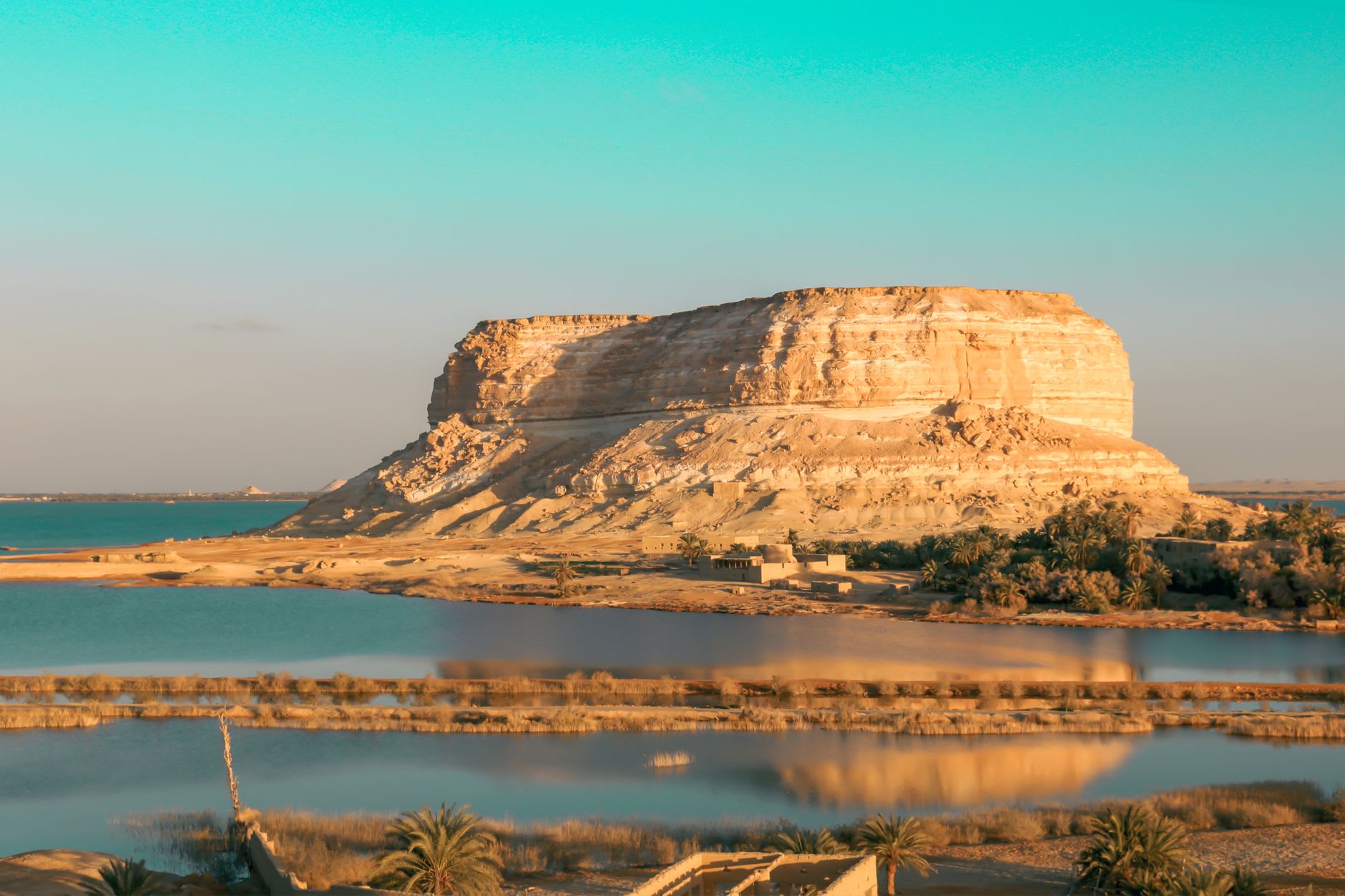
The local food is agricultural and serious about it: fresh dates at harvest time — October and November — that bear absolutely no resemblance to the packaged kind found elsewhere, pressed olive oil from the small grey-green Siwa olives that grow in dense groves around the springs, and a flat bread cooked on hot stone that women of the oasis make in outdoor ovens in the early morning. The smell of that bread in the morning, with the light still low and the salt lakes reflecting pale gold, is the thing I remember most about Siwa.
When to go: October through April. October and November coincide with the date and olive harvest — the most active and food-rich time of year. Summer in Siwa is brutal, and the oasis genuinely discourages casual travel when temperatures push past 40°C for weeks at a time.