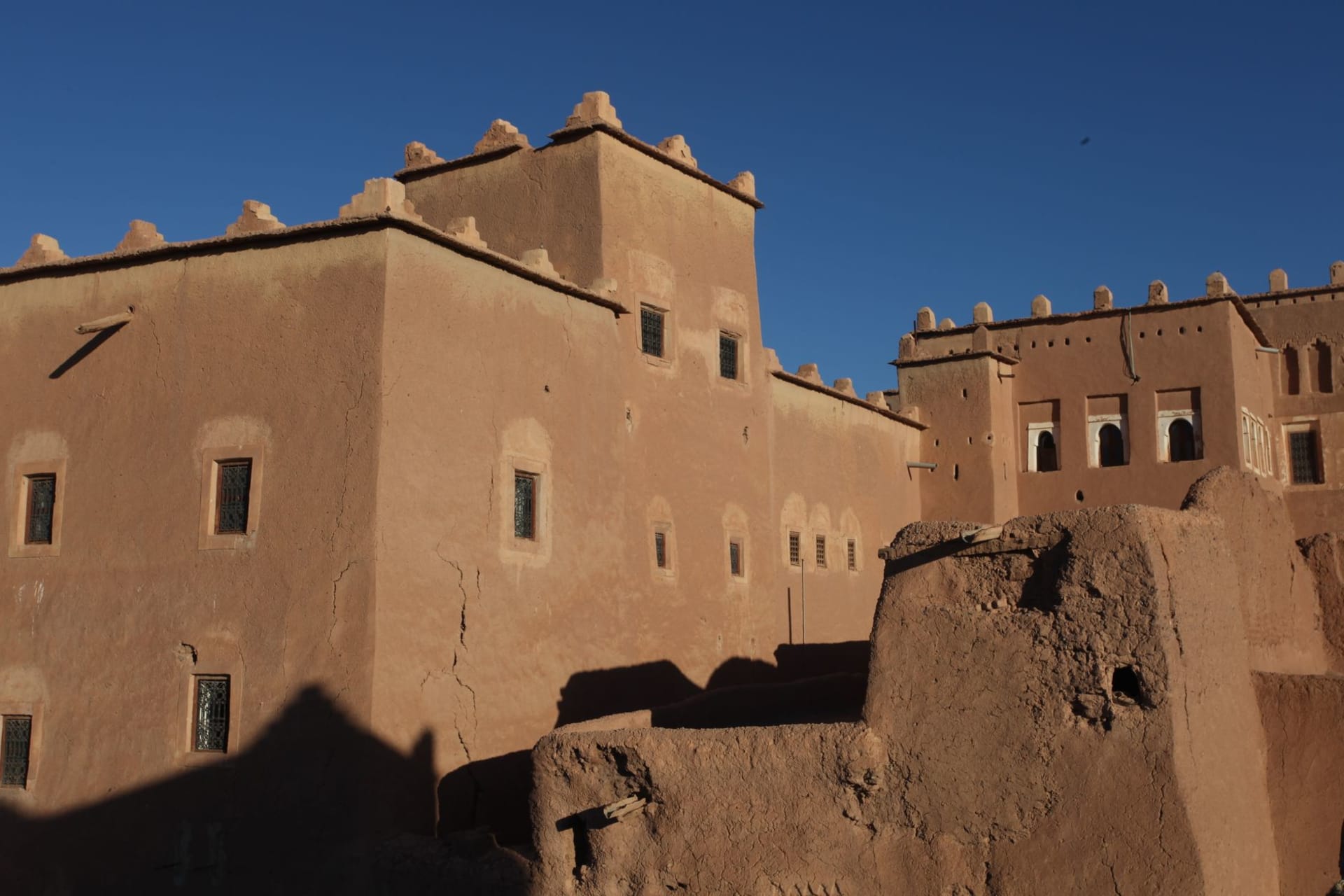
The light in Ouarzazate is the whole story. It arrives differently here than it does in the rest of Morocco — harder, cleaner, stripped of coastal moisture and mountain haze, and by mid-afternoon it turns everything south of the Atlas to gold and ochre and a deep warm amber that makes even unphotogenic things photogenic. This is why film crews have been coming since the 1960s: Lawrence of Arabia, Gladiator, The Mummy, Game of Thrones, Babel, and dozens more. The location scouts were not wrong. The light is genuinely cinematic in a way that the word cinematic rarely earns.
I drove down from the Tizi n’Tichka pass in late October, when the Atlas peaks behind me had the first snow and the valley ahead was still warm. Ouarzazate appears at the end of a long, descending plain — larger than you expect for somewhere this far south, the film industry having given it an infrastructure that a remote Saharan outpost would not otherwise possess. But the thing I went directly to was not in town at all.
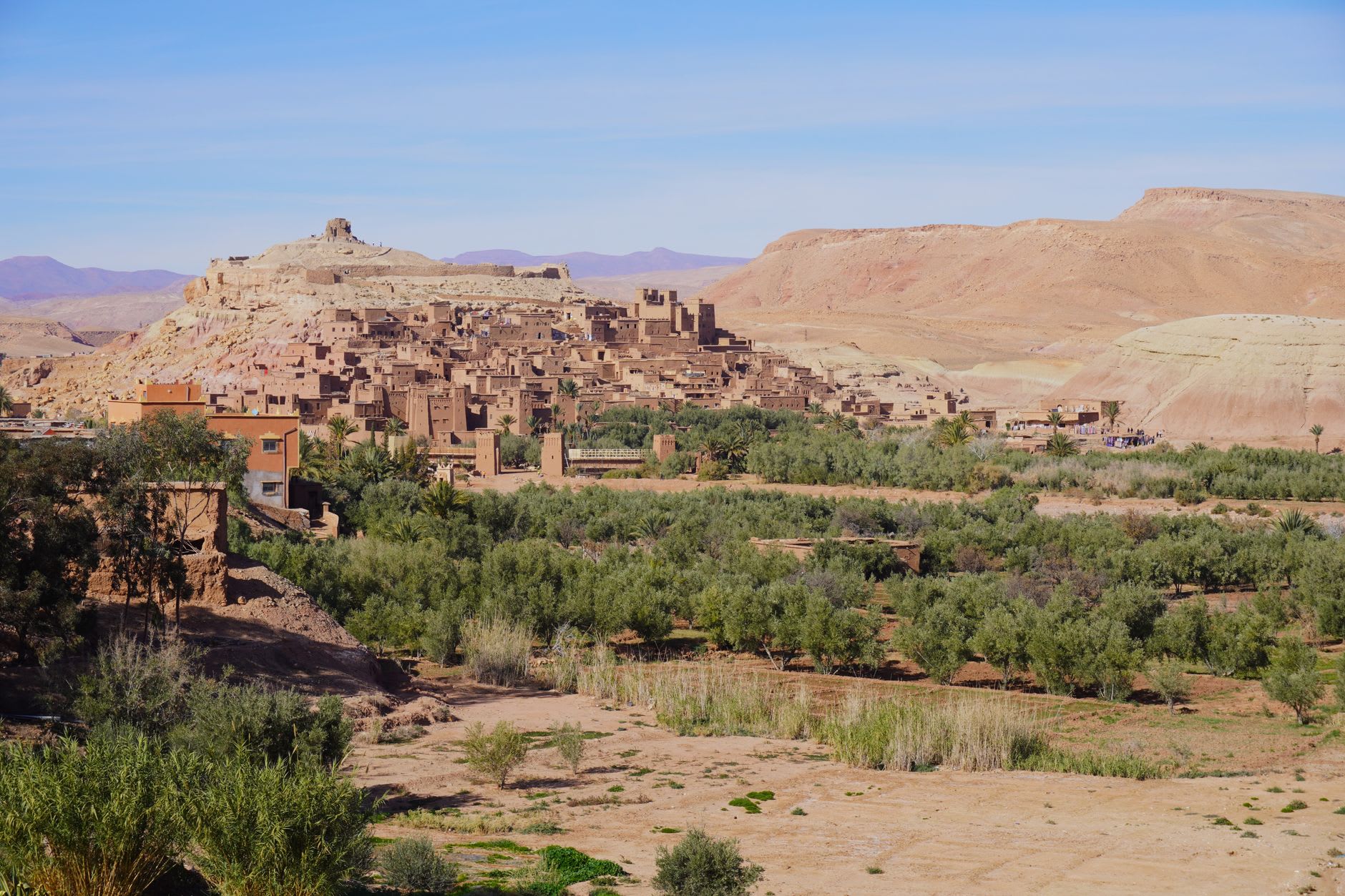
Ksar Aït Benhaddou, 30 kilometers northwest, is a UNESCO-listed fortified village built from pisé — compressed earth and straw — that rises in tiers above the Ouarzazate river. It is a genuine medieval ksar, not a reconstruction, though most families who once lived in it have moved to the new village across the river, and the old city is now largely uninhabited except for a handful of households who stayed and a series of small shops selling argan products and silver. What strikes you immediately is how the building material — local earth — means the whole structure is the exact color of the ground it stands on, indistinguishable from the landscape except for its form. In the late afternoon light, the ksar glows from within, and the contrast between warm walls and blue sky and the green strip of river below is so composed it looks like a painting that got promoted to reality.
Back in Ouarzazate, the Museum of Cinema in the old Kasbah Taourirt is small but well done: costumes and props from productions shot in the region, including a genuine chariot from Gladiator that the curator discussed with obvious pride. The kasbah itself, adjacent, is one of the finest surviving kasbah complexes in the south — a labyrinth of dark corridors and surprising courtyards, some still inhabited by families who have lived there for generations, others converted to artisan workshops where the tile work and plasterwork traditions of the pre-Saharan south continue in the hands of craftsmen who learned them from their fathers.
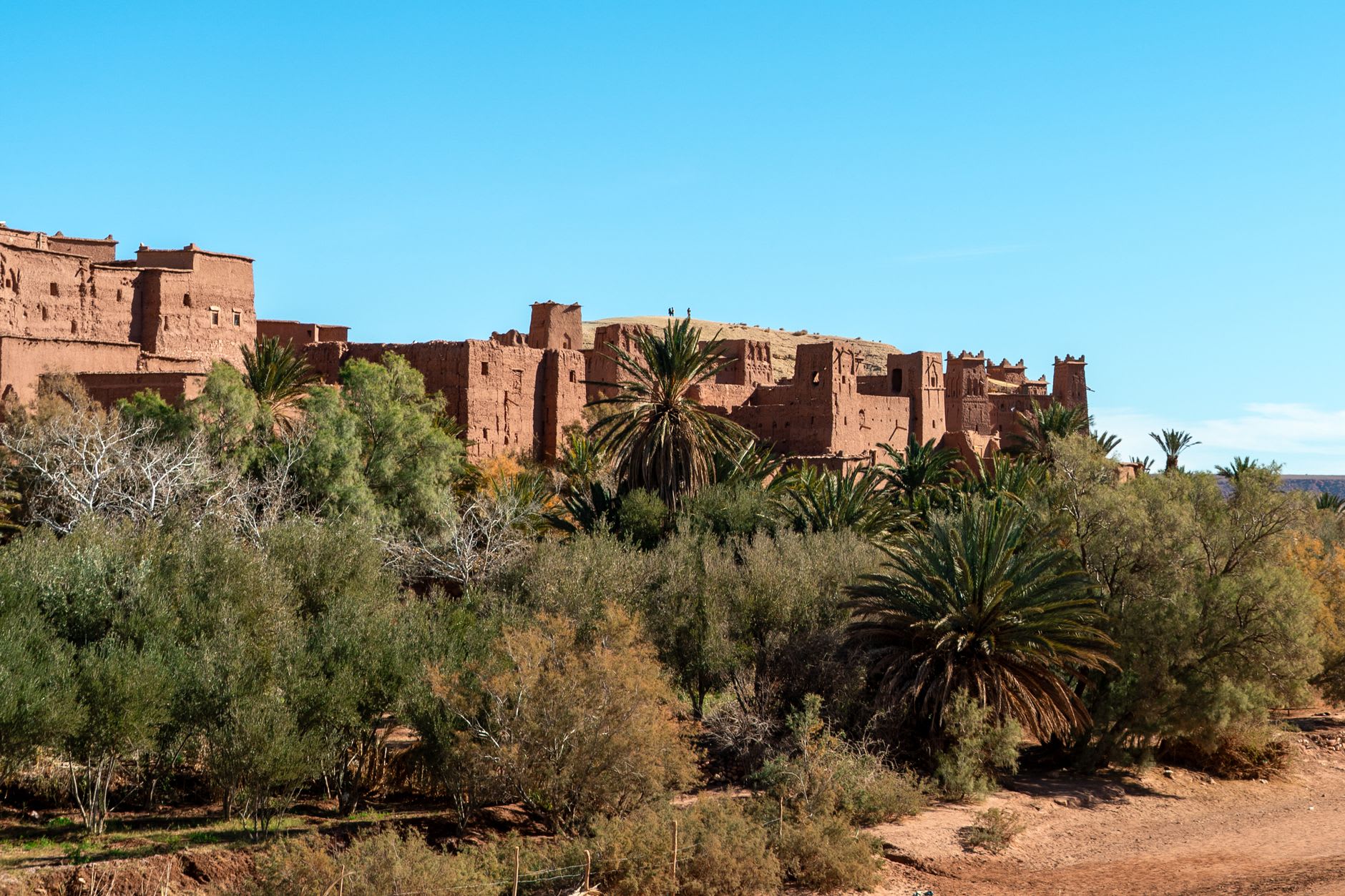
The road south from Ouarzazate goes to Zagora and eventually M’Hamid, through the Draa Valley. Even just the first 60 kilometers of that drive — through palmeries and past kasbah ruins and occasional nomadic camps visible from the road — is worth doing for the landscape alone, with the pre-desert light doing its work on the red earth and the palmeries going dark green against it.
When to go: October through April. The spring desert Rallye du Maroc happens in October and closes some roads briefly. March and April bring warm temperatures without summer heat, and the amber afternoon light remains excellent throughout the winter season. The ksar at Aït Benhaddou is most striking at golden hour — plan to be there in the last two hours before sunset.