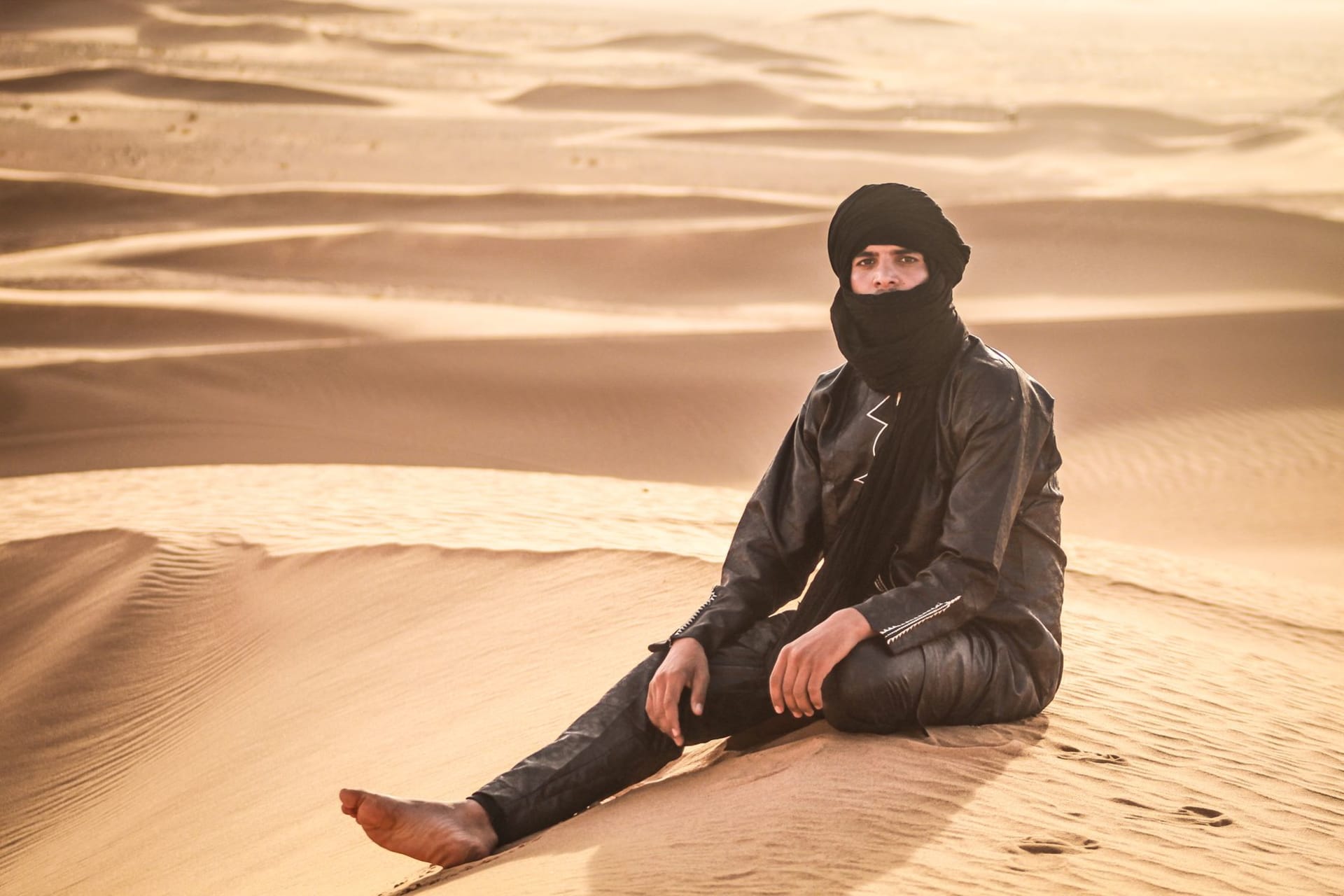
M'Hamid el Ghizlane
"Here the road just stops, and you understand it was never really the point anyway."
The road south from Zagora runs out of ambition slowly. The palmeries grow sparse, the irrigation channels dry, and by the time M’Hamid el Ghizlane appears, the landscape has been scraping itself bare for 96 kilometers. The village sits at the end of Highway N9, where the pavement genuinely stops and the desert begins without a fence or a sign or any ceremony at all. The Draa River — which starts in the High Atlas and carries a thin thread of green through the pre-Saharan south — dies here. Most years it does not reach this far; its dry bed runs into sand and is absorbed.
I had been told to skip M’Hamid. Too small, not enough services, go to Merzouga where the infrastructure works. This was bad advice. M’Hamid is what you come to the Moroccan Sahara for when you’ve already done Merzouga and want the version without the smooth edges. The town has a cluster of pisé houses, a weekly market on Mondays that draws nomadic Ait Atta people from the surrounding region, and a pervasive quality of being genuinely at the end of things.
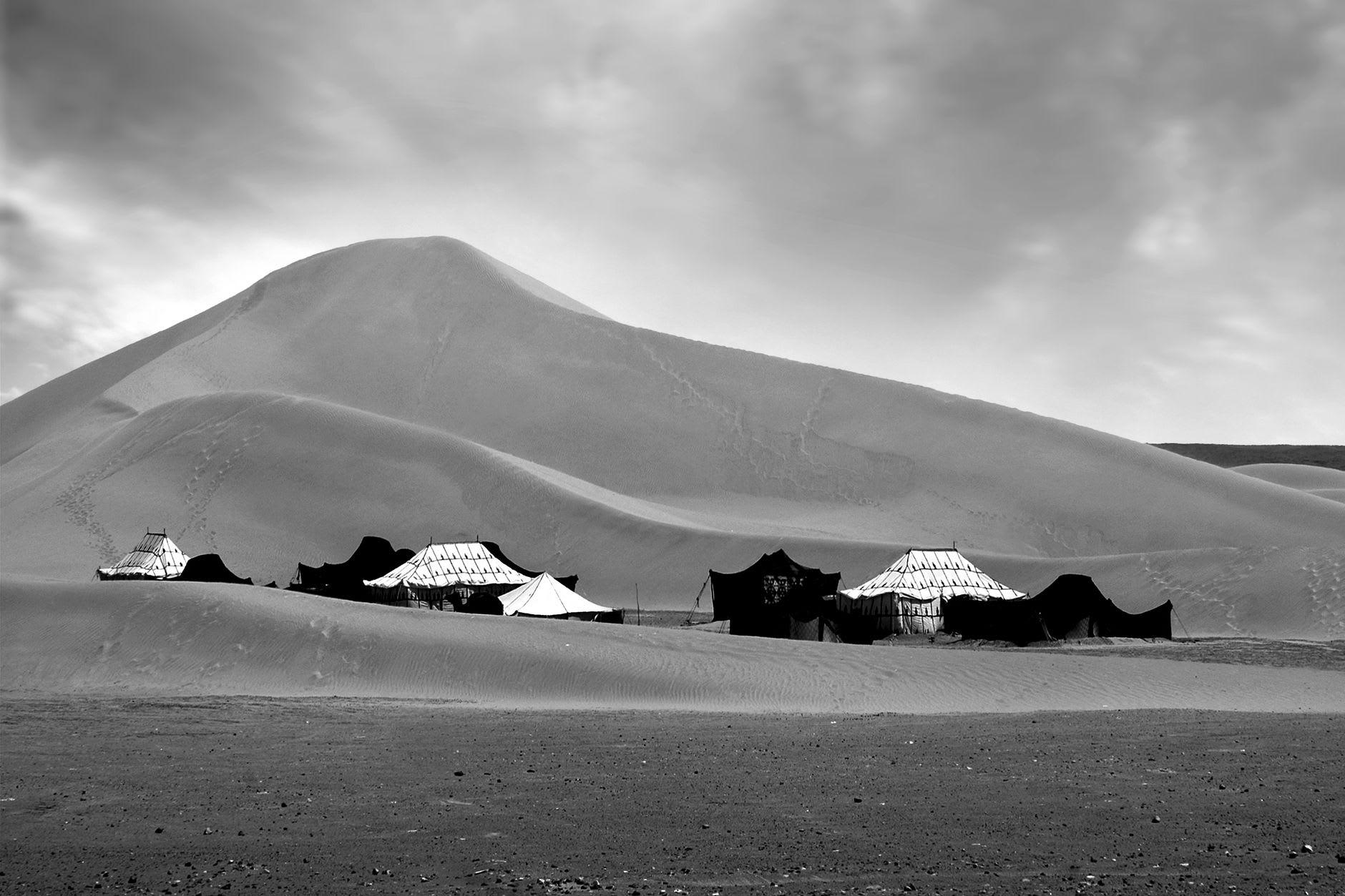
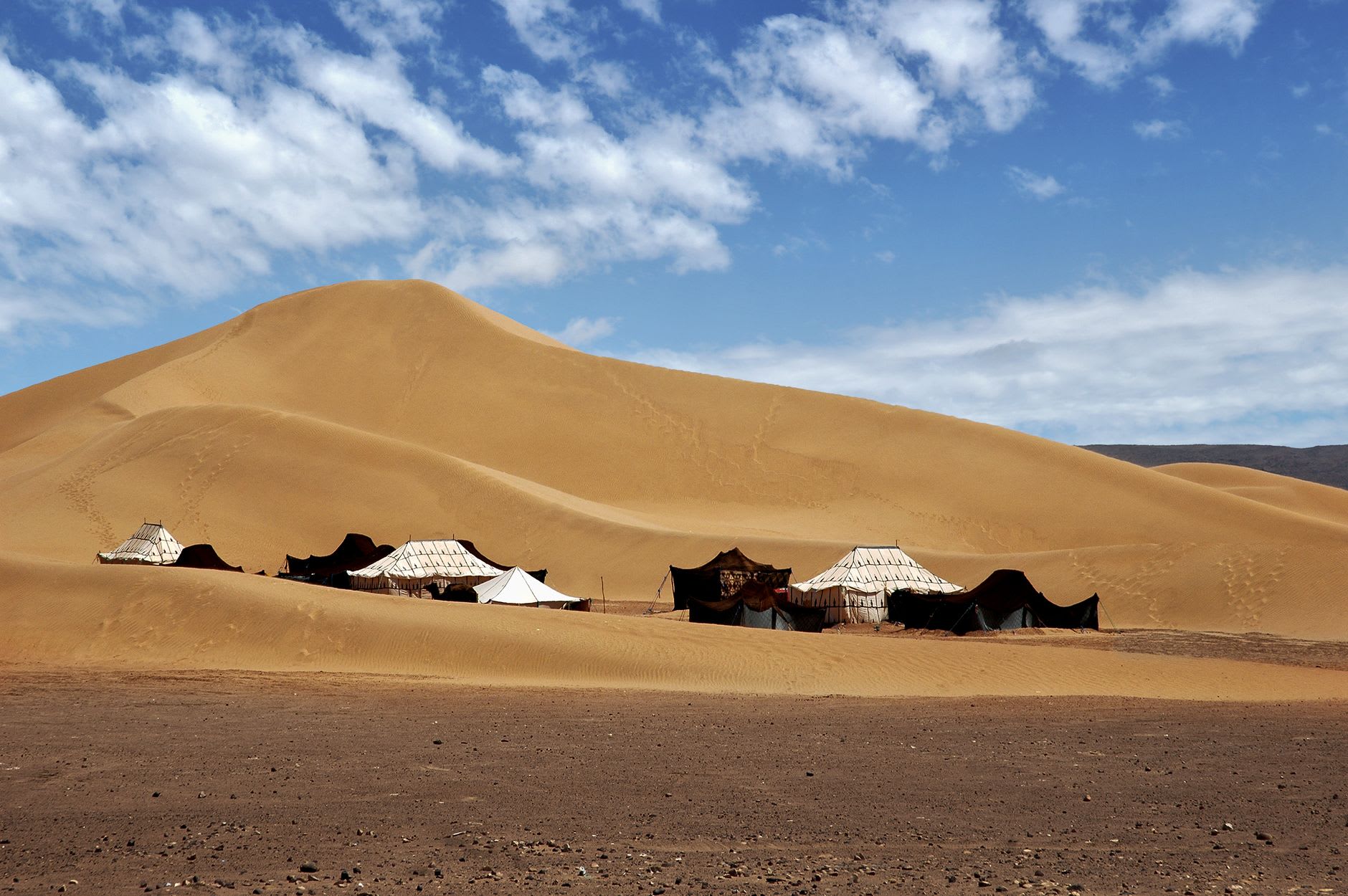
The ergs accessible from M’Hamid are different from Erg Chebbi. Erg Chigaga — reachable only by 4x4 across 60 kilometers of hammada — is entirely undeveloped, fifty square kilometers of dunes without a single permanent structure. The camps there are portable, seasonal, dismantled after the tourist season ends. The dune colors are paler than Merzouga, the sand more mixed with pale mineral, and the scale is harder to grasp because there are no buildings to scale against. You walk into the erg and the outside world does not appear to exist at all. The stillness has a different quality there too — less theatrical than Erg Chebbi, more indifferent, as if the desert doesn’t particularly care that you’ve made the effort.
The Monday souk is the other reason to time a visit around M’Hamid. Tuareg and Ait Atta traders bring livestock — camels, goats, sheep — and the air carries animal smell and charcoal smoke and the specific dustiness of desert markets. Old men in blue robes sit with blankets of goods spread before them: silver jewelry, leather sandals, dried herbs I couldn’t name, small bags of saffron from deeper in the mountains. The transaction pace is geological. No one is in a hurry here because M’Hamid has never been somewhere people pass through on the way to somewhere else. It is a destination in the pure sense — you come here because this is the only place this place exists.
The guesthouses are basic but deliberately so. The best are riad-style, open to a central courtyard, with thick earthen walls that hold the night’s cool well into afternoon. The evening I stayed, the owner — whose family had run the place for three generations — made harira for the six guests: a thick, tomatoey soup with lemon and fresh cilantro, eaten with msemen flatbreads hot off the pan. It cost almost nothing and tasted like the most generous thing I’d eaten all month.
When to go: October through March. The Monday market is worth planning around. February brings the annual music festival — Gnawa, Tuareg, and Sufi music performed under desert stars — which turns the whole town into an outdoor stage for several days and is one of the more unusual festivals in Morocco.