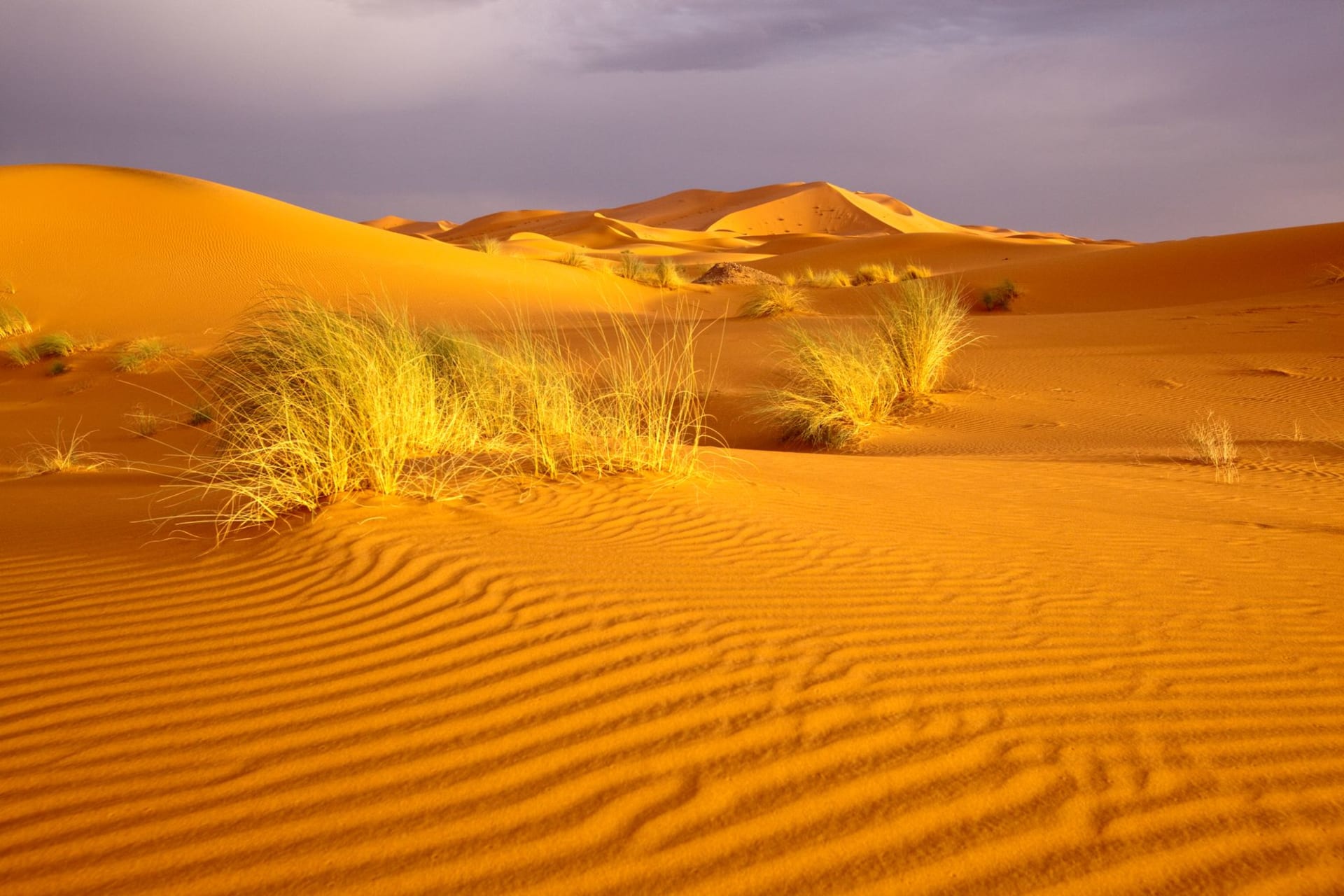
Erg Chigaga
"When the engine finally cut and the driver said we'd arrived, there was simply nothing — and that nothing was the most generous thing the desert ever gave me."
There is the Sahara that you reach by tour bus, and there is Erg Chigaga, which you do not. The famous dunes at Merzouga have a paved road and a row of hotels; Chigaga, out past M’Hamid el Ghizlane in Morocco’s deep south, has neither. The tarmac ends at M’Hamid and the rest is a two-hour wallow across hammada — flat black gravel desert, the least romantic landscape imaginable — in a 4x4 driven by someone who navigates by landmarks I never managed to see. We bounced, we slid, we crested a low rise, and then the dunes were simply there: a forty-kilometre sea of sand that the maps don’t quite convey, because no map conveys silence.
The road that runs out
The drive is the gatekeeper, and I came to love it for that. Every kilometre of bad piste between you and Chigaga is a kilometre that the day-trippers won’t cross, which is why the erg stays empty in a way Merzouga can no longer manage. Our driver, Brahim, stopped halfway at a lone tent where a family sold mint tea so sweet it made my teeth ache, and he and the old man talked for twenty minutes in Hassaniya about water and goats and a cousin in Zagora. There was no hurry anywhere. The desert had drained the concept of hurry out of everyone in it, and I felt mine go too, somewhere around the second glass.
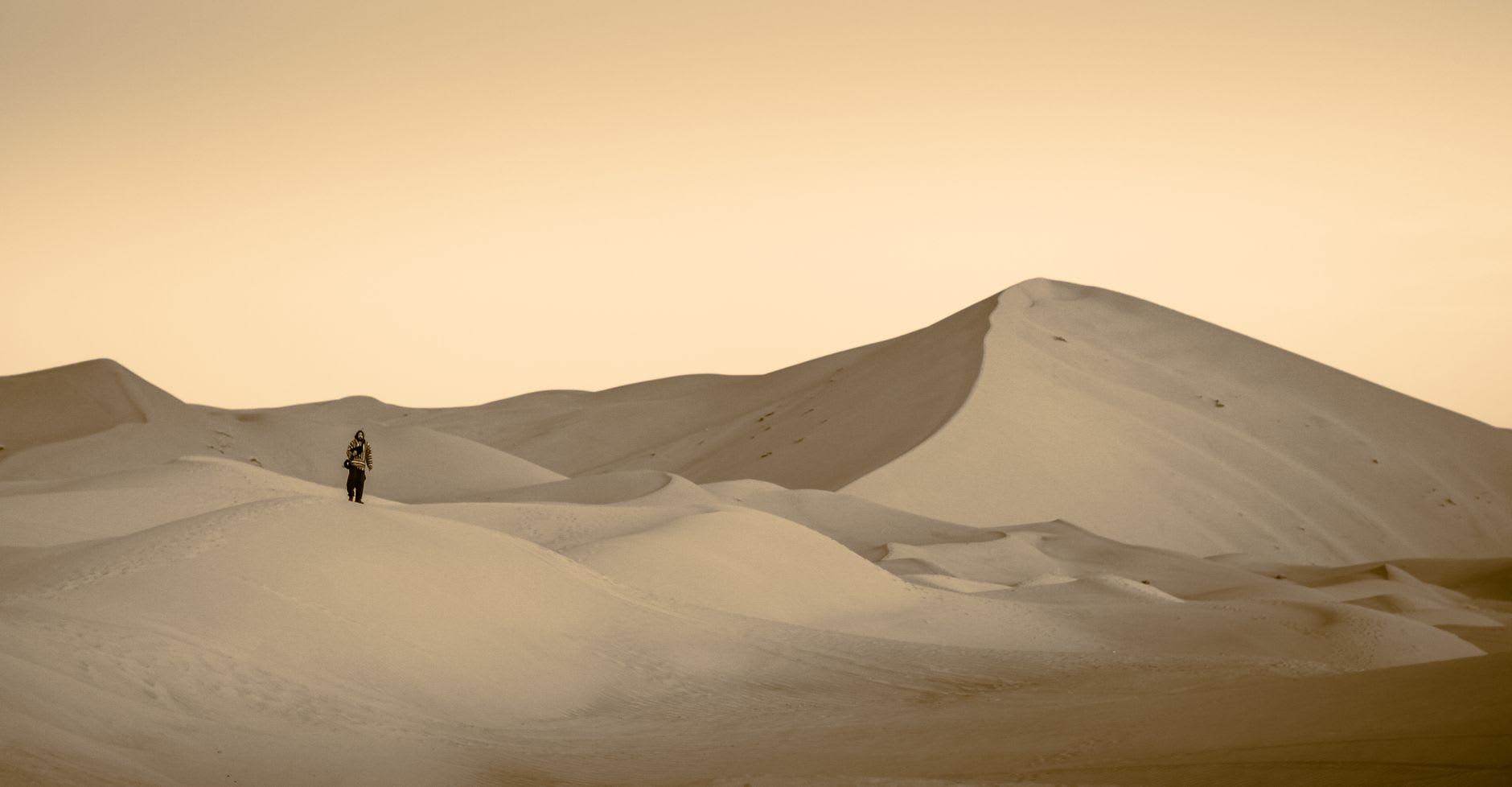
Sand, silence, and an indecent number of stars
The dunes themselves are the real thing — some rising nearly three hundred metres, soft as poured cream at the top and ferociously hard work to climb, each step sliding you back half of what you gained. Lia made it to a high crest before me and sat there laughing while I floundered up the last of it, and from the top the erg rolls away in every direction with the long shadows of late afternoon stretching blue across the gold. We slid down on our backsides, which is undignified and entirely the correct way to do it.
The camp was a cluster of dark wool tents in a hollow between dunes, and dinner was a tagine cooked over a fire of dead tamarisk wood, eaten by lamplight while a young man drummed quietly on a battered djembe. Then the lamps went out, and the sky did the thing that no photograph has ever honestly reproduced. The Milky Way was not a smudge; it was a structure, a great spilled ridge of light, and the silence underneath it was so total that I could hear my own pulse. I have slept in a lot of places. I have never been anywhere as quiet as Erg Chigaga at two in the morning.

When to go
October through April, no question — the summer heat out here is genuinely dangerous, pushing well past 45°C with no shade for a hundred kilometres. Even in winter the nights are cold enough to want a real blanket. Go with a reputable operator out of M’Hamid or Zagora, stay at least one full night, and resist any package that tries to do Chigaga as a day trip. The whole point is the dark.