Douz
"Douz is where Tunisia quietly runs out of itself and lets the Sahara take over."
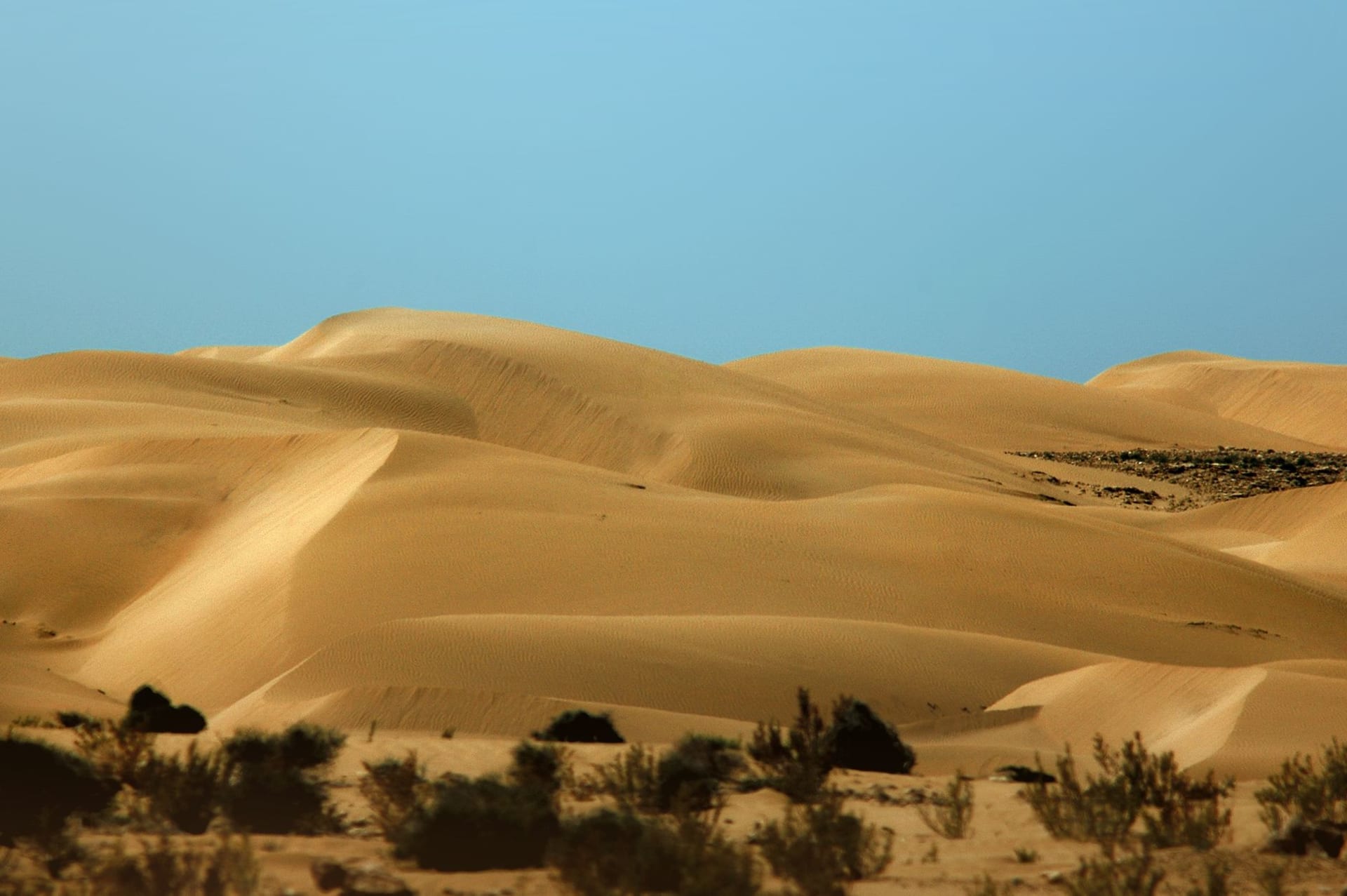
Douz calls itself the Gateway to the Sahara, and the slogan is for once accurate — the town sits at the exact point where southern Tunisia’s agricultural zone gives out entirely and the Grand Erg Oriental takes over. One side of town is date palm gardens and irrigation channels; the other is sand. The transition happens at the end of a particular street where the houses stop and the dunes simply pick up, as if the two things agreed on a boundary and both decided to respect it.
I came in from Tozeur by louage — the shared taxis that run the southern highway — and arrived in the late afternoon when the light was already gold and long. The main square has a camel fountain. The camel here is not decorative: Douz has been a center of camel breeding and trading for centuries, and the Thursday livestock market is one of the largest in the country. I arrived on a Thursday and followed the sound to the market ground at the edge of town, where the animals were tethered in long lines and the traders — mostly men in white or grey robes with red-and-white checked scarves — moved between them with expressions of professional skepticism. A large camel was being assessed by two men who circled it without speaking, touching its knees and flanks with the backs of their hands. No one hurried. The camel was indifferent to the whole proceeding.

The dates of the Douz region are extraordinary. Tunisia is one of the world’s major date producers, and the deglet nour variety grown here — long, translucent, honey-colored, with a dry sweetness that deepens when you chew — is considered among the finest on the continent. The date workers in the palm gardens climb the tall trunks without equipment, their feet braced against the bark, moving with a casual efficiency that turns alarming quickly if you stand and watch it. The harvest runs from October to December, and the air in the gardens during those weeks carries the sugar-heavy smell of ripe fruit browning in the sun.
The desert itself starts within walking distance. The first dunes — a series of modest rises compared to Erg Chebbi, but still soft and orange and total — are accessible on foot from the edge of town. In the morning, before the sun is high, the sand is cool enough to walk barefoot, and the surface holds overnight footprints in perfect negative relief. By midday, the dunes have absorbed the heat and the walking is different: hotter, slower, the sand soft and deep enough to pull at the legs with each step.

The Sahara Festival, held annually in December, transforms Douz for four days into a gathering of Saharan cultures: camel racing, greyhound coursing, Bedouin poetry, traditional music from across the region. It draws a crowd and loses a little of its authenticity proportionally, but remains fundamentally about the people and traditions it was built around, and the atmosphere in the evenings — fire, music, the smell of roasted lamb — is difficult to manufacture elsewhere.
When to go: October through March. The Thursday market is a fixed point worth building a visit around. December brings the Sahara Festival and cooler temperatures but also crowds and accommodation pressure — book early if this is your window. The dates and olive harvests in October and November add another layer to the agricultural character of the place.