Djanet
"The rock art here is 10,000 years old and it still looks freshly made — whoever painted it knew what they were doing."
It takes effort to reach Djanet. Two hours of flying southeast from Algiers across the Algerian interior, or an overland journey of days across the Hoggar from Tamanrasset, and you arrive at a town of about 15,000 people in a volcanic landscape that seems to belong to another planet. Djanet sits in a depression in the Tassili n’Ajjer plateau, surrounded by vertical sandstone formations in shades of ochre and rust, and the town’s pink-and-cream mud-brick buildings press close together as if for company against all that stone.
I landed at noon and walked directly into the Tuareg quarter, following the sound of voices. The streets were narrow and partly covered, protecting against a sun that at that hour left no shadow at all. Women sat at doorways working leather goods — the distinctive blue-black of the indigo-dyed cloth the Tuareg call tagelmust. The smell of the place was dry stone and tea-smoke and something mineral I couldn’t identify, possibly the rock itself, heated past the point where it just sits there passively and starts giving something back to the air.

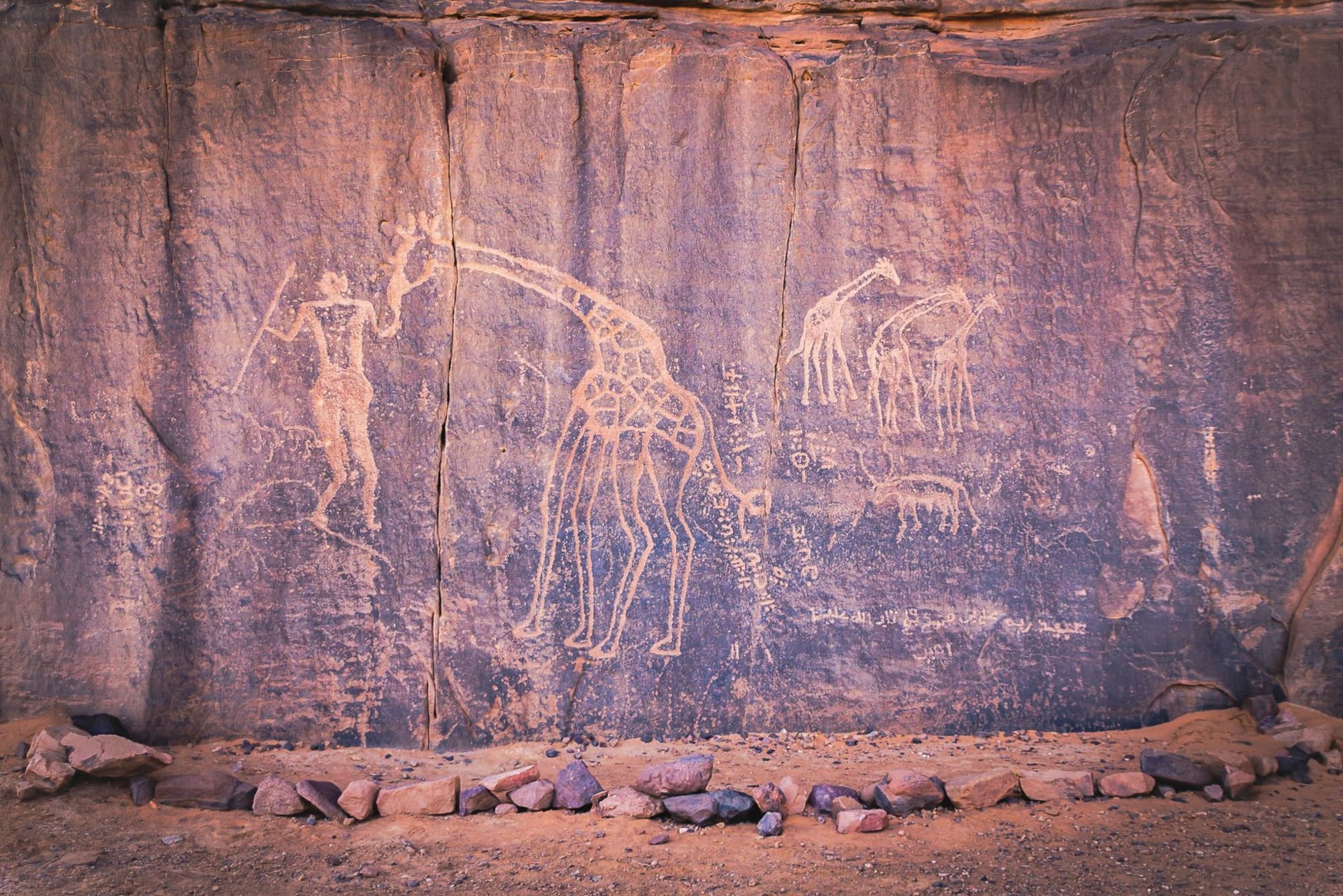
The rock art is why you come to the Tassili region, and Djanet is the only sensible base from which to see it. The plateau contains over 15,000 examples of prehistoric paintings and engravings, some dating back 10,000 years, when the Sahara was wet and green and full of animals that no longer exist there — hippos, elephants, crocodiles — painted with a confidence and economy of line that makes the artists feel uncannily present. To reach the main sites requires a multi-day trek into the plateau with a guide and mule transport for supplies. The paintings themselves are set high on overhanging cliff faces, protected from direct rain, still vivid with ochre and black and white pigments ground from local minerals.
There is something disorienting about looking at a painted giraffe in a landscape where no large mammal has survived for millennia. The art documents a world gone so completely that its absence feels like a kind of violence. I stood in front of one panel for a long time — a human figure with arms raised, surrounded by cattle, painted sometime around 6,000 BCE — trying to feel the human continuity in it. What I felt instead was the strangeness of time. How the same rock face had been here throughout everything, from a green Sahara full of animals to this stone and silence.

Back in town, the central market sells dried herbs and spices of the region, fresh dates, and the blue cotton and silver jewelry that the Tuareg have turned into an art form across centuries. The local tea ceremony — three glasses minimum, each progressively less sweet, drunk at a pace that makes conversation involuntary — is taken seriously here, and refusing the second glass is a social refusal that requires explanation. I didn’t refuse it.
When to go: October to March, when temperatures are manageable. The plateau trek to the rock art sites requires guides arranged through the local tourism office in Djanet; independent access to many sites is restricted to protect the paintings. A minimum of three days in the region is recommended to reach the best panels — five or six days is better if you can manage it.