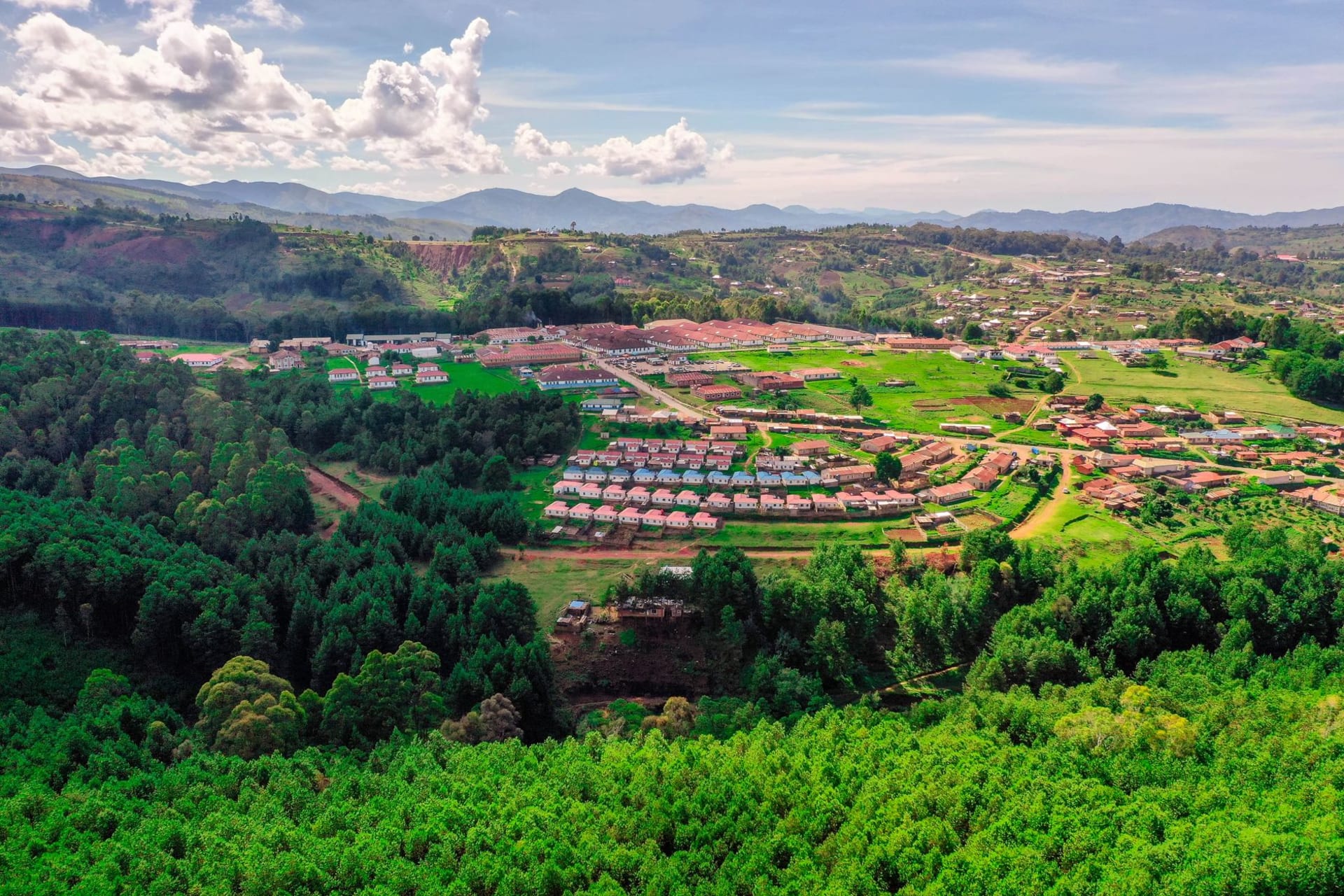
Musanze
"The volcanoes are so close and so large that the town seems to be explaining itself by their presence."
Musanze sits in a bowl of valley about ninety minutes north of Kigali, and the Virunga volcanoes are so close that on a clear morning they fill your entire field of vision to the north — Karisimbi, Bisoke, Sabinyo, rising in a line that the sky seems to accommodate reluctantly. The town exists primarily because of the gorilla economy; most travelers pass through it as a logistical hub, sleeping the night before a trek. I stayed three days, which is probably one day more than most itineraries suggest and at least one day less than the place deserves.
The caves are what most visitors overlook. Musanze Caves are lava tubes — formed by volcanic flows hundreds of thousands of years ago — that run for some three kilometers beneath the town, the longest known lava tube cave system in Africa. You enter through an unremarkable gate and then descend into something extraordinary: cool, dark tunnels three to fifteen meters wide carved in perfect basalt, their walls still showing the flow marks of the cooling lava. Bats roost in the upper chambers, and their rustling is the only sound below the tour guide’s footsteps. I found the caves more affecting than I expected — the scale of geological time suddenly made legible, a reminder that the volcanoes visible above have been reshaping this landscape for far longer than anything with legs.

The twin lakes of Ruhondo and Burera sit east of town, surrounded by terraced hills of exceptional beauty. Ruhondo in particular has a still, reflective quality in the early morning that produces the kind of photograph that looks unreal — the volcanoes doubled in the surface of the water, the green terraces descending to the shore in layers, a pirogue moving across the reflection and leaving a slow V-shaped trail. I hired a bicycle and rode the road between the two lakes, which takes you through small villages where children shout “Muzungu!” and then appear to find the whole interaction hilarious, and past hillside farms where banana trees heavy with fruit overhang the road.
The town market runs every day but reaches a proper intensity on weekend mornings: produce from the surrounding farms, dried beans in sacks, roasted maize from braziers at the entrance, and one stall selling an improbable quantity of used mobile phone cases. I bought a kilo of passion fruits for less than I would have paid for a single one in Mexico City and ate them over two days, cutting them in half and drinking the pulp with a knife in a way that no kitchen has ever improved upon.

Musanze also serves as the base for Bisoke volcano hikes — a serious four-to-five-hour ascent to the crater lake at 3,711 meters — and for the Dian Fossey Karisoke Research Center, where guided tours offer context about both the gorilla research that began here in the 1960s and the conservation legacy that followed. The combination of caves, lakes, market culture, and proximity to the volcanoes makes Musanze the most layered town in Rwanda.
When to go: July and August offer the clearest views of the volcanoes and the most reliable gorilla-trekking conditions. Gorilla permits should be booked months in advance. The caves and lakes are accessible year-round. The town itself is active and interesting in any season; the rains of April and May make the crater hike muddy and the volcano views intermittent but add a quality of atmospheric drama to the surrounding landscape.