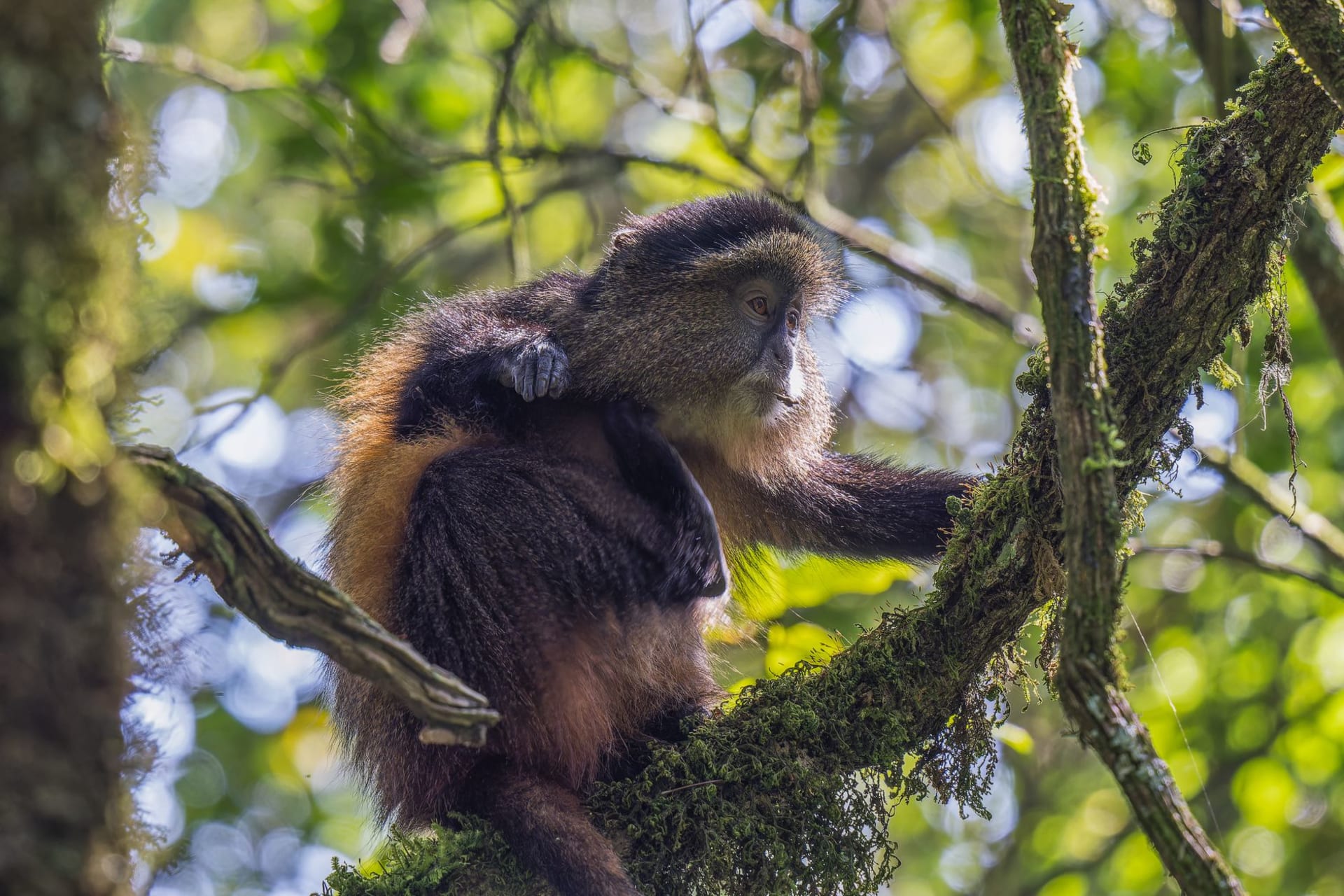
Gishwati-Mukura National Park
"The guide pointed at a chimp forty metres up and whispered that thirty years ago this whole slope was a potato field — and I had to sit down to take that in."
Everyone goes to Rwanda for the mountain gorillas, and I understand why; I went too, and it rearranged something in me. But it was Gishwati-Mukura, three hours southwest along the spine of the Congo-Nile divide, that I keep thinking about months later. It became a national park only in 2015 and a UNESCO biosphere reserve in 2020, which makes it younger than my passport, and the reason it is young is the reason it is extraordinary: by the late 1990s this forest had been logged, farmed and grazed down to barely six percent of its old self. What you walk through now is, in large part, a forest that has been deliberately grown back.
A forest in recovery
Gishwati and Mukura are two separate patches of montane rainforest stitched together administratively, and the larger of them, Gishwati, is where the trekking happens. The first thing that strikes you is how steep everything is — Rwanda is not called the land of a thousand hills as a figure of speech — and the second is how loud a recovering forest can be. There is a small population of eastern chimpanzees here, around twenty when I visited, and they are still semi-habituated, which means a trek is genuinely uncertain. We followed our guide up a muddy ridge for two hours, listening to him interpret pant-hoots that I could not have distinguished from wind, before he stopped, grinned, and pointed almost straight up. A chimp was watching us eat its forest’s silence. He told us, quietly, that thirty years ago this exact slope had been a potato field. I sat down on a wet log to take it in.
Golden monkeys and the long view
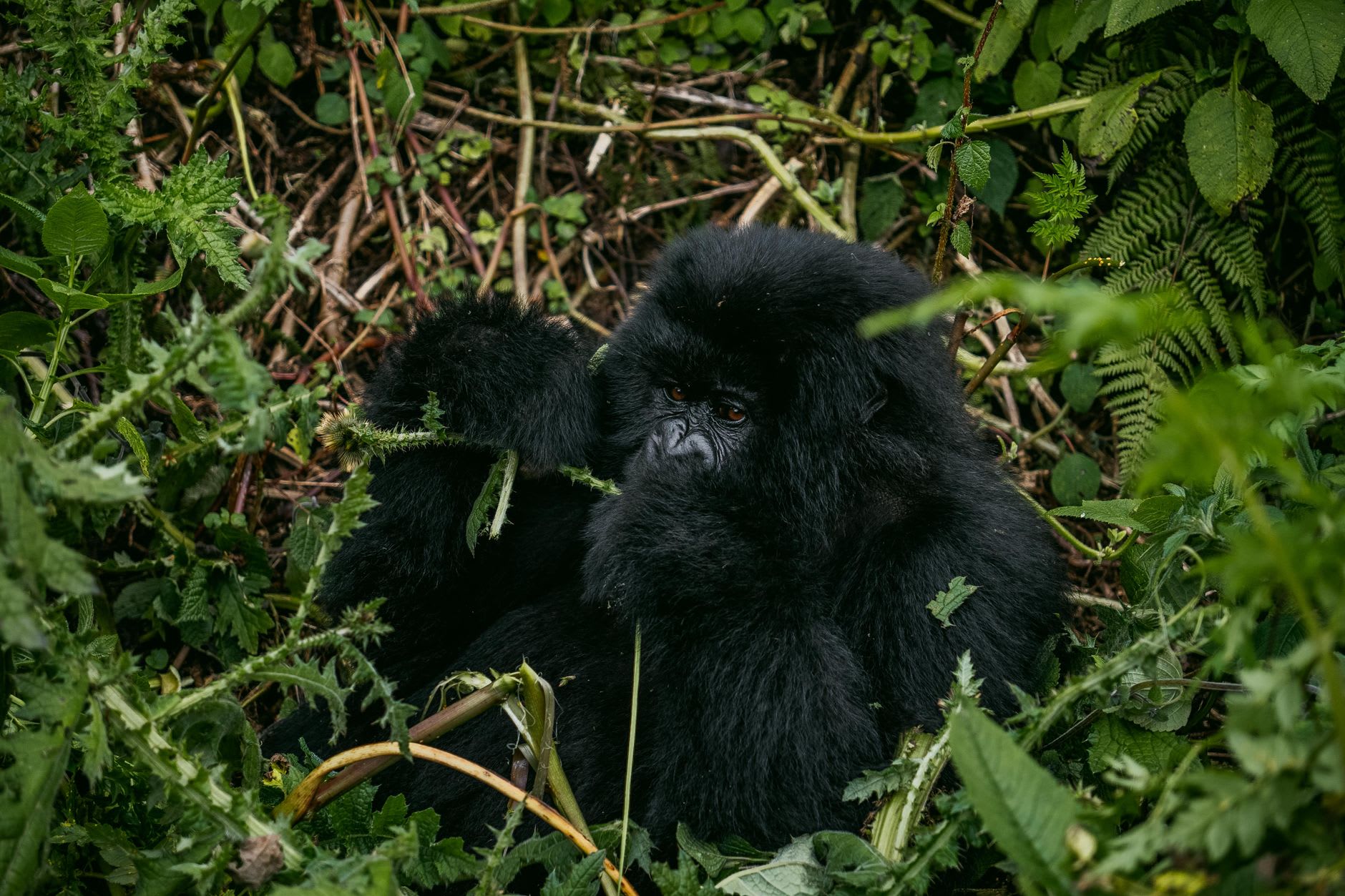
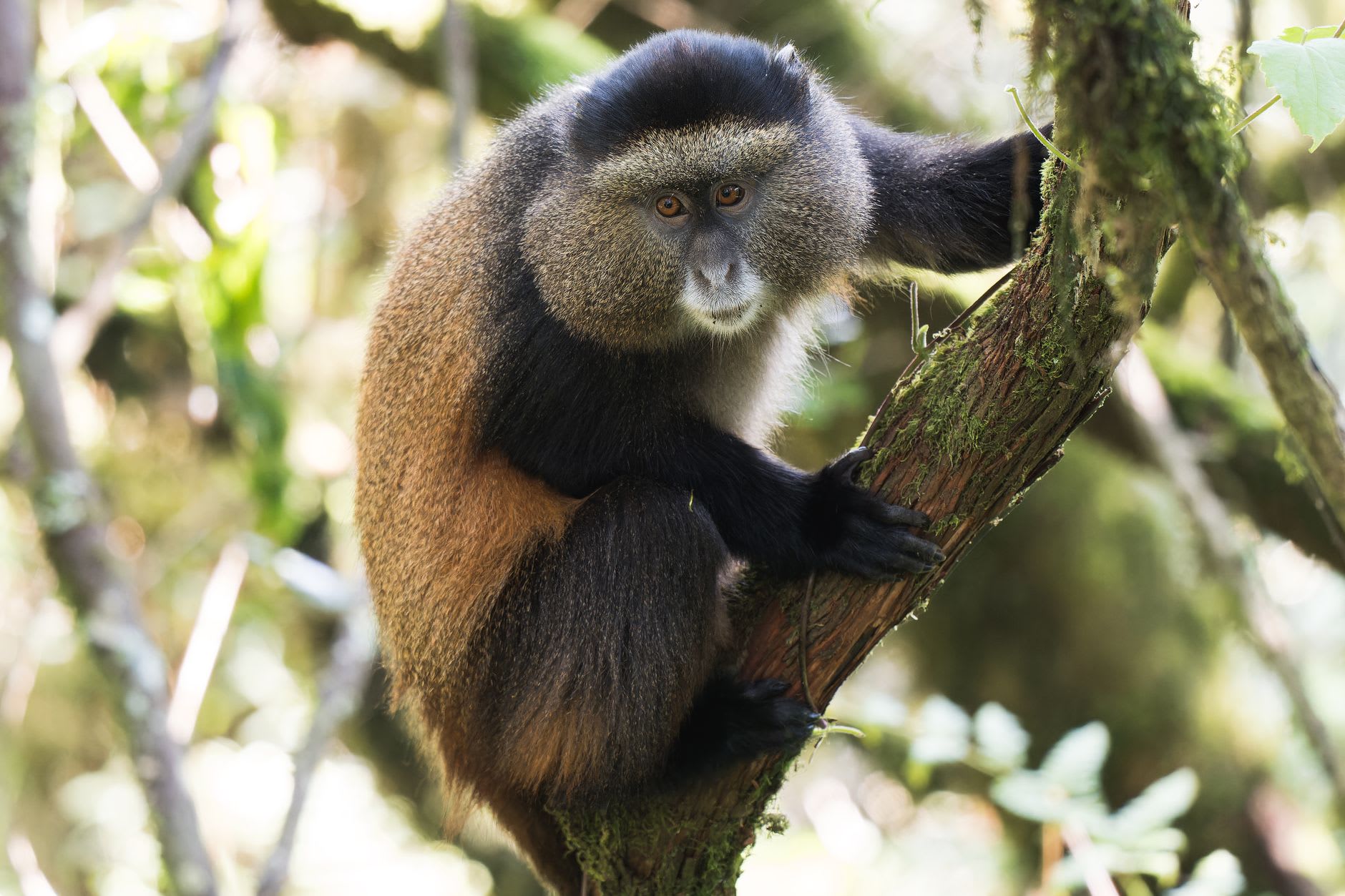
Beyond the chimps, the canopy holds golden monkeys, blue monkeys and L’Hoest’s monkeys with their white bibs, and the birding is the kind that makes serious people lower their voices — Ruwenzori turacos flashing red under their wings, mountain yellow warblers, the occasional Grauer’s swamp warbler. But what I valued most was less the checklist than the texture: the constant drip of a forest that is never quite dry, the smell of leaf-mould and crushed wild celery, the orchids and tree ferns that have moved back in the way furniture returns to a repainted room.
The community-run side of the park is worth your time and your money, because the recovery isn’t an accident. Local cooperatives lead walks to waterfalls, demonstrate beekeeping, and pour you a cup of tea grown on the very slopes that were once eating into the forest. Lia spent an hour with a woman drying flowers for natural dyes and came back with stained fingers and a long story. The lesson of Gishwati is unsentimental: a forest can come back, but only if the people living against its edge are given a reason to want it to.
When to go
The two dry seasons — mid-December to February and June to September — give you the firmest footing on these slopes, which turn to genuine peril in the rains. Treks must be booked through the park authority in advance, numbers are small, and you should arrive with proper boots and zero expectation of guarantees. That uncertainty is the point.