Vladivostok
"Nine thousand kilometers from Moscow, and the ramen here is better than anything I found west of the Urals."
At Vladivostok station there is a small stone obelisk on the platform that reads: Kilometer 9288. The Trans-Siberian Railway terminates here, and someone decided that the end of one of the longest train journeys on earth deserved a marker. I had not come by train — I flew — but I found the marker anyway and stood next to it for a while, trying to process the distance in the direction from which I had not traveled. Nine thousand kilometers of European Russia, Siberia, taiga and steppe and birch forest and the backs of mountains. The Pacific, just below the station, was doing nothing in particular. A cargo ship sat on the horizon facing Korea.

Vladivostok is a city that faces the wrong direction relative to the rest of Russia — not west toward Europe but east and south toward China, Korea, and Japan — and this orientation has produced a culture noticeably different from anything I’d encountered in the previous weeks. The food is the most obvious evidence. Korean restaurants serving jjigae and japchae sit beside Japanese ramen shops of real quality. The seafood market near the waterfront sells live Kamchatka crab, sea urchin, fresh scallops, and dried squid in quantities that suggest the Pacific is very close and very generous. I ate ramen — proper ramen, with a tonkotsu broth of genuine depth — in a basement restaurant on Fokina Street, and briefly questioned whether I’d been eating correctly for the previous three weeks.
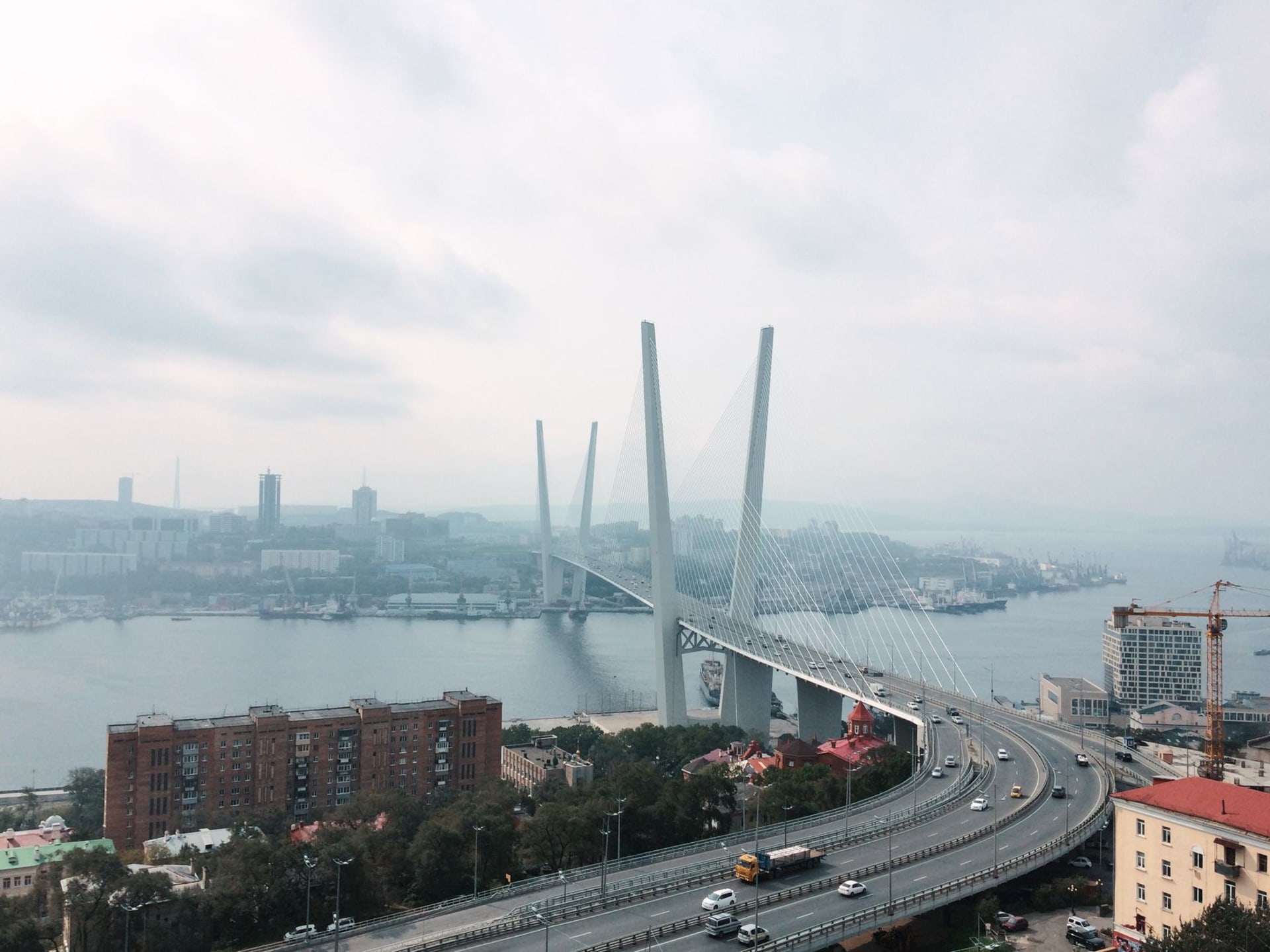
The city itself is arranged on hills above two bays, the Golden Horn and the Amur, connected by suspension bridges that would not look out of place in San Francisco and were completed in 2012 for an APEC summit that otherwise left few obvious traces. From the viewpoints on the Orlinoe Gnezdo — the Eagle’s Nest Hill — both bridges are visible at once, the Golden Horn Bay below them, the container port beyond, and on clear days the hills of the Muravyov-Amursky Peninsula running south toward the horizon. It is an unexpectedly dramatic city in outline, the kind of topography that makes you understand why people chose to settle somewhere despite the logistical difficulties.
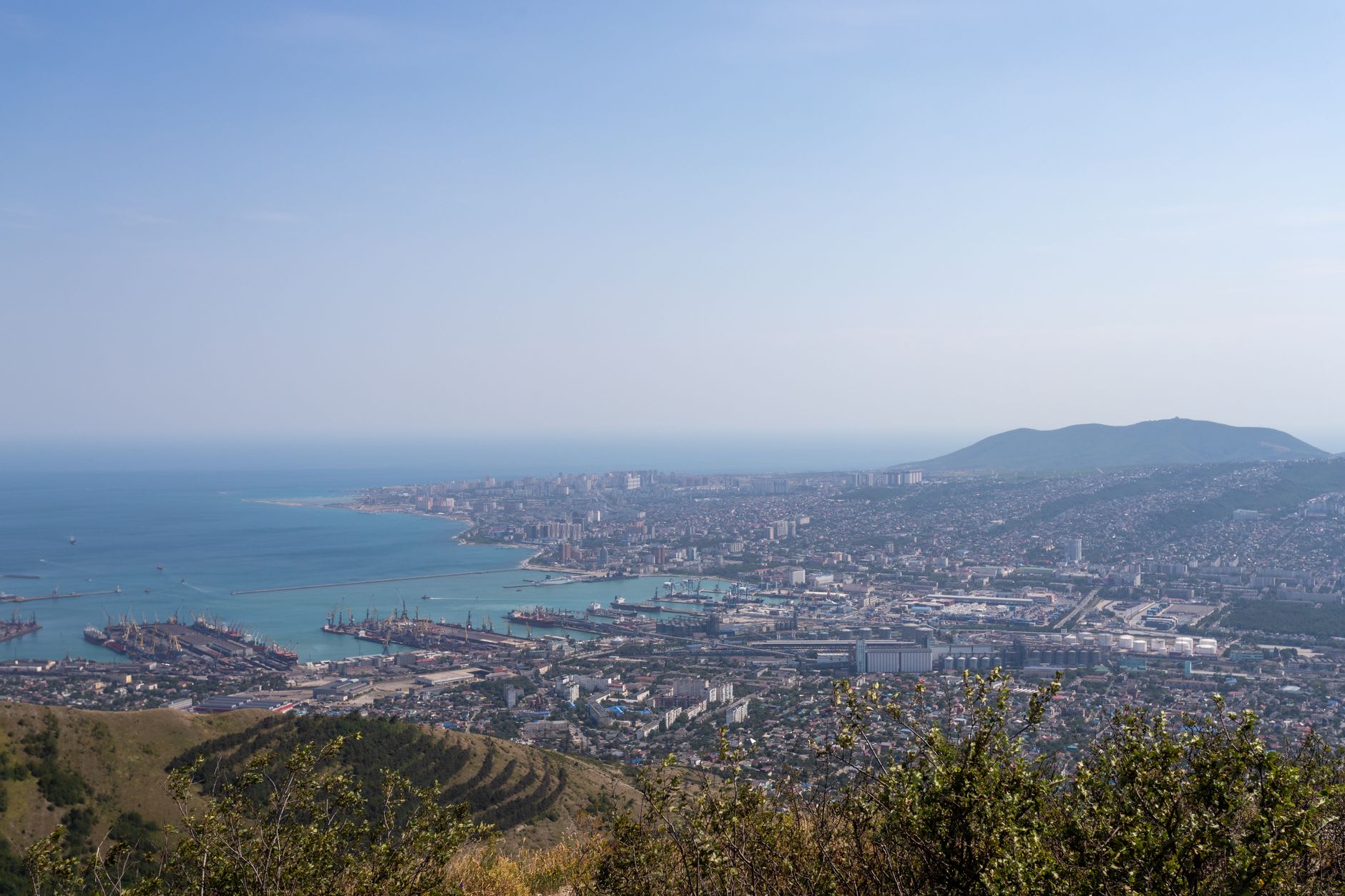
The Tokarevsky lighthouse sits at the tip of the peninsula, reachable by walking across a narrow causeway when the tide allows, and the walk out to it carries a particular quality of finality. The Pacific is on three sides. The lighthouse is old and painted white and functional. From there, Japan is not visible but present — Hokkaido is roughly eight hundred kilometers to the southeast, the shortest distance from Russia to Japan, and the sea between them has the flat grey quality of water that knows what it is connecting. I stood there until the wind became unreasonable, then walked back across the causeway and caught a bus back to the ramen restaurant.
When to go: July through September for the warmest weather and clearest seas. May is often foggy. August is ideal for combining the city with day trips to the surrounding bay and islands. Vladivostok’s winters are cold and windy but the city stays active; the bridges and harbor look best in snow.