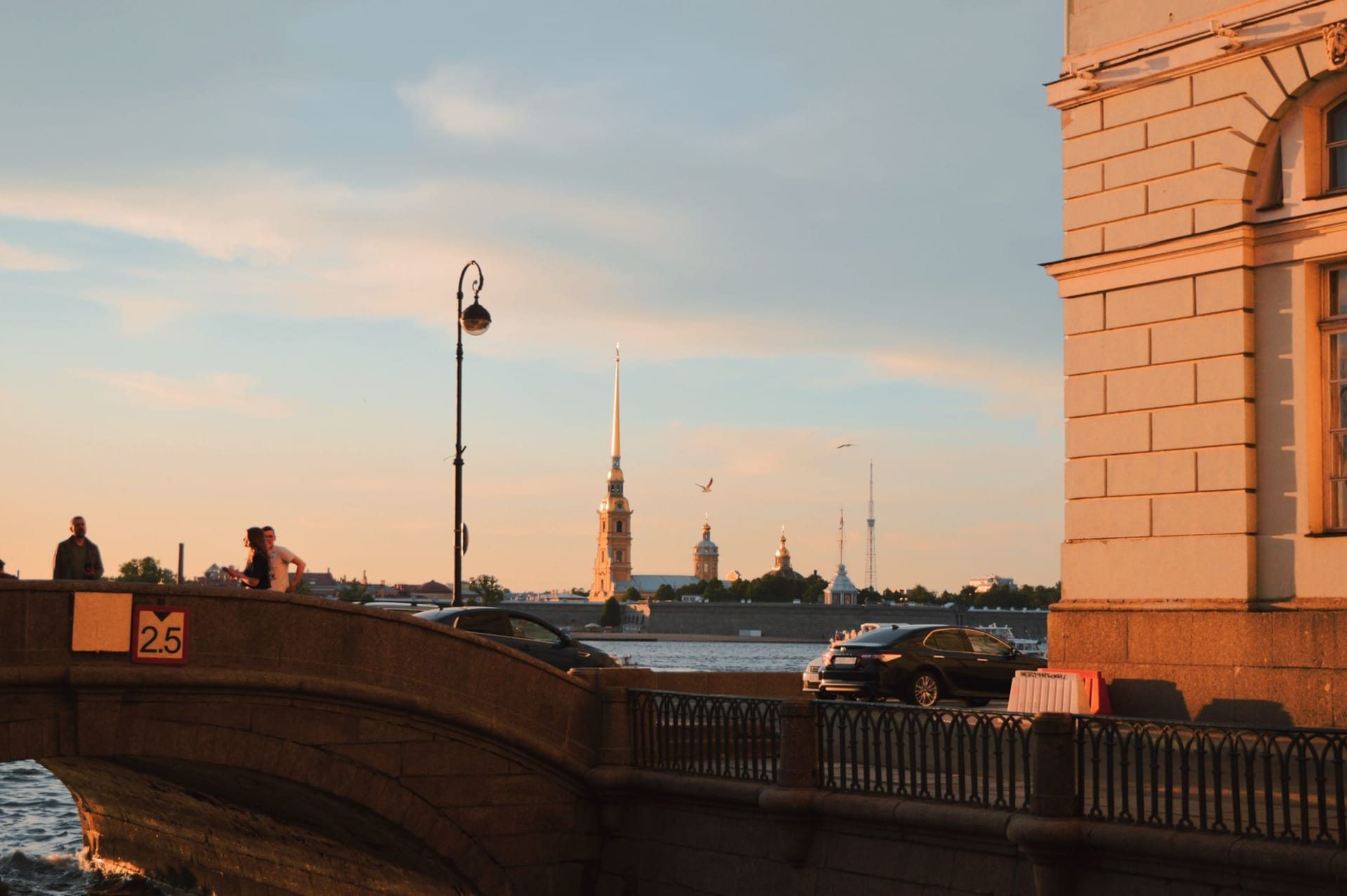
Saint Petersburg
"At 2 a.m. in June, when the bridges lift and the sky refuses to go dark, Saint Petersburg becomes the most surreal place I know."
I arrived by night train from Moscow, the Sapsan depositing me at Moskovsky Station at six in the morning, and the first thing I noticed was the light. Not sunrise exactly — it was June, and the sky had never properly gone dark. There was a quality to it I cannot fully describe: grey-gold, evenly distributed, simultaneously resembling late afternoon and very early morning, belonging entirely to neither. The Nevsky Prospekt at that hour held a handful of joggers, two women with a pram, and a man in a suit eating a pasty over a trash can. A city coming out of a dream rather than waking from sleep.
The Hermitage will defeat you. This is not a warning but an invitation — surrender to the defeat, let it wash over you, and you will find something good on the other side. I spent three days inside and barely reached the Dutch masters; I never made it to the Egyptian collection. What stayed with me was not the famous Rembrandt or the Matisse rooms but a smaller gallery where a guard named Sergei had been stationed for twenty-two years beside the same Flemish still-life. He told me the varnish changes color with the seasons, that in winter the cherries look nearly black. He said he still notices it. I thought about that for days.
The canals are where Saint Petersburg becomes intimate. Along the Moika and the Griboedov, the baroque buildings lean over the water with a slight forward lean, as though they have been slowly bowing toward their own reflections for two centuries. The plaster is crumbling in places. The paint is peeling in colors that seem more atmospheric than accidental — ochre giving way to pink giving way to the damp grey of the canal. Cats sit on the embankment walls with the authority of co-owners. Somewhere on Griboedov Canal I ate a bowl of ukha at a windowside table in a place with no menu, just a woman who brought what she thought you needed.
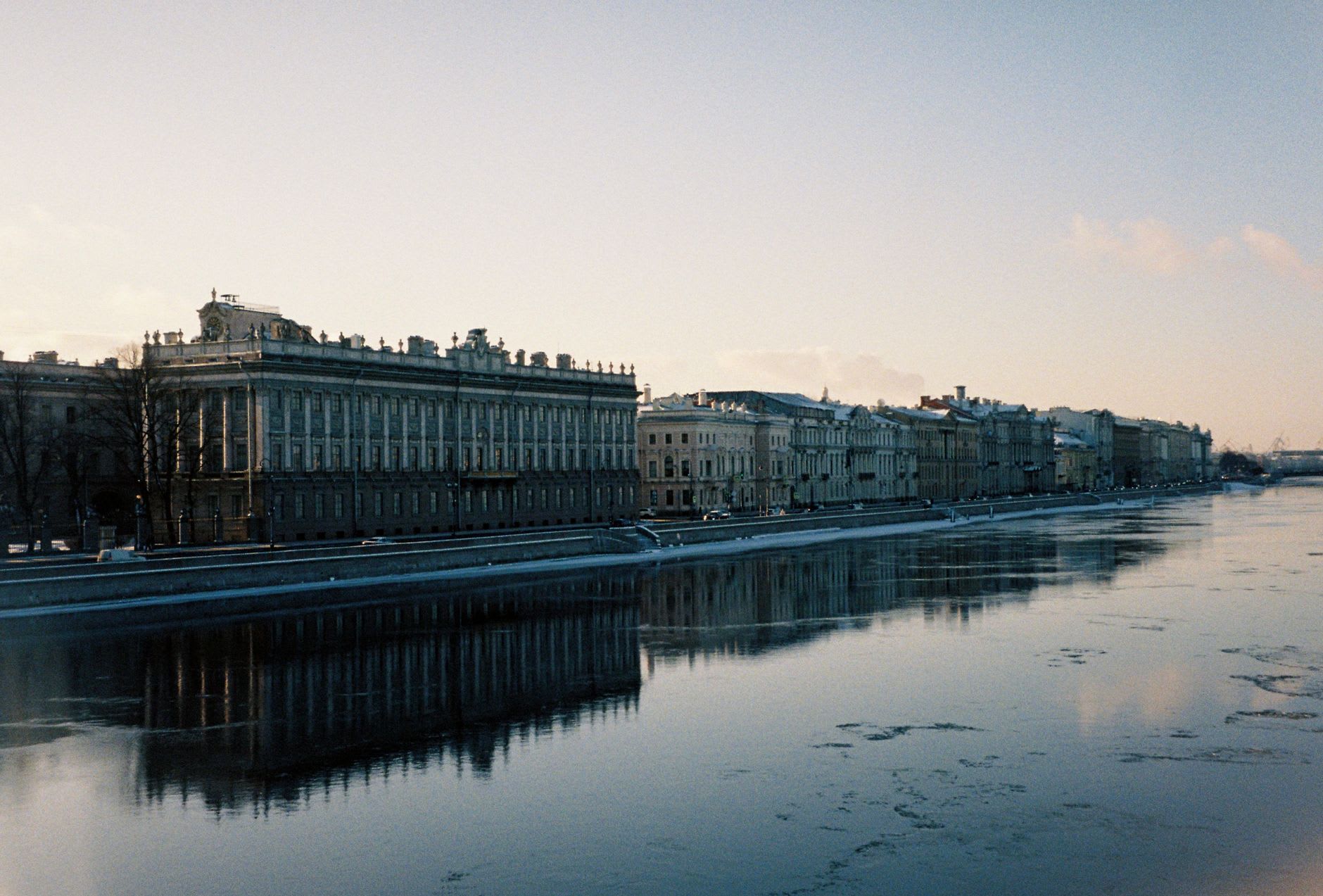
The White Nights happen in late May and June, when Saint Petersburg sits close enough to the Arctic Circle that the sun sets but the sky never truly darkens — a sustained twilight lasting all night, the horizon staying a pale gold. I walked the Neva embankment at two in the morning, alone except for a few other insomniacs, and watched the Dvortsovy Bridge rise for the cargo ships. The whole city felt suspended in something between waking and dreaming, its baroque skyline sharp against a sky that had no business being that light. The drawbridges opening for river traffic in the small hours has become a ritual that Petersburgers attend as seriously as theater. Standing on the embankment, watching the roadbed rise into the pale sky, I understood why this city has produced so many writers who could not stop writing about it.
When to go: Late May through June for the White Nights — surreal and worth every tourist that comes with them. September brings crisp golden light and the cultural season opening, with Mariinsky ballet tickets suddenly available. Avoid January if cold for its own sake does not appeal to you; embrace it if it does.