
Moscow
"The metro here is the most beautiful public transport system on earth, and they built it for everyone."
A city that earns its weight in winter — gold domes, metro palaces, and Georgian wine poured until there's no reason to go home.

The first thing Moscow teaches you is the metro. Not Red Square, not the Kremlin, not the skyline of Stalin’s wedding-cake towers — the metro. I descended at Komsomolskaya on my second day, having been assured by a local named Dasha that I was wasting my time with surface streets, and the escalator delivered me into something that had no business being underground. Mosaics of medieval battle scenes. Chandeliers with more arms than a small cathedral. Commuters in winter coats reading Bulgakov, completely indifferent to the palace around them. I missed my stop twice that morning, not out of confusion but because I kept riding past stations I wasn’t finished looking at.

Red Square is not overrated. I know how that sounds — I know the pressure every self-respecting traveler feels to find the famous thing lacking, to return with a shrug and a story about how it’s just for tourists. But standing in front of Saint Basil’s Cathedral at dusk when the snow has just begun and the coloured domes are disappearing into the grey sky one by one, something reaches you behind the sternum. The scale of it is theatrical in a way that the Kremlin, immediately adjacent, pointedly is not. The Kremlin is just power, blunt and walled. Saint Basil’s is something stranger — a fever dream of turrets and spirals that somehow holds together, that somehow works, that somehow makes the freezing square feel like the centre of the world.
The real Moscow, though, exists elsewhere. I found it in Chistye Prudy, in the neighborhood behind the boulevard where the pond freezes over in December and couples skate under birch trees. I found it in Patriarch’s Ponds, where Bulgakov set the opening of The Master and Margarita and where the literary association has made the bench outside a kind of pilgrimage site. I found it most completely in a Georgian restaurant in Patriarch’s Ponds district where I sat until half past midnight over a plate of pelmeni and a carafe of homemade horseradish vodka that someone’s aunt had sent up from Voronezh. The khachapuri arrived on boards too heavy to lift. The wine was from Kakheti and cost almost nothing. Nobody at the neighboring table left before I did.

The Winzavod contemporary art center, in a former wine factory in the Basmanny district, operates as a kind of pressure valve for a city that officially has complicated feelings about contemporary art. On a Thursday afternoon I watched a video installation that had been banned in three European venues and drank espresso in a courtyard where someone had parked a Soviet-era truck filled with sunflowers. It was an aggressively Moscow afternoon — incongruous, slightly absurd, completely genuine. The city has a black humor about its own contradictions that takes a few days to calibrate to, and then becomes one of its most recognizable features.
When to go: September through October brings golden birch trees and clear skies across the city’s parks, when Moscow is at its most photogenic and least brutal. February is for those who want the full experience of cold as a defining character — minus twenty-two in the morning, overcoats that smell of wool and snow, and the specific intimacy of a city that has learned to treat winter as domestic.
Keep exploring
More from Russia
 russia
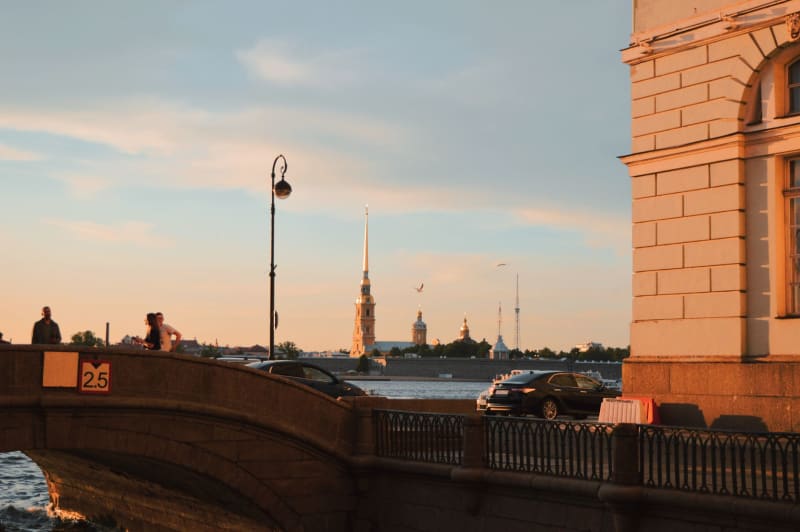
Saint Petersburg
A baroque city suspended between centuries — where Europe chose the wrong timeline and the June sky refuses to go dark.
Explore russia
Sochi
Russia's subtropical paradox — a Black Sea resort with palm trees, Stalin's preserved dacha, and ski slopes twenty minutes above the beach.
Explore russia
Suzdal
A tiny Golden Ring town of nine thousand people and thirty churches, where no building has ever been allowed to outgrow a bell tower.
Explore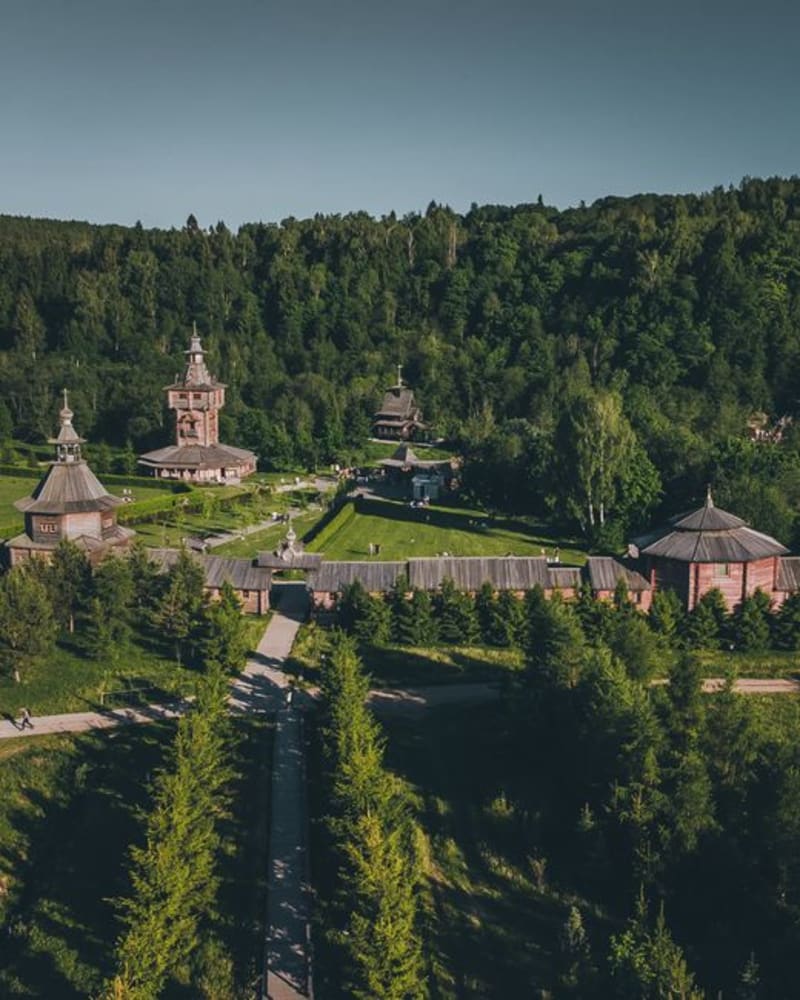 russia
Valaam Island
A monastery archipelago in Lake Ladoga where bells carry over the water and roughly 200 monks still keep the hours the old way.
Explore russia
Veliky Novgorod
Russia's oldest city, where medieval frescoes still breathe inside churches that were ancient when Moscow was a forest clearing.
Explore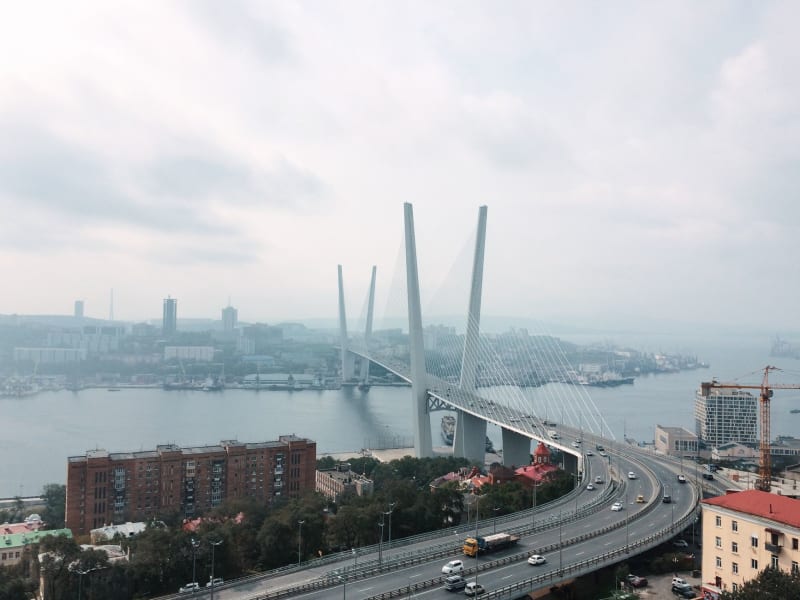 russia
Vladivostok
The Pacific end of everything — where the Trans-Siberian terminates and Russia runs out of continent and stares at Japan.
Explore