Kizhi Island
"I counted the domes twice because I refused to believe a carpenter had stacked twenty-two of them with an axe and no nails."
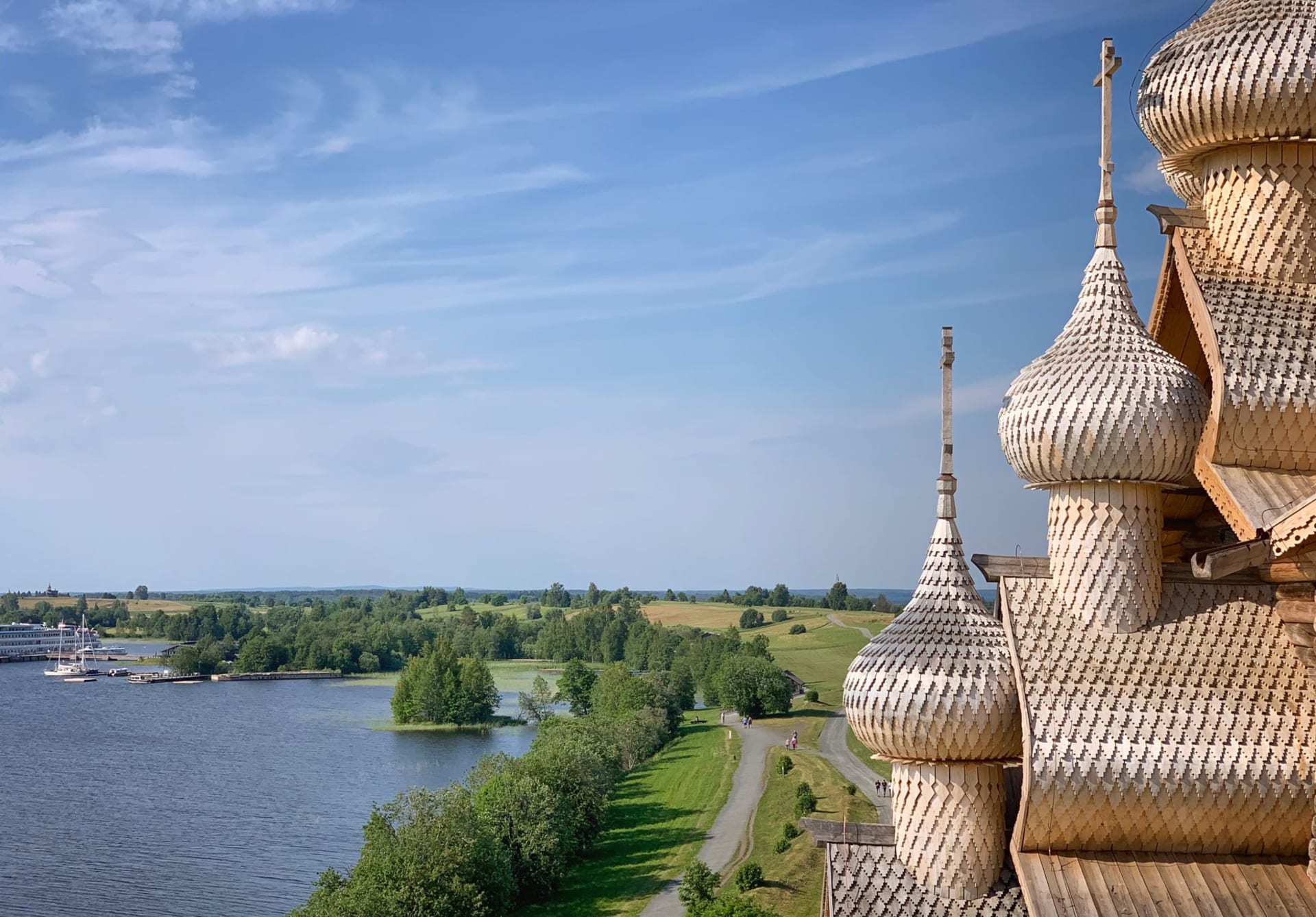
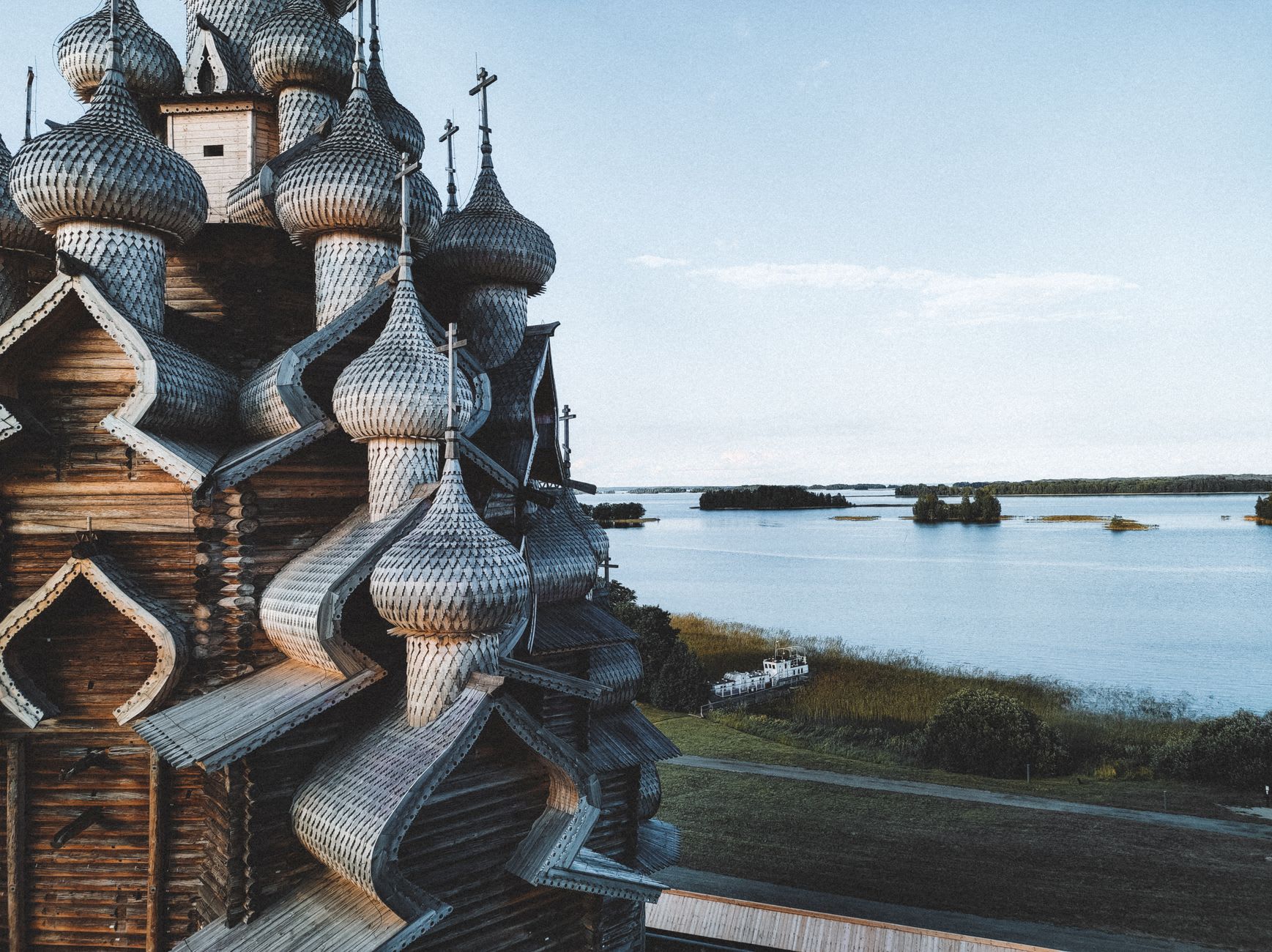
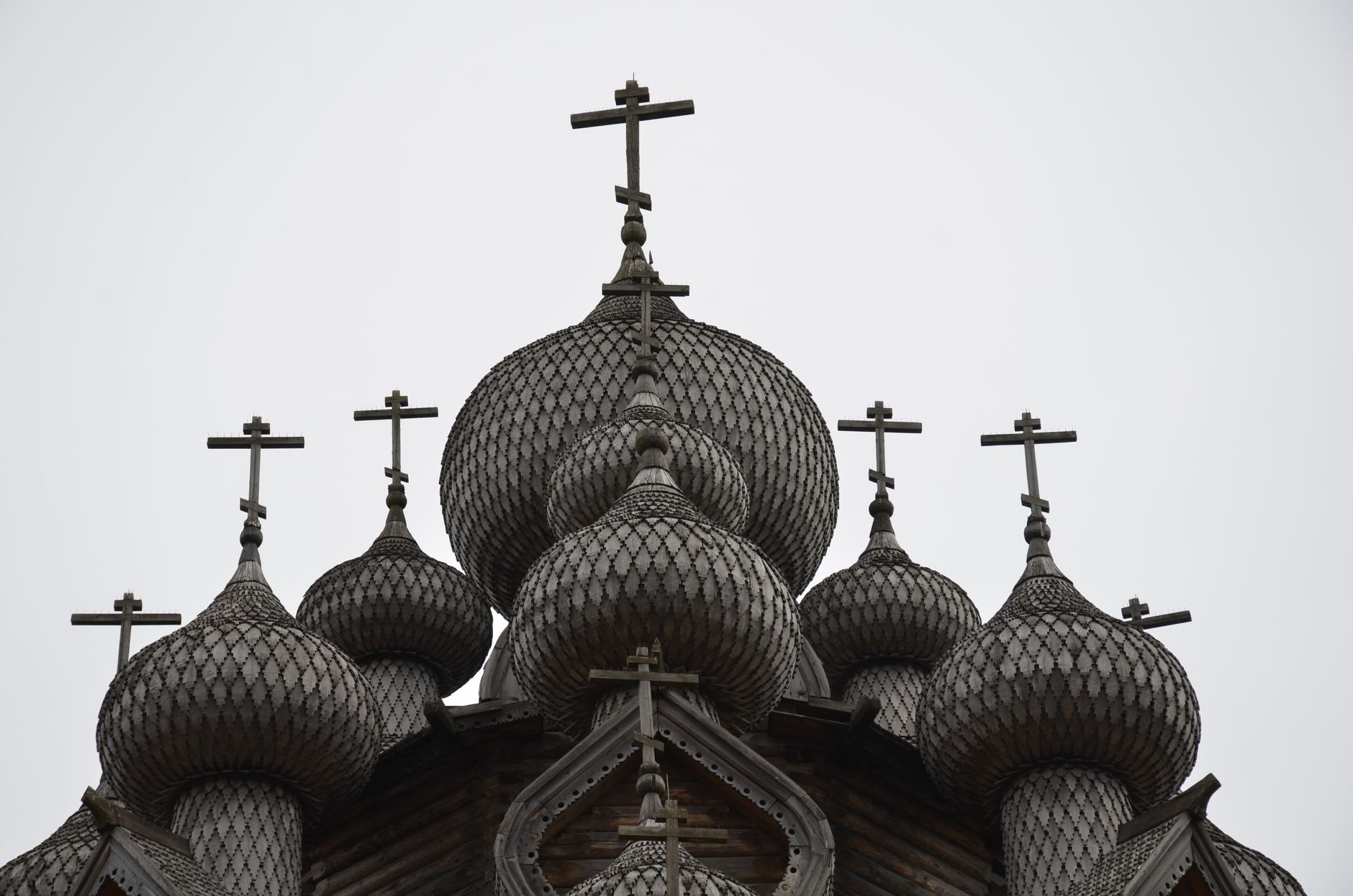
The hydrofoil out of Petrozavodsk skims across Lake Onega for an hour and a quarter, throwing spray against the windows, and just when the lake has begun to feel less like a lake and more like a grey inland sea, a thin green island appears with something improbable standing on it. From a distance the Church of the Transfiguration looks like a pinecone made of silver, or a chandelier someone forgot to take indoors. Up close it is stranger still: twenty-two domes of aspen shingle, stacked in tiers, built in 1714 by carpenters who, the legend insists, used a single axe and not one nail. Lia said it looked like it was about to take off. I didn’t disagree.
A church built like a riddle
Kizhi is the open-air museum of wooden architecture for the whole Russian north, and the Transfiguration church is its impossible centrepiece. The thing that undoes you is the wood itself — aspen shingles that turn silver with age and glow almost white when the sun is low, so the domes seem lit from inside. There is no heating in the building; it was the summer church, used only in the warm months, while the smaller Church of the Intercession beside it handled the long Karelian winters. Standing between the two, with the slatted bell tower completing the triangle, you understand that these carpenters weren’t decorating. They were solving a problem — how to throw rain off a roof in a place where it rains for half the year — and the beauty is simply what good solutions look like when you let them accumulate for three centuries.
The island beyond the postcard
Most people photograph the churches and reboard the hydrofoil within ninety minutes, which is a mistake. Kizhi is a long, narrow island, and the further you walk from the landing the more it becomes a real place rather than a backdrop. There are relocated peasant houses with their barns built into the same roofline as the living quarters — animals downstairs, family up, all under one enormous timber lid — and inside them grandmothers in headscarves demonstrate weaving and birch-bark work without the faintest whiff of performance. I watched an old man re-shingling a roof the medieval way, splitting aspen with a froe, and he let me try; my shingle was an embarrassment and he laughed at it openly, which I respected enormously.
Out past the houses the island narrows to meadow and reed, dotted with tiny chapels you reach along a single mown path. The Chapel of the Archangel Michael sits alone in the grass, and if you wait for the day-trippers to thin out you can have it entirely to yourself, with nothing but lake-light and the smell of warm wood and the occasional clonk of a sheep bell from somewhere you can’t see.
When to go
June through August, without much room for debate — the hydrofoils run only in the ice-free months, the white nights of midsummer keep the domes lit until absurd hours, and the meadows are at their greenest. Book the earliest boat out of Petrozavodsk and the latest back; the hours when the island is nearly empty are the ones worth crossing a sea for.