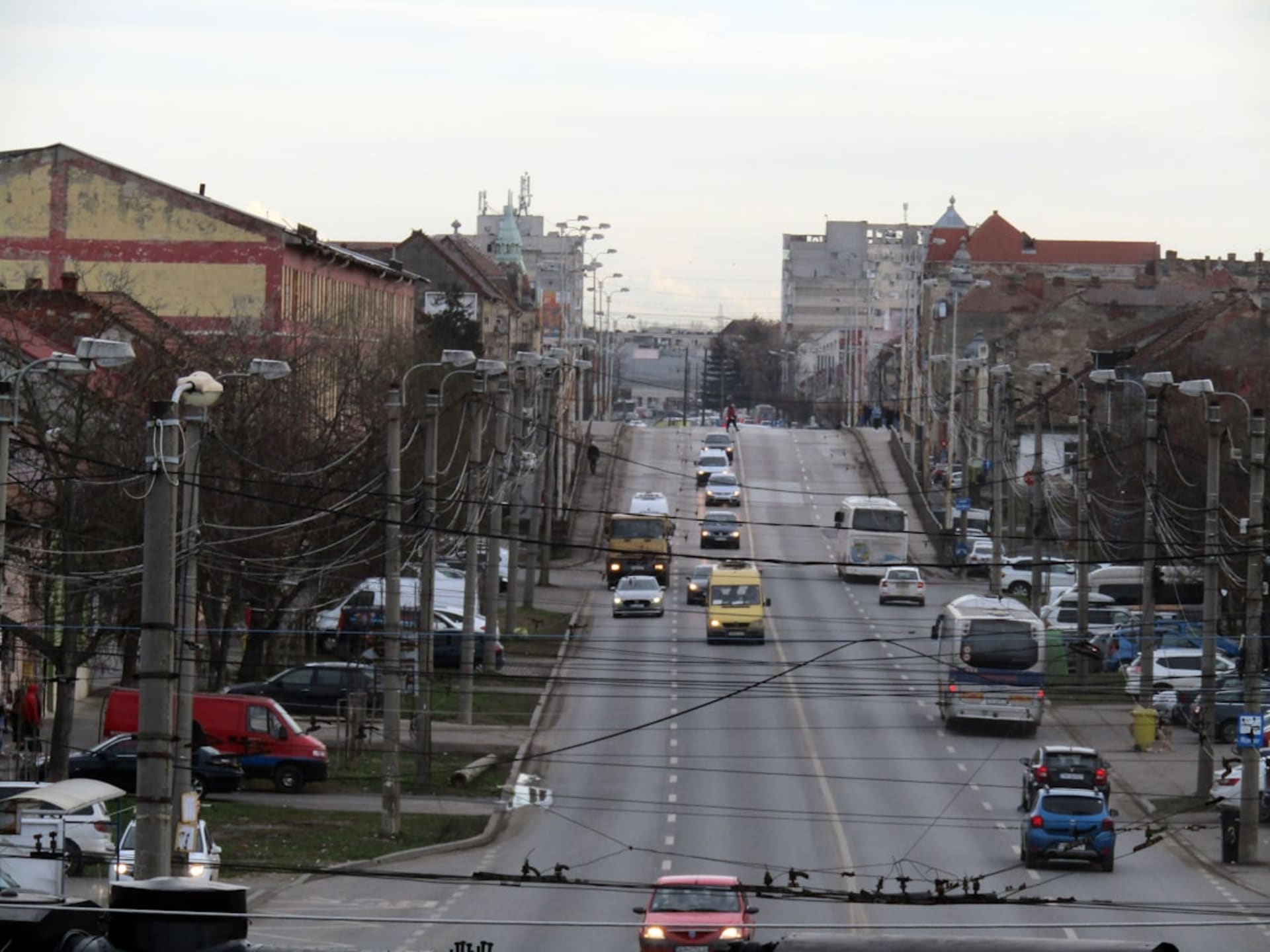
Timișoara
"Four languages in one block, three churches in one square — Timișoara doesn't feel like Romania so much as the place where Romania meets everything west of it."
Timișoara sits in the Banat, a region of southwestern Romania that was administered from Vienna for two centuries and has never fully let go of the memory. The streets have Habsburg bones — wide boulevards, municipal buildings with Italianate facades, squares designed with a civic confidence that feels slightly unusual in this corner of Europe. Add a Romanian majority, a large Hungarian minority, a German presence that shrunk dramatically after 1989, a Serbian community near the border, and a university that keeps the whole mix young and restless, and you have a city that is harder to categorize than most.
The Three Squares
Timișoara is organized around three main squares in the old center, each one with its own character and its own church. Piața Unirii has the Catholic Cathedral and the Serbian Orthodox Cathedral facing each other across a Baroque garden — a spatial fact that tells you something about how this city has historically managed difference. Piața Libertății is quieter, lined with pale yellow buildings that look freshly painted in the morning light. Piața Victoriei runs long and narrow toward the Orthodox Metropolitan Cathedral, which glows amber at night and anchors the city’s skyline. These three squares are connected and walkable in under twenty minutes, but I found myself circling them for days.
The Revolution and What the City Does With It
On December 16, 1989, protests began in Timișoara against the forced relocation of a Hungarian-Romanian pastor named László Tőkés. The protests grew. Securitate forces fired on the crowd. Within days the demonstrations had spread to Bucharest, and within weeks Ceaușescu was dead. Timișoara was where the crack in the wall first appeared.
The city doesn’t make this into spectacle. There’s a modest memorial on the steps of the Orthodox Cathedral, candles and photographs mounted on the wall. The Museum of the Revolution is small and documentary in tone. What strikes me is the restraint — the city seems to feel that what happened there is serious enough not to require amplification.
Eating and the Street That Feeds You
The restaurant scene along Strada Alba Iulia and around Piața Victoriei runs from solid Romanian comfort food to places that would hold their own in most Western European cities. I ate ciorbă de fasole — a smoky, slightly sour bean soup with pork — at a place where the lunch crowd was three-quarters local office workers, which is always a reliable sign. The beer is Timișoreana, brewed here since the 1700s, and it tastes better here than it does anywhere else, which may be proximity or may be loyalty.
The city has a notable café culture too. The institutions along Bulevardul Revoluției from 1989 have the unhurried quality of places where people meet to talk for two hours and nobody expects you to order a second coffee.
The Parks and the Bega Canal
Timișoara sits on the Bega Canal, which runs through the city with a gentleness that makes it feel more like a park feature than a working waterway. The walking paths along the banks are where the city exercises and relaxes — joggers and strollers and couples on bicycles, the light on the water in the early evening turning the whole thing a quieter shade of gold. I walked the canal path on my last afternoon and understood what the city is when it isn’t performing for visitors: mostly peaceful, mostly moderate, quietly satisfied with itself.
When to go: April through June is ideal — the lindens along the boulevards are in bloom, the café terraces open, and the city is at its most livable. September and October are excellent for the same reasons and with even thinner tourist crowds. The city’s European Capital of Culture programming (officially 2023, but events continue into subsequent years) adds a particular richness to the cultural calendar — check what’s on before you book. Avoid August, when much of the local population leaves for the coast and the city slows to a summer murmur.