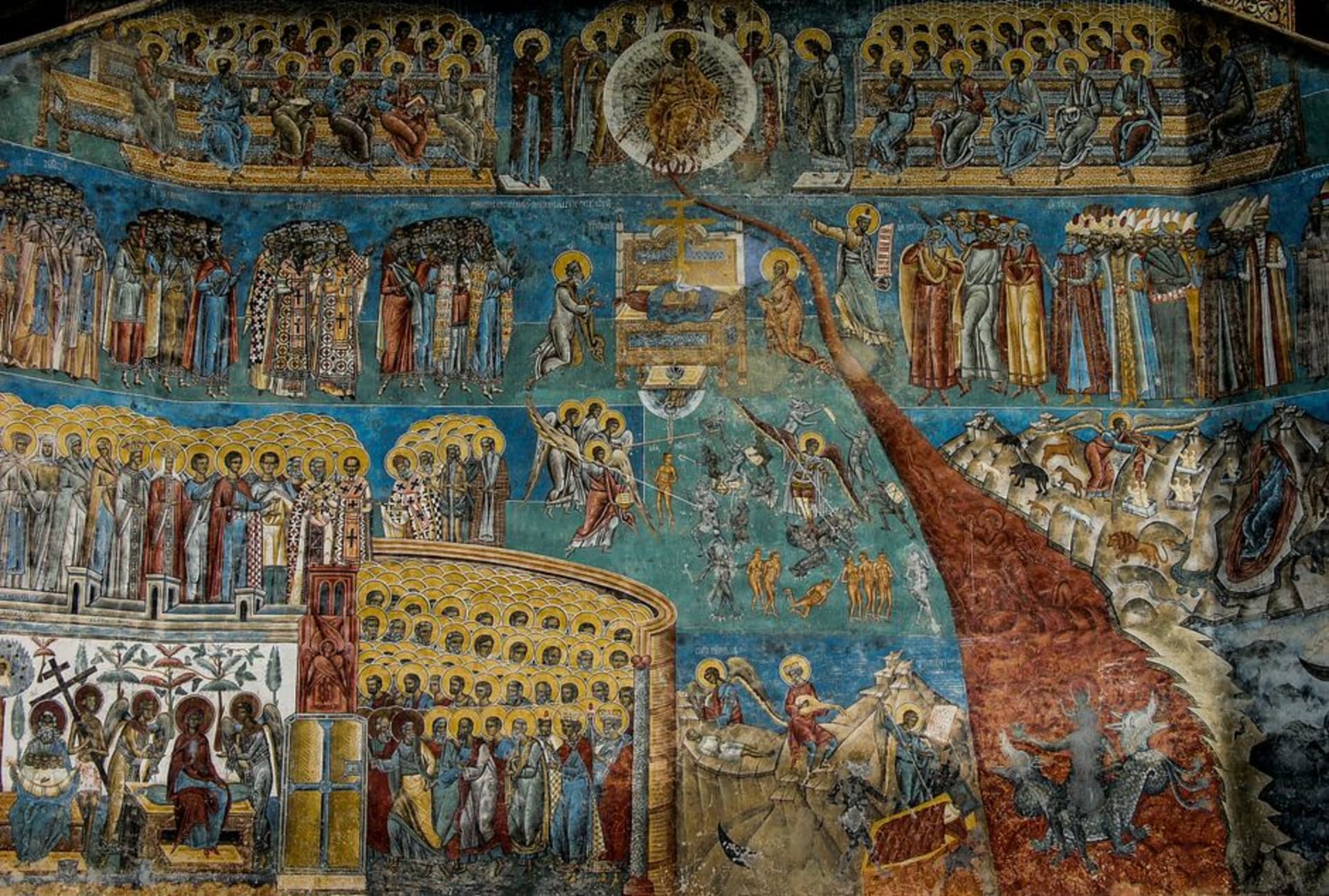
Fresco-covered Moldavian monasteries hidden in Bucovina's hills, where five centuries of biblical scenes still glow in improbable blue and red.
I’ll admit I had no idea what I was driving toward. Lia had read about Bucovina in some obscure forum thread about “underrated Romania,” and all I knew was we were heading into Suceava County to look at some old churches. Then we parked outside Voronet and I actually stopped walking for a second, because the entire exterior of the building was covered in painted scenes, still vivid after more than five hundred years of rain and snow. Voronet was founded in 1488, and the blue they used on its walls is so specific it has its own name — Voronet blue — a deep, almost electric pigment that no one has ever fully explained the recipe for. Lia kept touching my arm and pointing at different panels like she’d forgotten I was standing right next to her.
What got me wasn’t just the color, it was the sheer density of storytelling. These aren’t decorative borders, they’re entire biblical narratives wrapped around the building like a comic strip for people who couldn’t read — the Last Judgment stretching across one whole facade, souls being weighed, rivers of fire, angels rolling up the sky like a scroll. At Sucevita, we found a full depiction of the Siege of Constantinople painted onto stone, commissioned under rulers like Stephen the Great and Petru Rares who apparently understood that faith needed to be visible from outside the church, not just inside it.
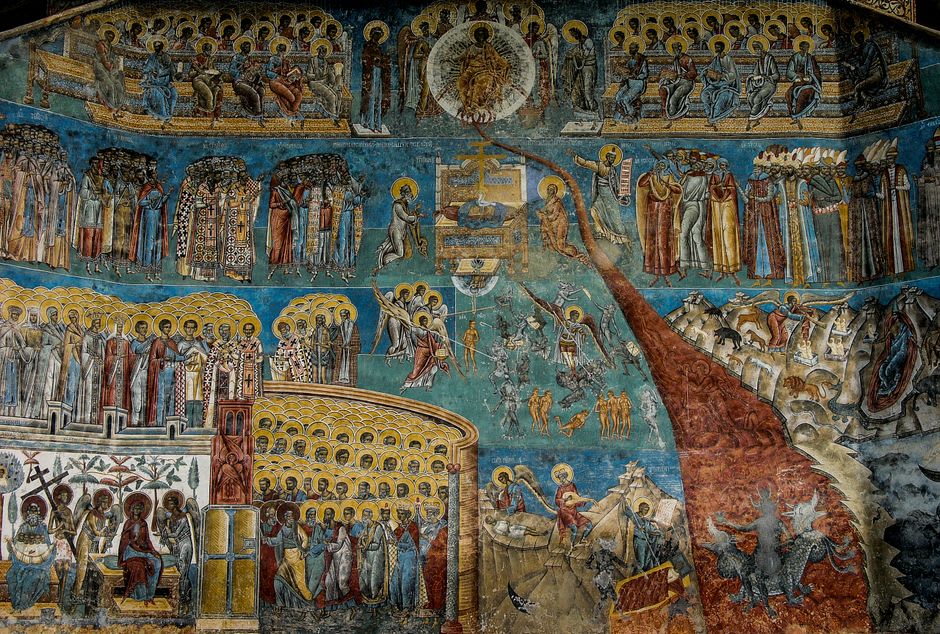
We spent four days working our way between Voronet, Humor, and Moldovita, and each one had its own personality. Moldovita felt warmer somehow, more ochre and red than Voronet’s cool blue, and an elderly nun there sold us a jar of quince jam through a little window without saying a word, just a small smile. Humor was quieter, fewer tour buses, and I remember sitting on a bench in the courtyard eating bread we’d bought that morning in Gura Humorului, watching the light shift across the painted saints as clouds moved overhead. It’s strange how a UNESCO World Heritage Site — these four monasteries were jointly inscribed in 1993 — can still feel like a personal discovery when you’re the only two people in the courtyard.
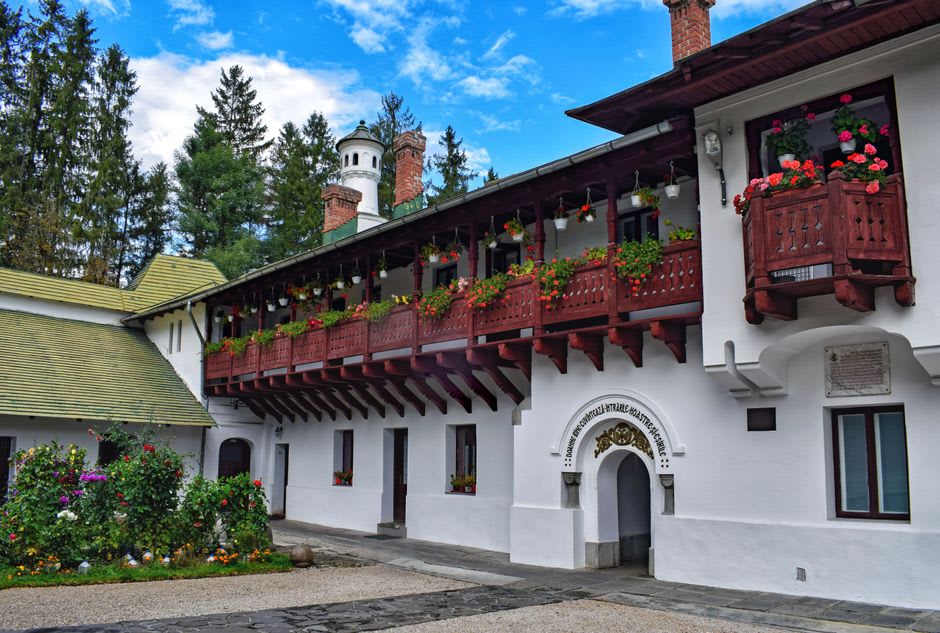
By the time we got to Sucevita, the light was doing something incredible, low and golden, catching every fold of paint on the western wall. I kept thinking about how these frescoes were never meant to survive this long exposed to weather, and yet here we were, two travelers from very different corners of the world, staring at faces painted before either of our countries existed in their current form.
When to go: We went in early June and the light on the frescoes in late afternoon was worth planning the whole day around — aim for May through September, when the roads between monasteries are easy and the sun does the paintings justice.