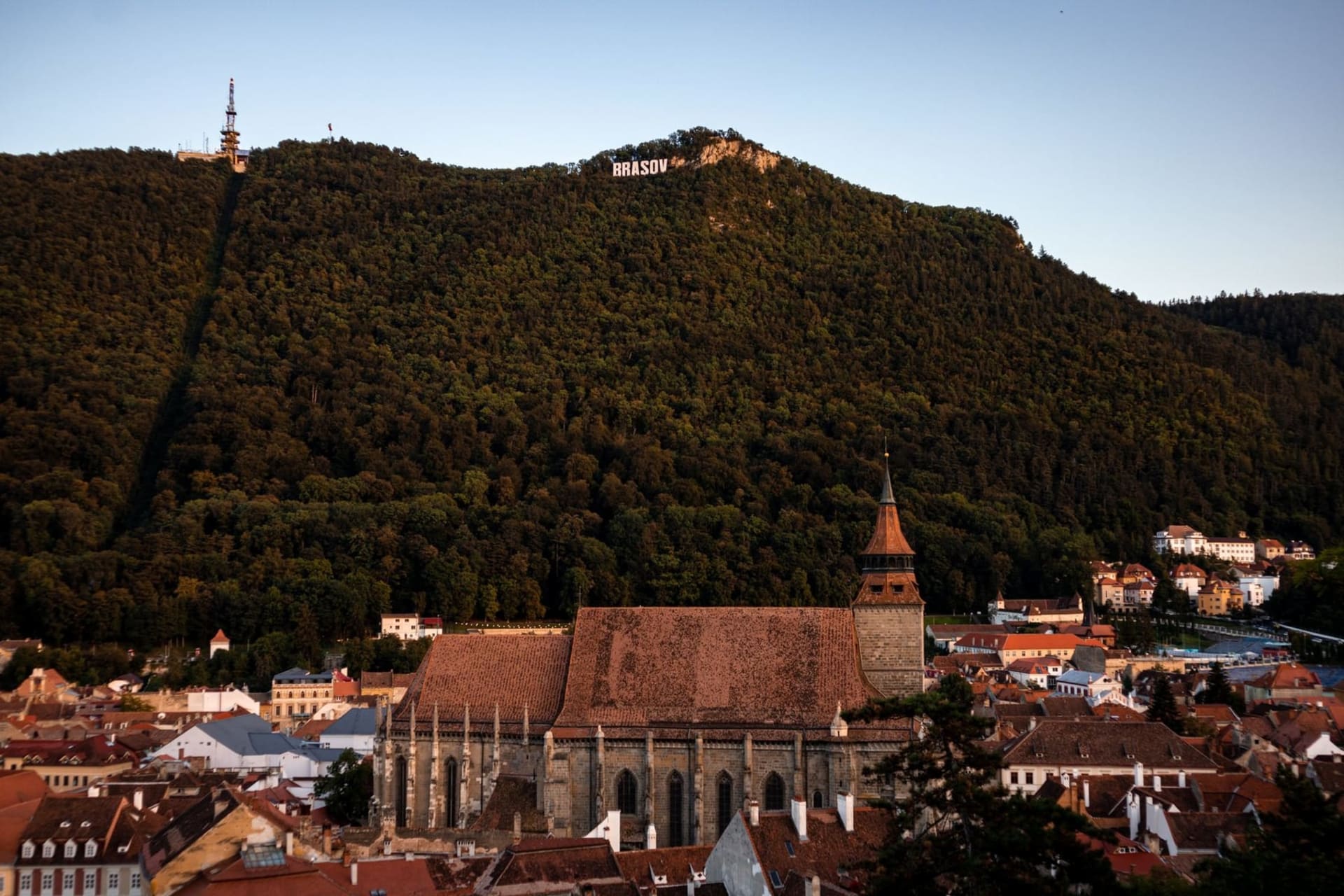
A Gothic Saxon city at the foot of the Carpathians where medieval walls, a Black Church, and Hollywood-worthy mountain scenery converge.
I arrived in Brasov expecting atmosphere and received something more disorienting: a city that felt genuinely lived in. Not performed for tourists, not suspended in amber. The old town breathes. Vendors on Strada Republicii sell covrigi — the local salted pretzels — from wooden carts, and the smell of warm dough and caraway cuts through the cold mountain air like a clarification. The Carpathians press right up to the rooftops here. That proximity changes everything about the quality of light, which arrives late and leaves early, spending its brief time doing dramatic things to the church facades.
The Black Church and the Weight of History
The Schwarze Kirche — the Black Church — earns its name. In 1689, a fire scorched its walls so thoroughly that the Gothic stone turned the color of coal, and nobody thought to scrub it back to pale. Standing inside, I felt the scale of the place before I understood it. It’s the largest Gothic church between Vienna and Istanbul, and the interior holds one of the most significant collections of Anatolian carpets in Europe — donated by Saxon merchants as offerings over four centuries. That unexpected combination, German Gothic architecture housing Ottoman textiles in a Romanian mountain city, stopped me mid-step. Lia pointed to a 16th-century carpet in the chancel and said, quietly, “nobody tells you about this part.” She was right.
Above the City: Tampa Mountain and the White Towers
A cable car climbs Tampa Mountain in minutes, but I preferred the trail that winds up through beech forest from the Rope Street — Strada Sfori — one of the narrowest streets in Europe, barely wide enough for two people to pass sideways. From the summit, Brasov’s red-tile geometry resolves itself below: the oval of Piata Sfatului at the center, the Black Church anchoring the south, the medieval bastions — Weavers’ Bastion, Rope Makers’ Bastion — studding the old walls like punctuation. The Hollywood-style “Brasov” sign on the hillside made me laugh out loud, an absurd piece of civic pride that somehow works.
Down in the square, I ordered a bowl of ciorba de fasole — a smoky bean soup thickened with sour cream — at a place with no English menu. The waiter brought bread without being asked. That felt like the summary of the city: a little rough around the edges, entirely without pretension, and more generous than it needed to be.
When to go: Late September through October brings golden beech forests on the Carpathian slopes and far fewer crowds than summer; February rewards skiers and anyone who wants the medieval square almost entirely to themselves.