Vale dos Vinhedos
"Lia said the hills looked like Tuscany that got homesick for Italy and moved to Brazil instead."
A valley of stone farmhouses and family wineries where Italian immigrants planted Brazil's most storied wine country.
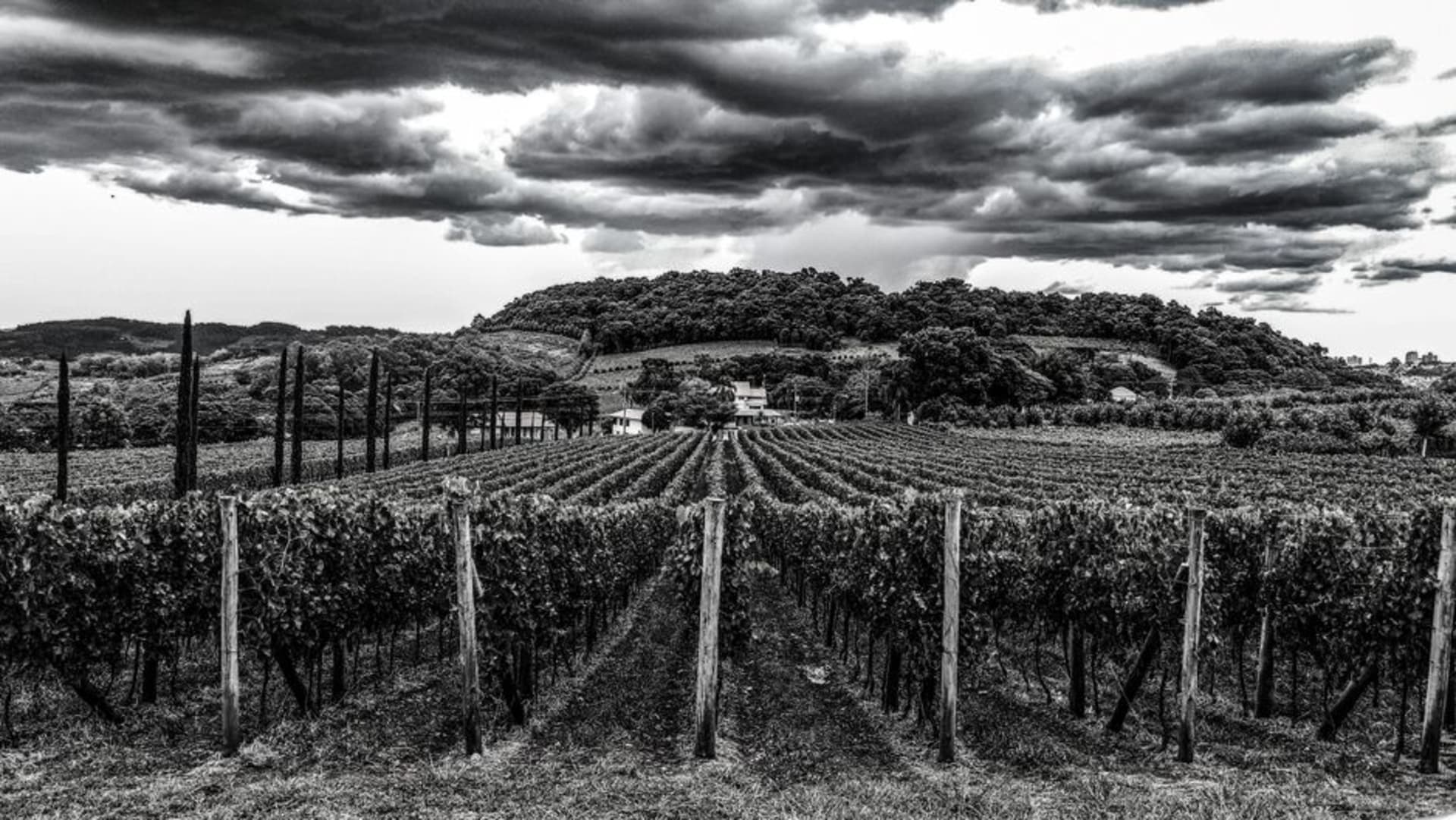
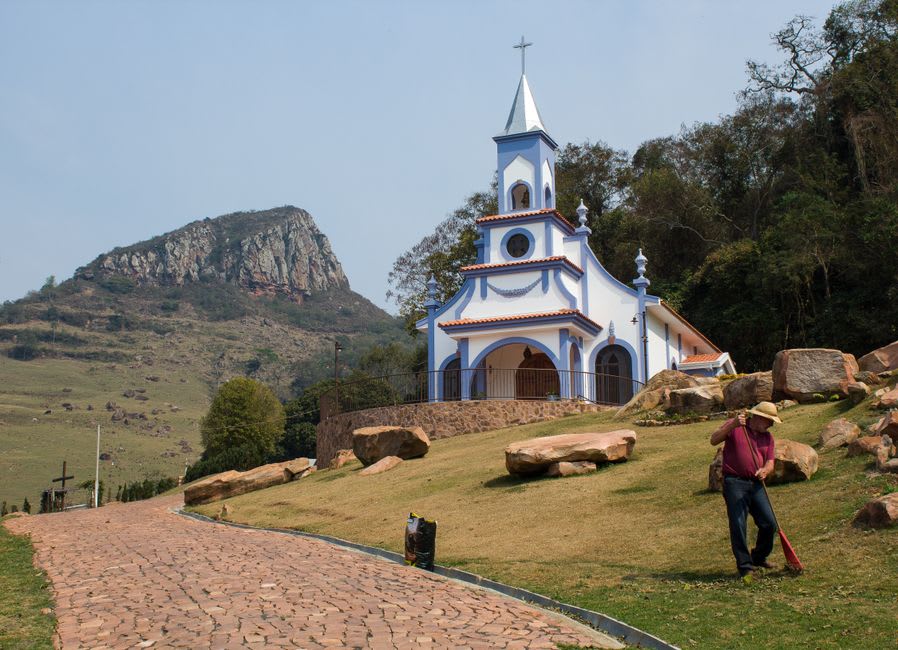
I’ll admit I had no idea Brazil made serious wine until a friend in Porto Alegre practically ordered us into a rental car and pointed us toward Bento Goncalves. Three hours later we were driving the Estrada do Vinho, RS-444 unspooling between hills combed with vine rows, and I kept thinking this looked nothing like the Brazil I’d pictured. No beaches, no jungle — just this quiet, orderly greenness, stone farmhouses catching the light, and the occasional small chapel with a bell tower poking up from a bend in the road. Lia had her window down the whole way, filming nothing in particular, just the light.
We learned later that Italian immigrants started settling this valley in 1875, and you can feel it in the architecture before anyone explains it to you — the wood-and-stone houses, the terracotta roofs, the whole layout of the place feels transplanted rather than native. In 2002 the region became the first in Brazil to earn a Denominacao de Origem, which sounds bureaucratic until you’re standing in a family winery’s cellar in Monte Belo do Sul and the owner explains, half in Portuguese and half in the Italian dialect his grandfather spoke, exactly which slope his sparkling wine grapes come from. We tasted five wines that afternoon standing on a wooden deck overlooking the valley, and I don’t think I said a full sentence for the first ten minutes.
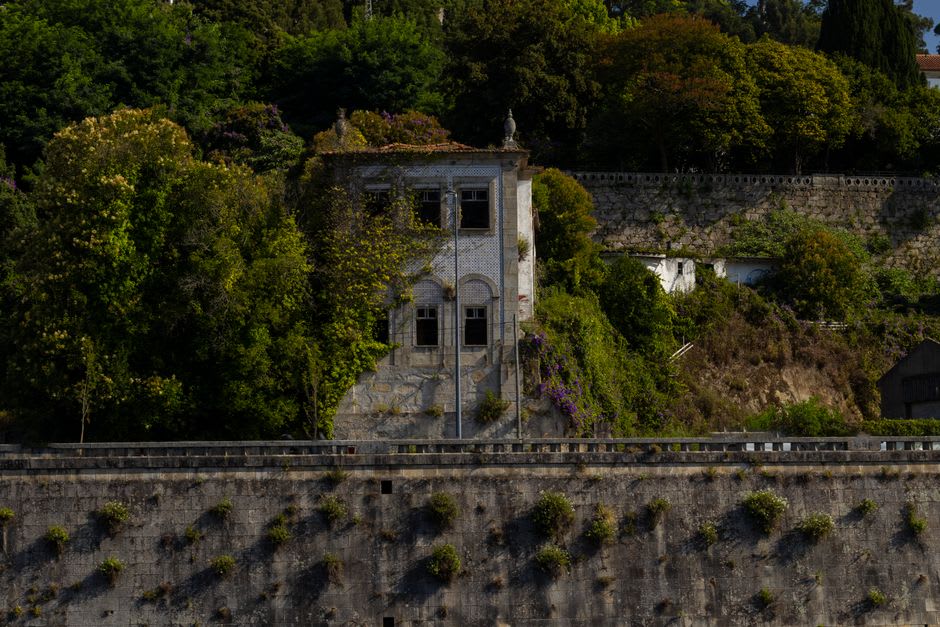
We based ourselves in Bento Goncalves for three nights, which turned out to be exactly right — long enough to work our way along the wine road at an unhurried pace, stopping at whichever winery had a sign that caught our eye rather than following some checklist. One morning we ended up at a tiny chapel built by early settlers, just a handful of pews and a view down into the valley, completely empty except for us and a dog that had wandered in ahead of us and refused to leave. Lia lit a candle. I mostly just stood there looking at the vines terracing down the slope, thinking about how many generations of the same families have been tending this same dirt.
What stuck with me most, honestly, wasn’t even the wine — it was how unhurried the whole valley feels. Every winery we visited was still run by the family that built it, and every owner wanted to tell us the whole story before pouring a single glass. By the time we drove back out along RS-444 at sunset, the hills gone gold and the vine rows throwing long shadows, I understood why my friend had been so insistent.
When to go: I’d time a trip to the grape harvest in February or March if you want to see the valley working at full tilt, though we went in June for the wine festival season and loved having the wineries a little quieter and the air properly cool for once.