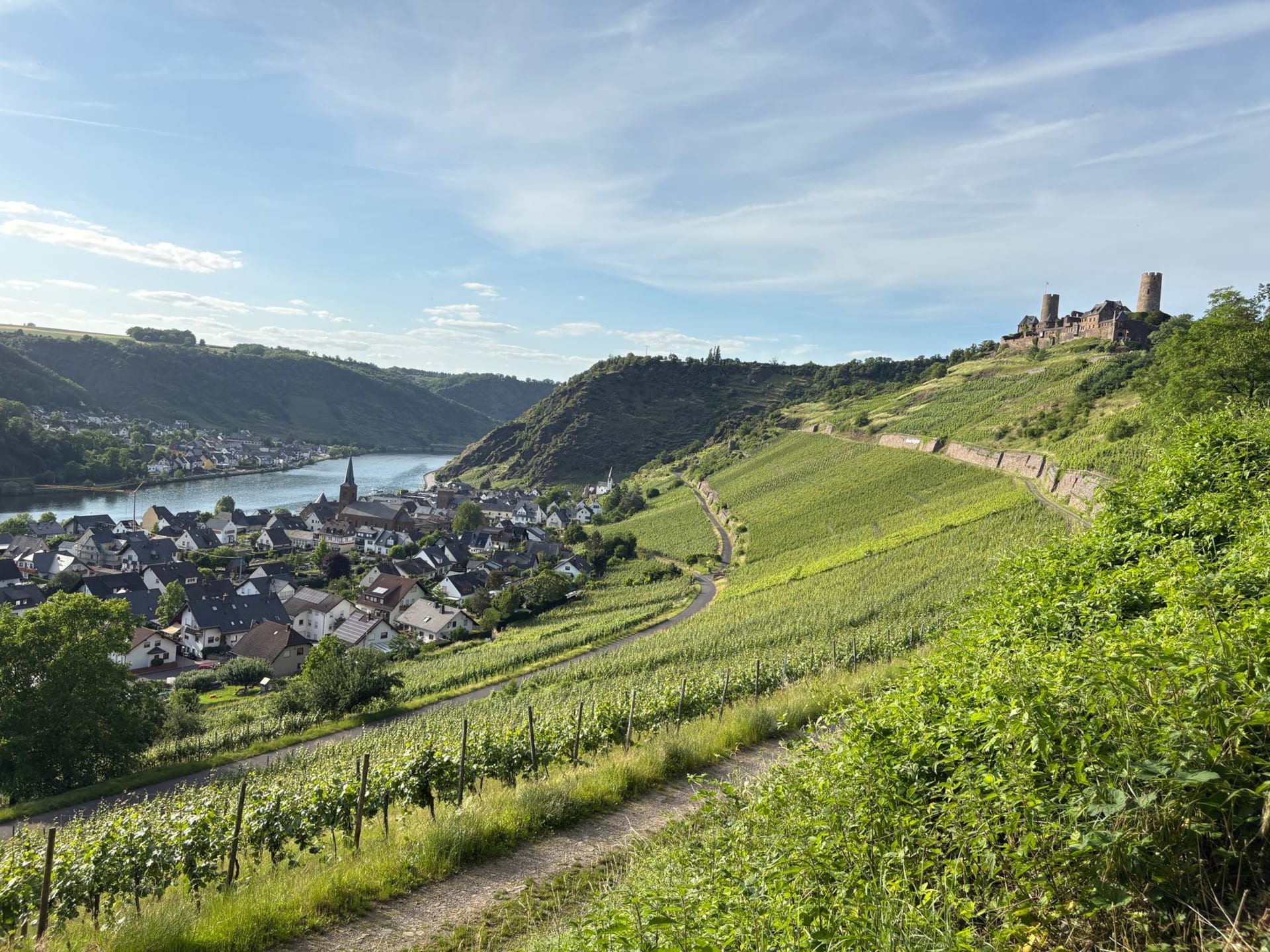
Rüdesheim am Rhein
"Rüdesheim is the Rhine gorge's front door — noisy, slightly exhausting, and entirely necessary."
The Drosselgasse in Rüdesheim is exactly what it looks like: a narrow lane of wine taverns playing accordion music for bus tourists who have been deposited here between the boat and the hotel. I walked its length at two in the afternoon when the volume was already considerable, ate a Flammkuchen at a table just inside the door of the least animated-looking Weinstube, and drank a glass of Riesling Spätlese that cost four euros and tasted like apricot dissolved in slate. The Drosselgasse is a performance, yes. But the wine is real, and that matters more than the performance.
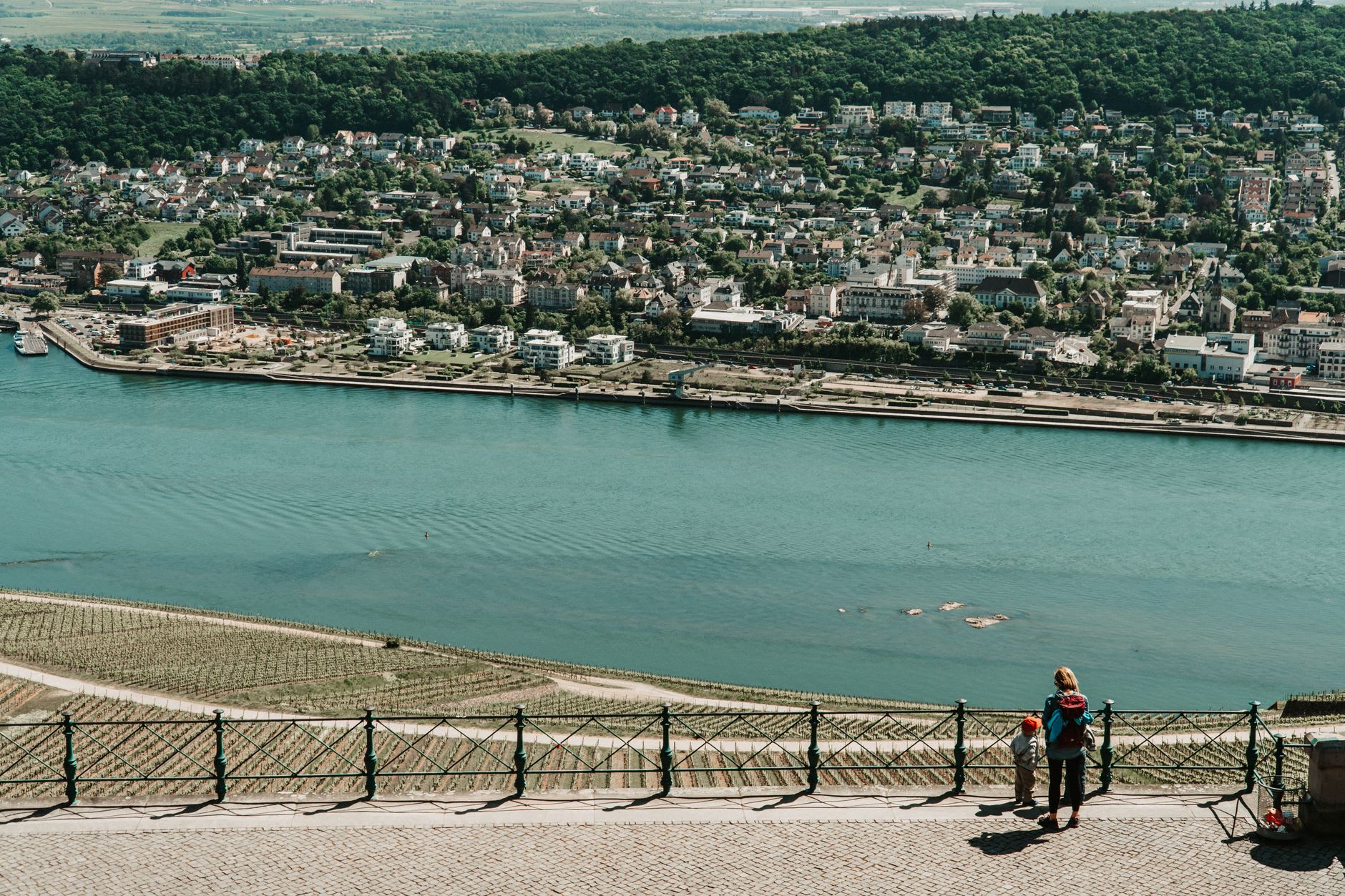
Rüdesheim sits at the southern entrance to the UNESCO Middle Rhine gorge, at the precise point where the river cuts through the Rhenish Massif and the landscape shifts from broad floodplain to dramatic narrow valley. The vineyards above the town — particularly the Rüdesheimer Berg, a steep south-facing escarpment — are among the most prestigious in Germany. The Rheingau wines produced on these slopes are rounder and richer than the steely Mittelrhein Rieslings further north, reflecting the warmer microclimate and the loess-over-slate soils. At a wine estate above the Drosselgasse, I tasted a Rüdesheimer Berg Rottland Auslese from 2019: concentrated sweetness that reminded me of fresh grapefruit peel dipped in honey, with an underlying mineral note that kept it from being cloying. I bought two bottles and carried them home carefully, the way you carry things you don’t want to regret losing.
The gondola cable car — the Seilbahn — lifts you above the vineyards to the Niederwald Monument, a 37-meter Germania figure installed in 1883 to celebrate German unification, arms raised, holding a laurel wreath. The monument is enormous and kitsch and somehow does not diminish the view it presides over: the gorge opening northward in a V, the twin towns of Bingen and Rüdesheim at its mouth, barge traffic threading through toward Koblenz. The Rhine does its most theatrical work from up here.

Below the cable car, back in town, the Siegfried’s Mechanisches Musikkabinett — a collection of automated musical instruments in a timber-framed building near the waterfront — is the kind of attraction that sounds ridiculous until you are inside it, listening to a 1920s orchestrion playing Strauss waltzes while the mechanisms click and whir in baroque cabinetry. It is eccentric and genuine and entirely its own thing. I liked it more than I expected, which is the best outcome a curiosity can produce.
When to go: September and October for the Rheingau Wein Wochen — weeks of wine events with producer tastings, harvest festivals, and outdoor Weinstuben spilling onto the riverside promenade. Avoid August peak season unless sharing every cobblestone with a thousand strangers is your idea of travel. The Seilbahn runs April through October.