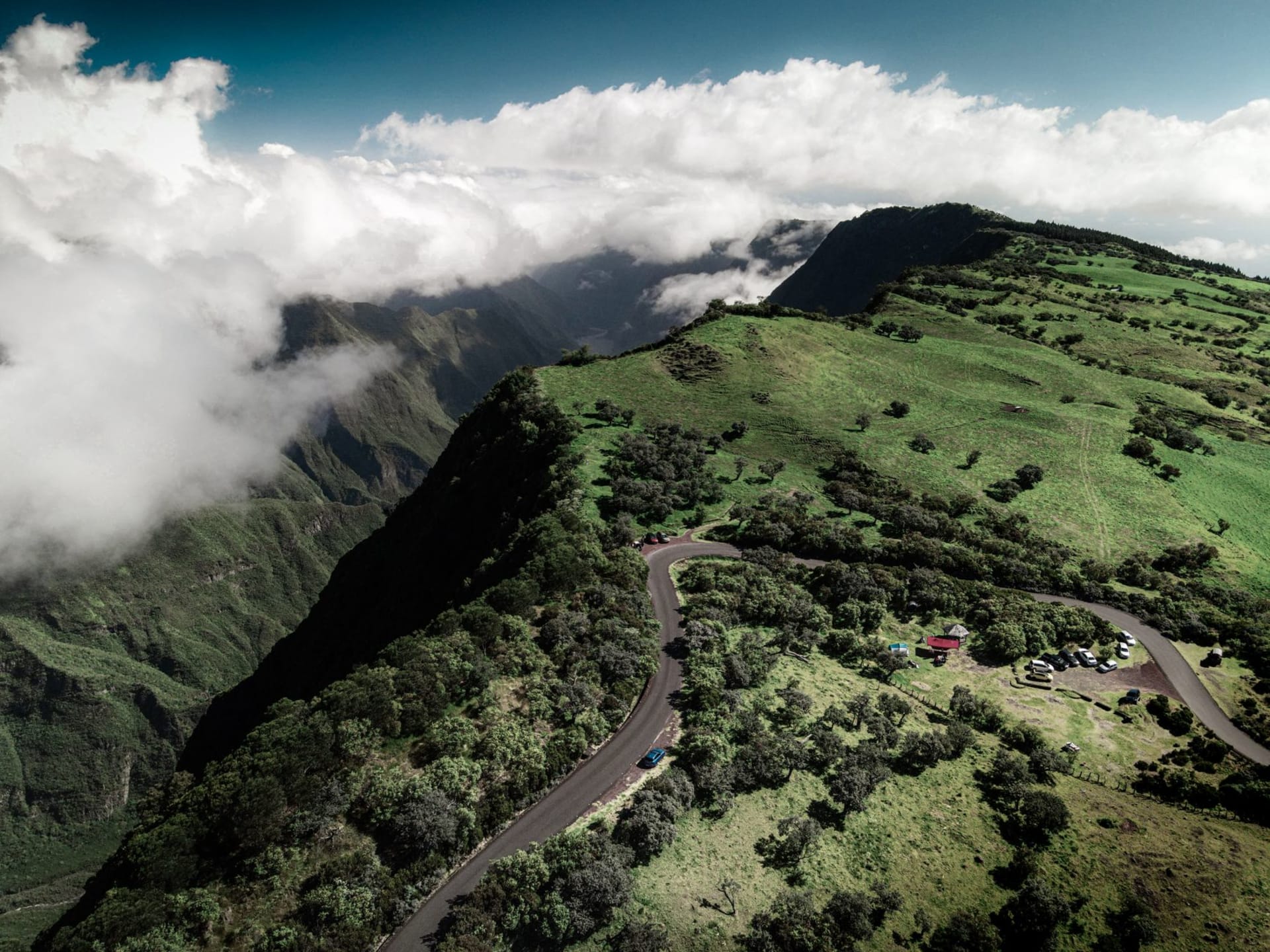
There’s a particular silence that comes with being somewhere genuinely hard to reach. Not the performative quiet of a spa, not the muted hum of a national park — something rawer. I felt it the moment the trail dropped below the rim of the cirque and the last cell signal flickered out somewhere behind me.
Cirque de Mafate is the only inhabited place in France with no road access. That single fact organizes everything about it. The people who live in its scattered îlets — La Nouvelle, Marla, Ilet à Cordes — receive their supplies by helicopter once a week. The rest of the time, they walk. Visitors either do the same or they don’t come at all.
Getting Down Into It
I entered via the Col des Bœufs, which is accessible by car from La Plaine des Cafres. From the parking area, the trail dips almost immediately into a wall of green — cryptomeria pines giving way to tree ferns, the soil darkening as you lose altitude. The path is well-maintained but honest about its demands. Roots everywhere. Wet rock when clouds roll through, which is often. I wore trail shoes and was still slipping on the switchbacks before La Nouvelle came into view, improbably neat on its plateau, gîtes and a church and a small shop selling cold Dodo beer at prices that reflect the helicopter freight.
La Nouvelle is the cirque’s de facto capital — maybe 200 permanent residents, a welcome center, and a boulodrome that sees serious use on Sunday afternoons. I bought a bottle of water and sat on a concrete wall and watched two men argue over a point. Some things transcend geography.
The Îlets and the Trails Between Them
Mafate’s real texture comes from moving between the îlets rather than staying in one. I spent two nights — one at La Nouvelle, one at Marla — and walked a circuit that took in both the high ridges and the valley floor along the Rivière des Galets. The light in the late afternoon does something remarkable to the basalt cliffs: they turn amber, then briefly red, before the clouds return and everything goes gray-green again. I kept stopping when I should have been walking.
Marla sits higher and feels more remote, which is saying something. The gîte there runs on solar power and rainwater. Dinner was curry — rougail saucisse, achards de légumes, rice — served at a communal table with a German couple doing the full GRR2 trail and a Réunionnais family celebrating an anniversary. The wine was cheap and the conversation was good.
What You Carry Out
There’s a cliché about nature resetting you. I’m wary of it, mostly because it gets said in places with spa menus and bamboo towels. Mafate earns the claim differently — through genuine effort and genuine disconnection. After two days, I caught myself listening differently: to wind direction, to the quality of the light, to the sound of water before I could see it.
The walk out is easier psychologically, harder physically. Gaining elevation at the end of a multi-day hike is its own exercise in stubbornness. I made it back to the car park in the early afternoon and sat for a long time before turning the key.
When to go: May through November is the dry season and far more reliable for trail conditions. December through March brings cyclone risk, heavy rain, and trail closures — Mafate floods seriously and gîte availability shrinks. June and July are ideal: cool nights, clear mornings, and the best ridge visibility of the year.