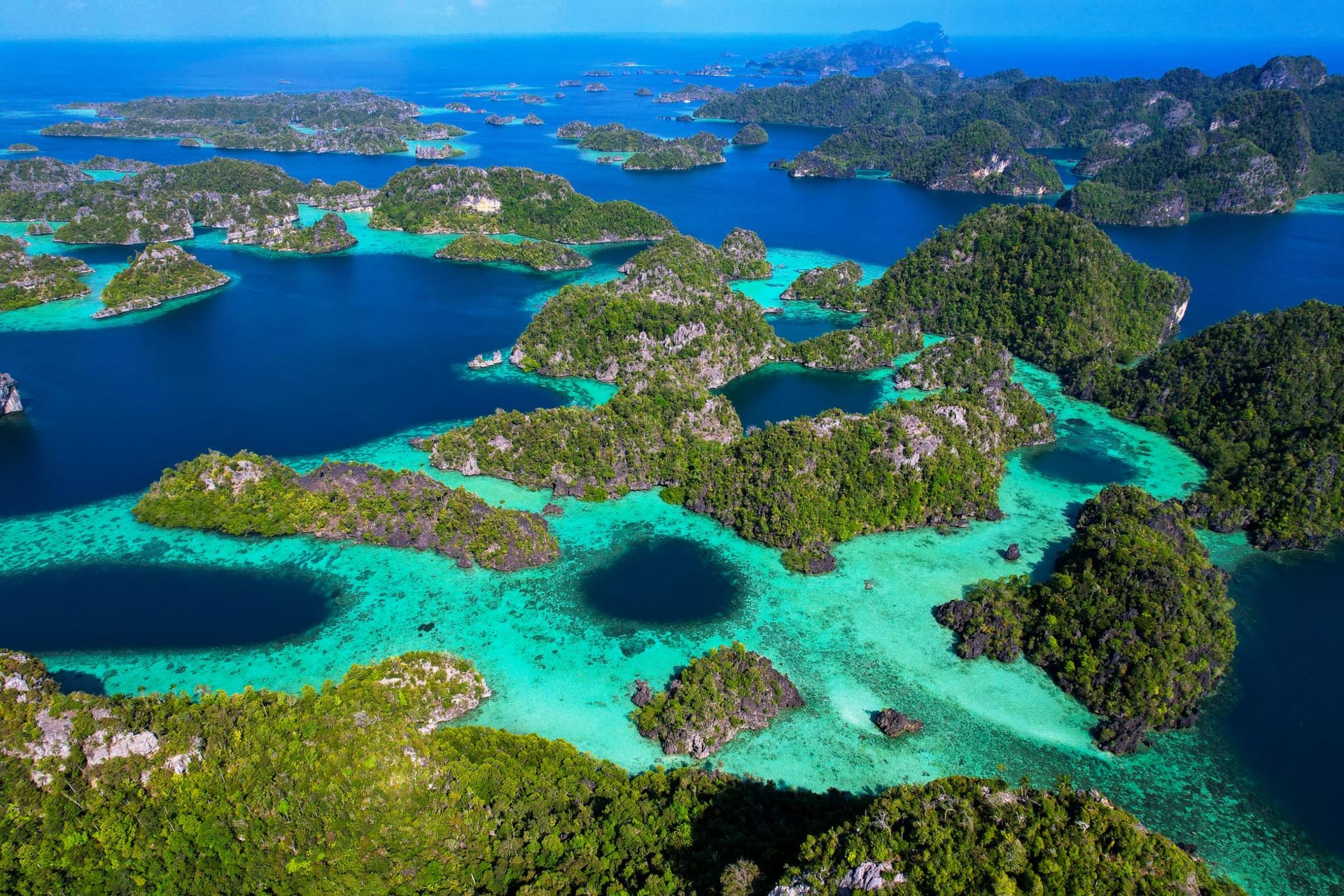
Wayag
"You climb for an hour in the heat and then the world just — stops. Every version of blue you have ever seen is down there."
The speedboat left Waisai at four in the morning. I was wrapped in a sarong and half-asleep in the bow, watching the darkness of the sea and thinking about the hour of sleep I had traded for this, when the sky began to lighten from black to a specific shade of orange that felt almost supernatural over the horizon. By the time we reached the lagoon at Wayag, the light was coming in low and the karst islands — those hundreds of mushroom-shaped limestone towers covered in hanging jungle — were casting reflections that made it impossible to tell where the stone ended and the water began.
Wayag is the image you find when you search for Raja Ampat. It is a cluster of karst formations in the far northwestern corner of the archipelago, a two-to-three hour speedboat journey from Waisai, and it earns every photograph ever taken of it. What the photographs do not capture is the scale — the way the towers seem to multiply as you move between them, revealing new channels and hidden coves with each turn of the boat. We cut the engine and drifted for ten minutes in absolute silence. The only sound was water against limestone and something calling from the canopy high above.

The viewpoint hike takes about forty-five minutes in each direction — a steep scramble up a fixed rope, then a ridge walk through low scrub to a flat rock platform at the summit. I went up in the late morning heat, the kind that presses down with physical weight, stopping every few minutes to look back at the growing spread of water and stone below. At the top, the guide — a young man from a nearby village who had made this climb perhaps a thousand times — sat in the shade and looked at his phone. I stood at the edge and said nothing for a long time. The turquoise water below was threaded through dozens of karst pillars like a maze with no right answer. Boats like white dots. Distance that made everything feel both immense and very fragile.
Coming back down, we snorkeled along the base of the limestone walls. The coral here grows in enormous branching formations that start at about two meters depth — brain corals the size of coffee tables, staghorn colonies branching in every direction. A napoleon wrasse, electric blue and the size of a small child, drifted past without any interest in us whatsoever. The water temperature was exactly right. The kind of warmth that makes you forget you are in a body.

Lunch was rice and canned mackerel eaten on the boat’s bench while the sun climbed higher. Not romantic, not special in any culinary sense — but the kind of meal that situates itself so completely in a place and a day that I will probably remember it longer than most meals in actual restaurants. There was also a bag of Indomie the crew had brought, which they ate with quiet satisfaction.
Wayag is not where you stay. There is no accommodation on the island itself — a small hut for park rangers, nothing else. It is a place you travel to for the day, ideally with an early departure and no plan for the afternoon except drifting back slowly. The speedboat journey is rough in certain seasons, and the entrance fee here is paid separately from the main Raja Ampat levy. All of this is worth it.
When to go: October through April brings the calmest sea conditions for the long speedboat crossing. July and August work but the southeast swell can make the open-water passages genuinely uncomfortable. Dawn arrivals are worth every minute of the pre-dawn departure — the light on the towers at sunrise is something the afternoon cannot replicate.