Undara Volcanic National Park
"A volcano that erupted so quietly it left tunnels instead of a crater."
A savanna landscape in Queensland's outback gulf country hiding one of the longest lava tube systems on earth, carved 190,000 years ago by a single volcano.
Undara sits about a five-hour drive inland from Cairns, well past where the rainforest gives way to dry savanna woodland, termite mounds and cattle stations that measure their size in hundreds of thousands of hectares rather than acres. I arrived expecting outback scenery and got that, but the reason to come is entirely underground: 190,000 years ago, one of Australia’s youngest volcanoes erupted here with such fluid, low-viscosity lava that instead of building a cone, it flowed for over 160 kilometres, the outer surface cooling and crusting over while the molten rock kept moving beneath, eventually draining away and leaving hollow tubes behind. It’s one of the longest lava flows from a single volcanic eruption known anywhere on the planet.
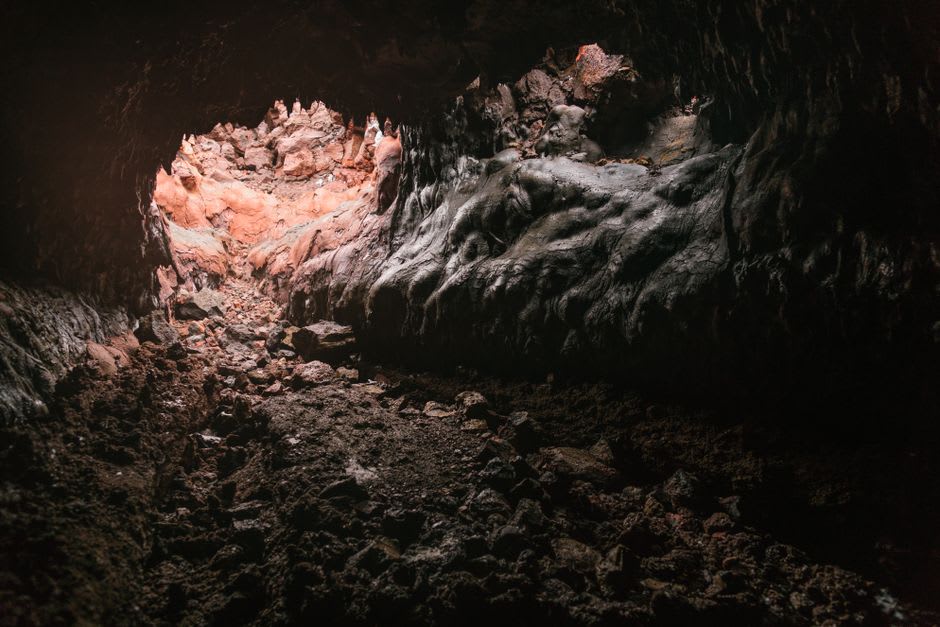
You can’t explore the tubes without a guide, which turned out to be the right call rather than a bureaucratic inconvenience — the entrances are through collapsed sections called “the Archways,” where the tube roof caved in millennia ago and rainforest microclimates now grow inside the sinkholes, fig trees and ferns thriving in the constant humidity thirty metres below the surrounding dry savanna. Walking from blinding outback sunlight into that pocket of green, then further in to where the tube proper begins — smooth basalt walls, a ceiling still marked with the flow lines from the original lava, bats roosting in the darker sections — was one of the stranger transitions I’ve made between two completely different ecosystems within the space of about fifty metres.
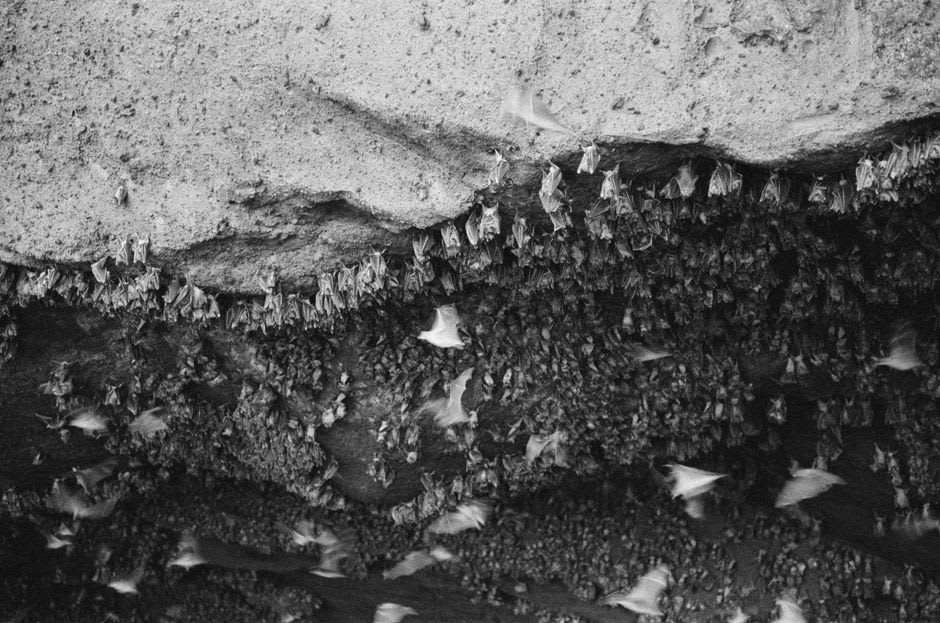
The tubes are also home to thousands of microbats and, near the entrances at dusk, the little red flying foxes and bent-wing bats stream out in numbers dense enough to blur against the darkening sky, hunting insects over the surrounding grassland. I stayed at the lodge on-site, in one of the old railway carriages converted into rooms, and sat out with a beer watching that nightly exodus until it was too dark to make out individual shapes.
The surrounding savanna, part of the vast Undara Volcanic Park estate, is worked cattle country still, and the isolation is real — this is the kind of outback silence that makes you understand instantly why the night sky out here looks the way it does, with no ambient light for a hundred kilometres in any direction.
When to go: May through September, the dry season, is the only realistic window — roads can flood and close in the wet, and the heat becomes oppressive by November. Book the guided cave tours ahead; numbers are limited and it’s the only legal way in.
Keep exploring
More from Queensland
 queensland
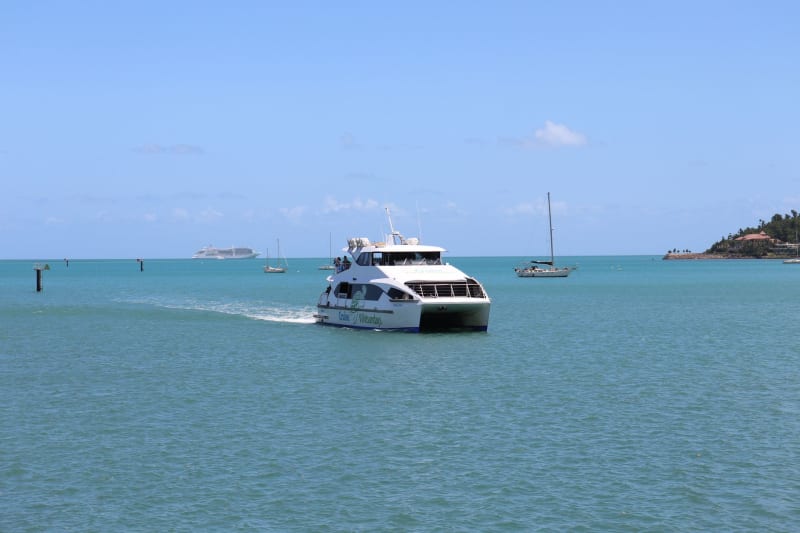
 The Whitsundays
Seventy-four islands scattered across the Coral Sea where the water is so improbably turquoise it looks colour-corrected.
Explore queensland
 Agnes Water and Town of 1770
The southernmost point of the Great Barrier Reef and Queensland's official birthplace, twinned into one unhurried coastal outpost with the best surf north of Noosa.
Explore queensland
 Airlie Beach
The mainland gateway to the Whitsundays — a compact, unpretentious sailing town where backpackers and yacht owners drink at the same bars.
Explore queensland
 Cairns
A city built entirely around the act of departure — for the reef, the rainforest, the Cape — and somehow remarkable for it.
Explore queensland
 Cape York Peninsula
Australia's last genuinely remote frontier — red dirt tracks, crocodile rivers, ancient rock art, and a tip-of-the-continent ending that earns every kilometre of dust.
Explore queensland
 Carnarvon Gorge
A sandstone canyon deep in Queensland's central highlands, cut by a permanent creek and lined with Aboriginal rock art thousands of years old.
Explore