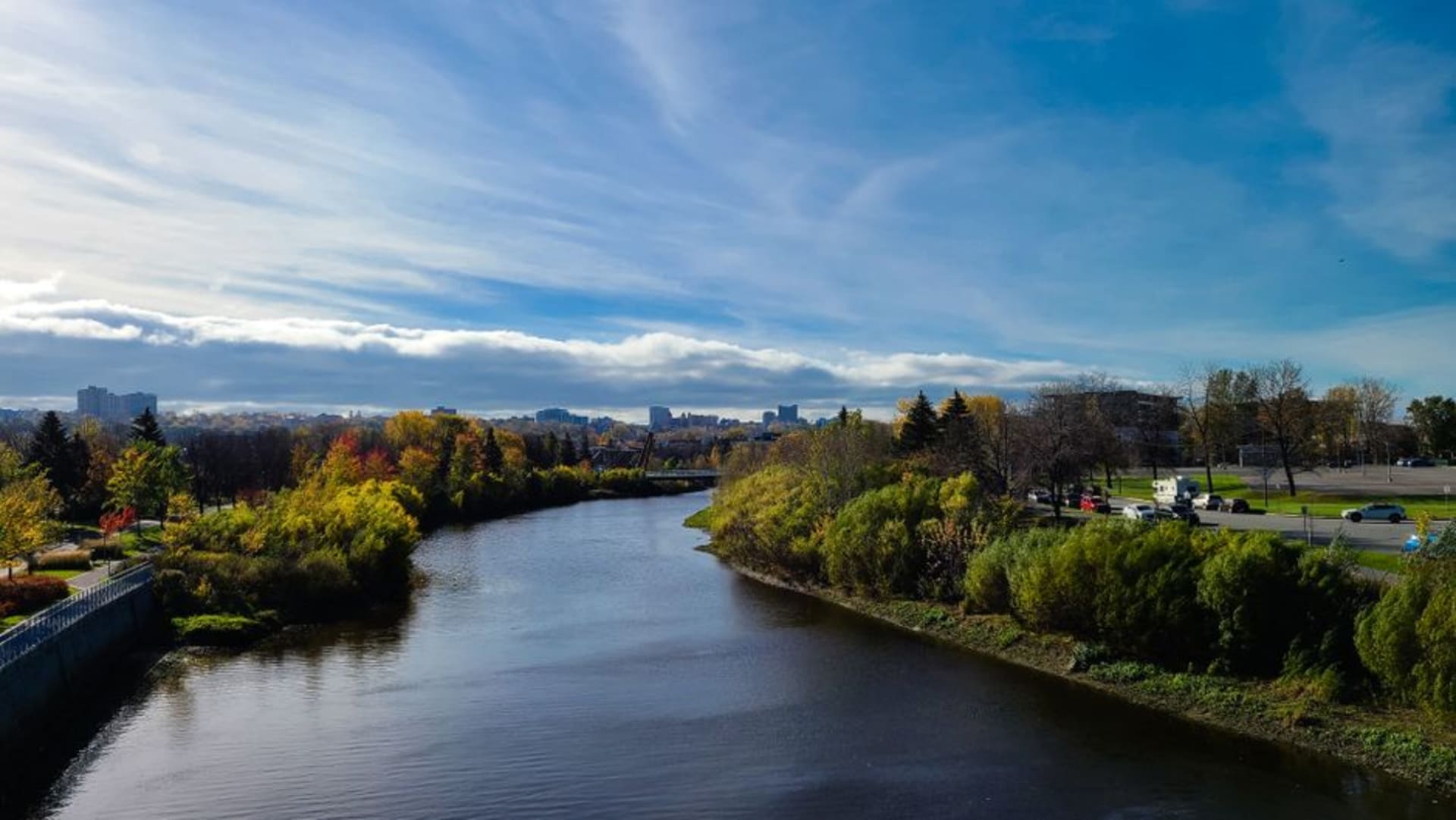
Trois-Rivières
"Trois-Rivières has been burning down and rebuilding itself since 1908 — it just keeps going, and somehow gets more interesting each time."
Québec's second-oldest city, wedged between the St. Maurice and St. Lawrence rivers, quietly carrying four centuries of paper mills, poetry, and stubborn survival.
I’d driven past Trois-Rivières on the highway between Montréal and Québec City more times than I could count before I actually stopped, which is a mistake I now regret. It sits at the mouth of the St. Maurice River, where the river splits into three channels before joining the St. Lawrence — hence the name, though there’s technically no third channel visible anymore, silted up centuries ago. Founded in 1634, it’s the second-oldest city in French-speaking North America after Québec City itself, and it has spent four centuries alternately thriving and catching fire.
The 1908 fire destroyed most of the old town, which is why the historic centre now reads as an unusual layer cake: a handful of 17th and 18th century stone buildings that survived — the Ursuline monastery, a couple of merchant houses — sitting alongside early-20th-century reconstruction and a genuinely lovely riverside promenade along the St. Lawrence. I walked it at golden hour with a coffee from a shop on Rue des Forges, watching the light hit the water the way it does specifically on wide northern rivers, flat and silver and enormous.
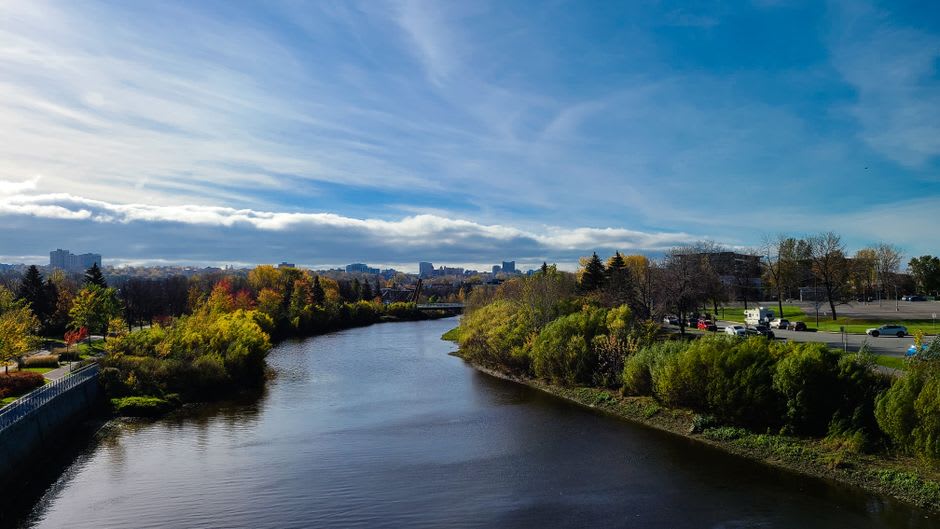
Trois-Rivières built its modern identity on paper — for most of the 20th century it called itself the paper capital of the world, its pulp mills feeding newsprint to half the continent. That industry has largely receded, and the city has reinvented itself as something more literary: it hosts the Festival International de la Poésie every autumn, an event I didn’t expect to find compelling and found completely compelling, poems posted in shop windows and read aloud in bars along the old streets. The Boréalis centre, housed in a former pulp mill on the waterfront, tells the industry’s story with an honesty about its environmental cost that I appreciated — no nostalgia-washing, just the actual history.
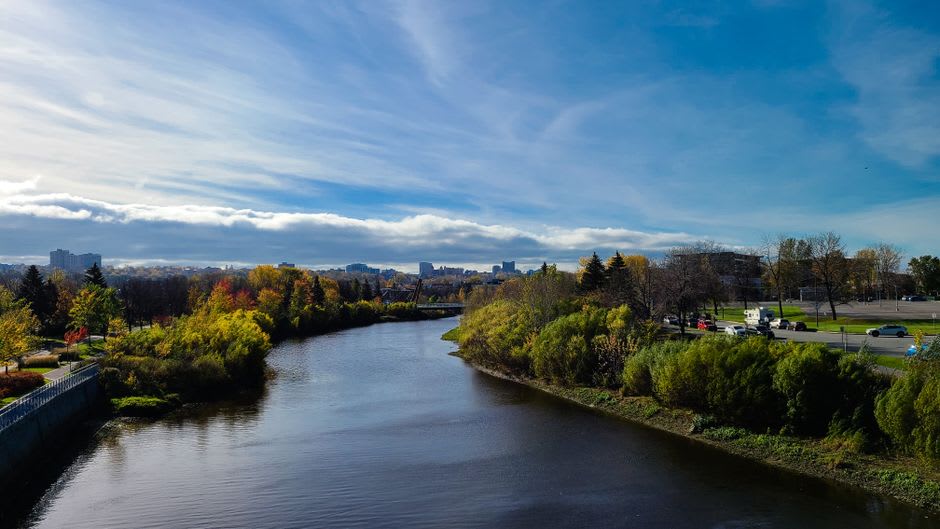
We ate well here, better than the city’s modest reputation suggests — a bistro on Rue des Ursulines doing a St. Lawrence pike-perch with brown butter that I still think about. Trois-Rivières doesn’t try to be Québec City or Montréal, and that’s precisely its appeal: it’s a working river city with genuine depth, not a stage set for tourism, and you can feel the difference within an hour of arriving.
When to go: September and early October for the poetry festival and fall colour along the rivers. Summer for the Grand Prix de Trois-Rivières street race and long evenings on the waterfront promenade. Winter is quiet and cold but the old town under snow, lit for the holidays, has its own charm.