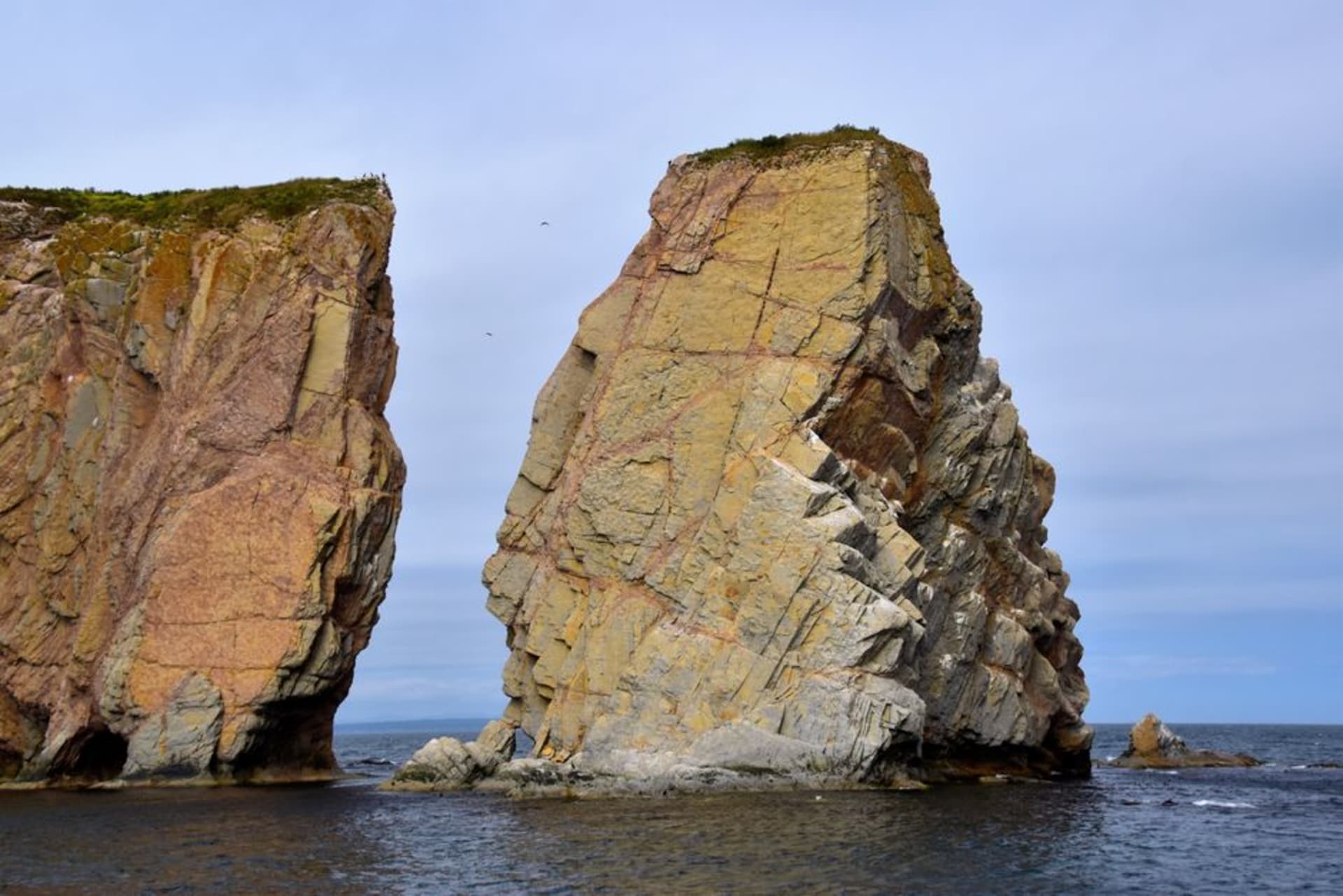
Percé Rock
"Percé Rock does the one thing a landmark almost never manages: it is exactly as strange in person as it looks in photographs."
A limestone monolith punched clean through by the sea — the single most photographed piece of rock in Quebec, and it earns every frame.
Lia and I drove the last stretch of the Gaspé peninsula coast road with the windows down, salt air replacing the pine smell that had followed us since Rimouski, and then the road curved and there it was — Rocher Percé, a 400-metre limestone slab standing alone in the Gulf of St. Lawrence like something that had wandered away from the rest of the cliff and gotten stuck. The name means “pierced rock,” and the pierce is real: a single arch cut clean through the stone by centuries of waves, wide enough that at low tide you can walk out along the sandbar and stand beneath it, craning your neck at daylight showing through solid rock forty metres overhead.
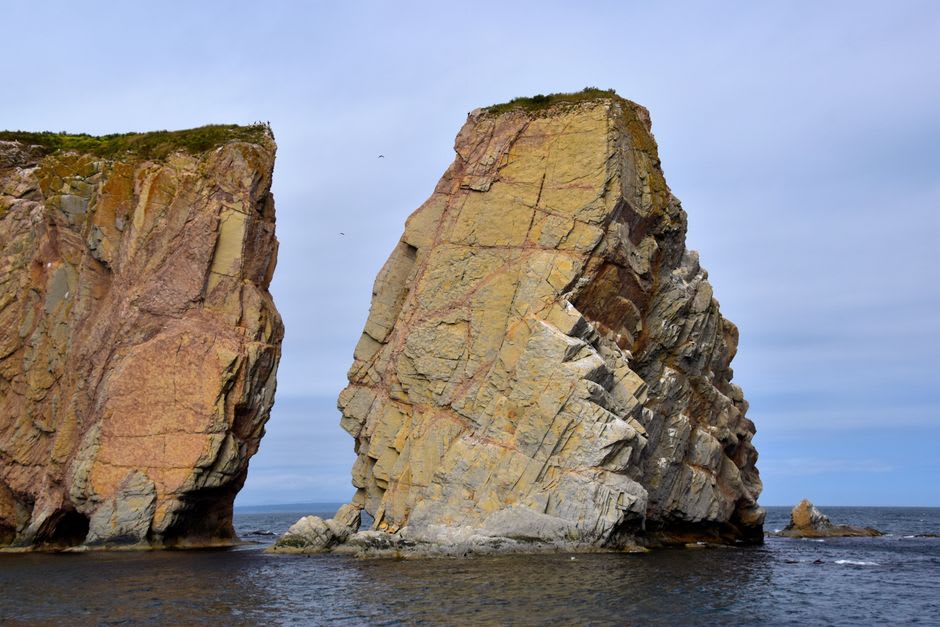
The geology alone would justify the detour — this is 375-million-year-old limestone, originally a reef, now standing as the largest natural arch of its kind in the world reachable on foot — but what stayed with me was the light. We walked the sandbar in late afternoon, when the tide had pulled back far enough to expose the crossing, and the rock went from grey to gold to a strange pink as the sun dropped toward the Chic-Chocs behind us. Lia pointed out that there used to be two arches; the second collapsed in 1845, leaving the freestanding pillar — l’Obélisque — that now stands apart from the main rock like a sentry that lost its post.
The village of Percé itself is small and entirely oriented around the view, which sounds like it should feel manufactured and somehow doesn’t. We ate a plate of fresh scallops at a terrace on the main street with the rock framed dead centre between two buildings, and I understood why generations of Quebec painters have used this exact vantage point. Boat tours circle the rock and continue to Île Bonaventure, and I’d recommend doing both the sandbar walk at low tide and the boat pass — the rock reads completely differently from water level, where the arch becomes a proper window rather than a curiosity.
When to go: Check tide tables before you arrive — the sandbar crossing is only possible roughly two hours either side of low tide, and Parks Quebec posts the schedule at the access point. Late June through September for reliable weather; early morning or late afternoon for the light that makes the limestone glow.