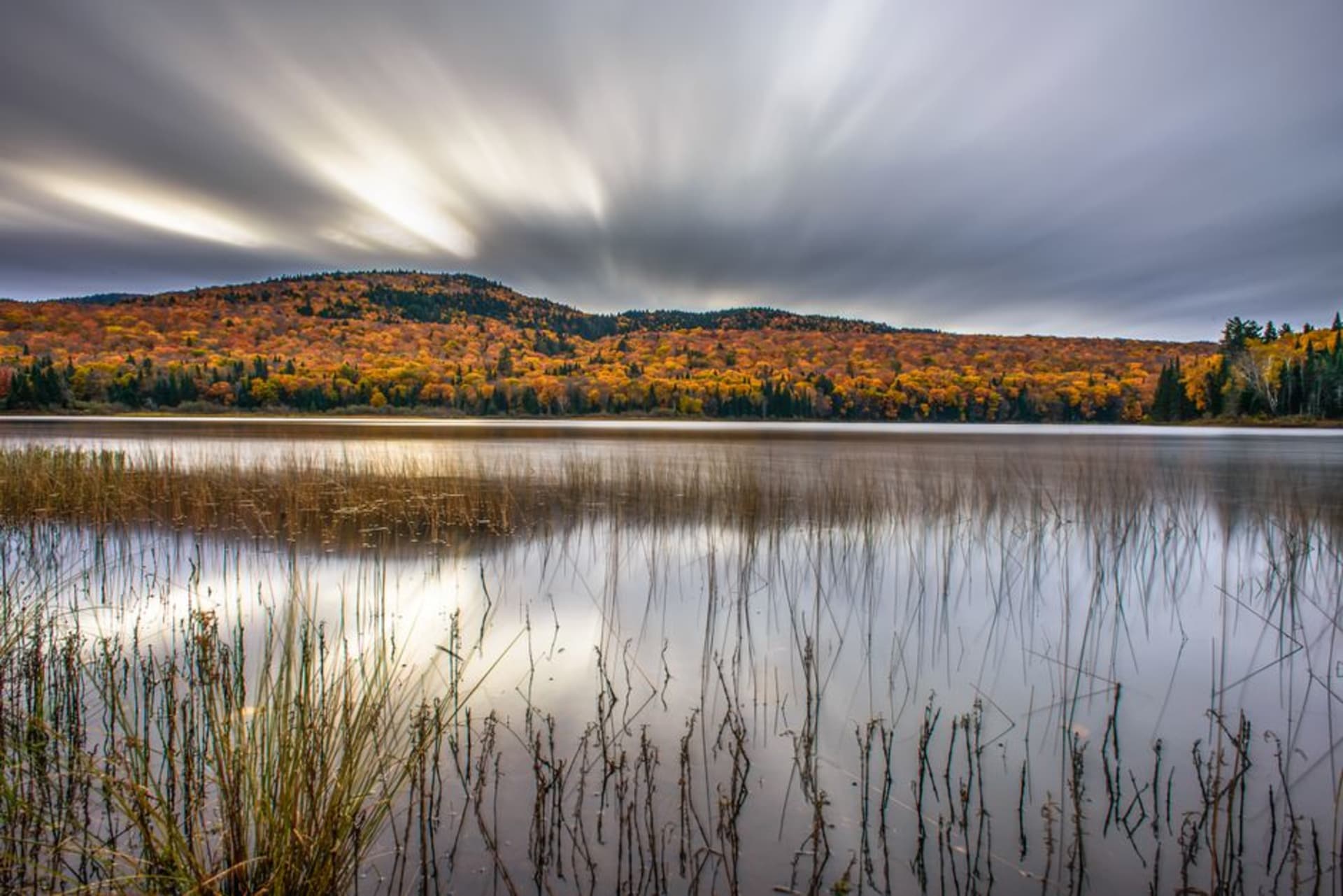
Monts-Valin National Park
"At altitude in Monts-Valin the trees stop looking like trees and start looking like something the wind sculpted on purpose."
The snow-ghost mountains north of the Saguenay fjord, where wind and cold sculpt the conifers into shapes that look more like sculpture than forest.
Nobody had properly warned me what “snow ghosts” meant, so the first ridgeline of them, appearing out of a whiteout as I snowshoed up toward the Pic-Dubuc summit, genuinely stopped me on the trail. The balsam firs at altitude in Monts-Valin get so thoroughly plastered with wind-driven rime ice and snow through the winter that they lose their tree shape entirely, rounding into soft white forms that look sculpted rather than grown — a phenomenon that requires a specific combination of cold, moisture, and wind that this particular range, rising abruptly north of the Saguenay fjord to over 970 metres, produces with unusual reliability. Guides here call them fantômes de neige, snow ghosts, and by the time I reached the open ridge near the summit I was walking through a field of them, silent white shapes in every direction with almost no reference point left to tell you which way was down.
Monts-Valin sits about forty minutes north of Saguenay city, a range that gets meaningfully more snow than the fjord towns below it thanks to lake-effect moisture off Lac-Saint-Jean colliding with the elevation, and the park has built a genuine winter tourism identity around that snowfall — extensive snowshoeing and backcountry ski terrain, groomed trails, and a lodge with heated yurts partway up the mountain that I stayed in on a night cold enough that the walk from the yurt to the shared bathroom felt like an expedition in itself.
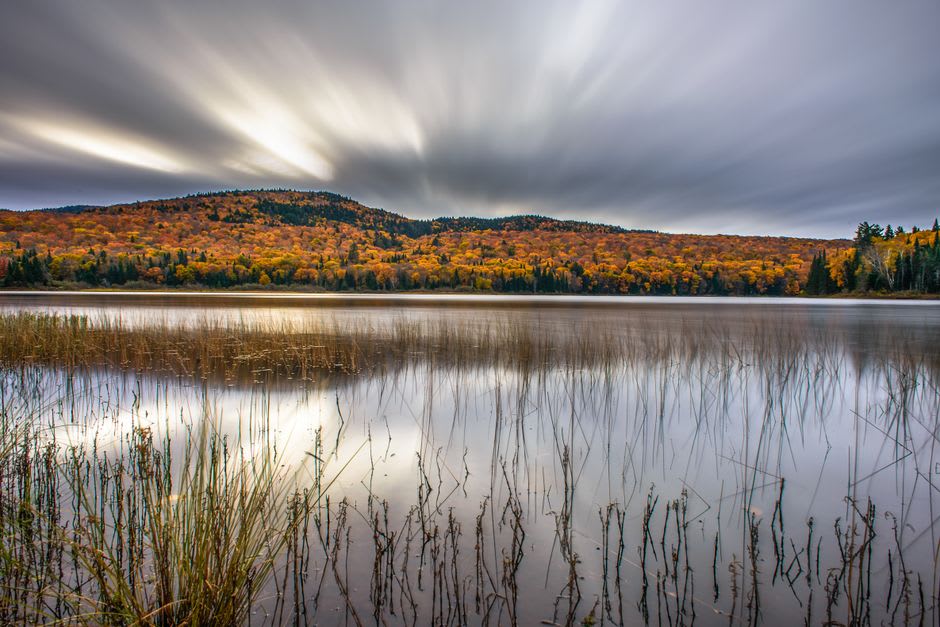
The summit of Pic-Dubuc, when the cloud finally broke on my second attempt, gave a view that put the whole region into perspective at once: the Saguenay fjord’s dark cut through the landscape to the south, Lac-Saint-Jean’s pale expanse to the west, and range after range of lower forested hills rolling out in every other direction, all of it dusted the same uniform white. The wind at the top was serious enough that the guide kept the group moving rather than lingering, but even a few minutes up there, above the tree line and above the snow ghosts themselves, felt like a genuine reward for the climb.
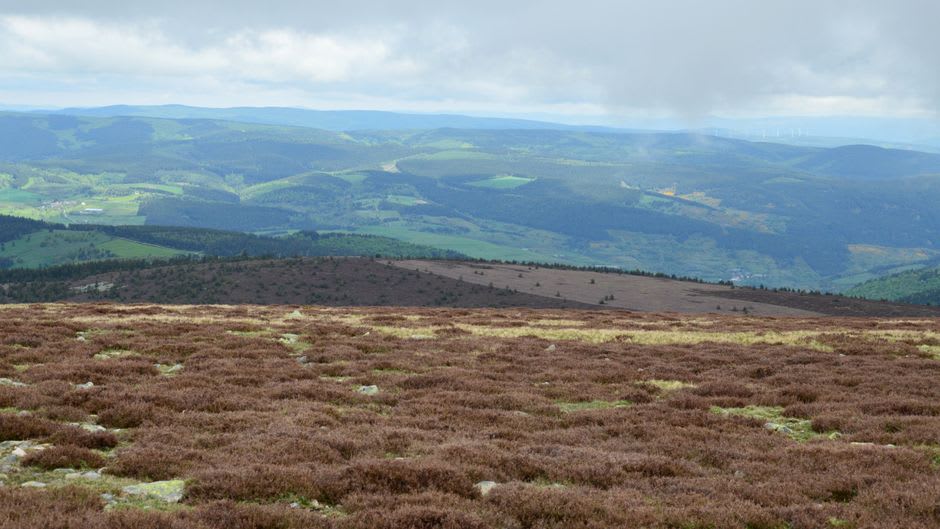
In summer the park shifts registers entirely — the snow ghosts vanish, the same trails become hiking routes through boreal forest and open granite summits, and the caribou that occasionally range through the park (a small, isolated herd, a genuine rarity this far south) become the more likely wildlife draw, though I didn’t see one myself.
When to go: Late January through March for the snow ghosts at their most developed and for the best snowshoeing and backcountry ski conditions. July and August for hiking the same summits without snow gear, with long views and far fewer visitors than the coastal fjord sectors get.