
Montmorency Falls
"Niagara is wider, yes. But Montmorency Falls will get you wet from 50 metres away — it earns its drama."
I’d been warned that Montmorency Falls was impressive, which is the kind of warning that prepares you for something photogenic but not necessarily for something that moves. The morning I visited it had been raining overnight, and the falls — already 83 metres of continuous detonation — were running with the extra weight of the night’s rain. I heard them before I saw them: a low-frequency vibration in the air that I felt in my ribcage before I registered it as sound. Turning the corner on the path, the falls materialized at such close range that the spray hit my face immediately. I stood there for a full minute, not thinking anything useful, just being wet.
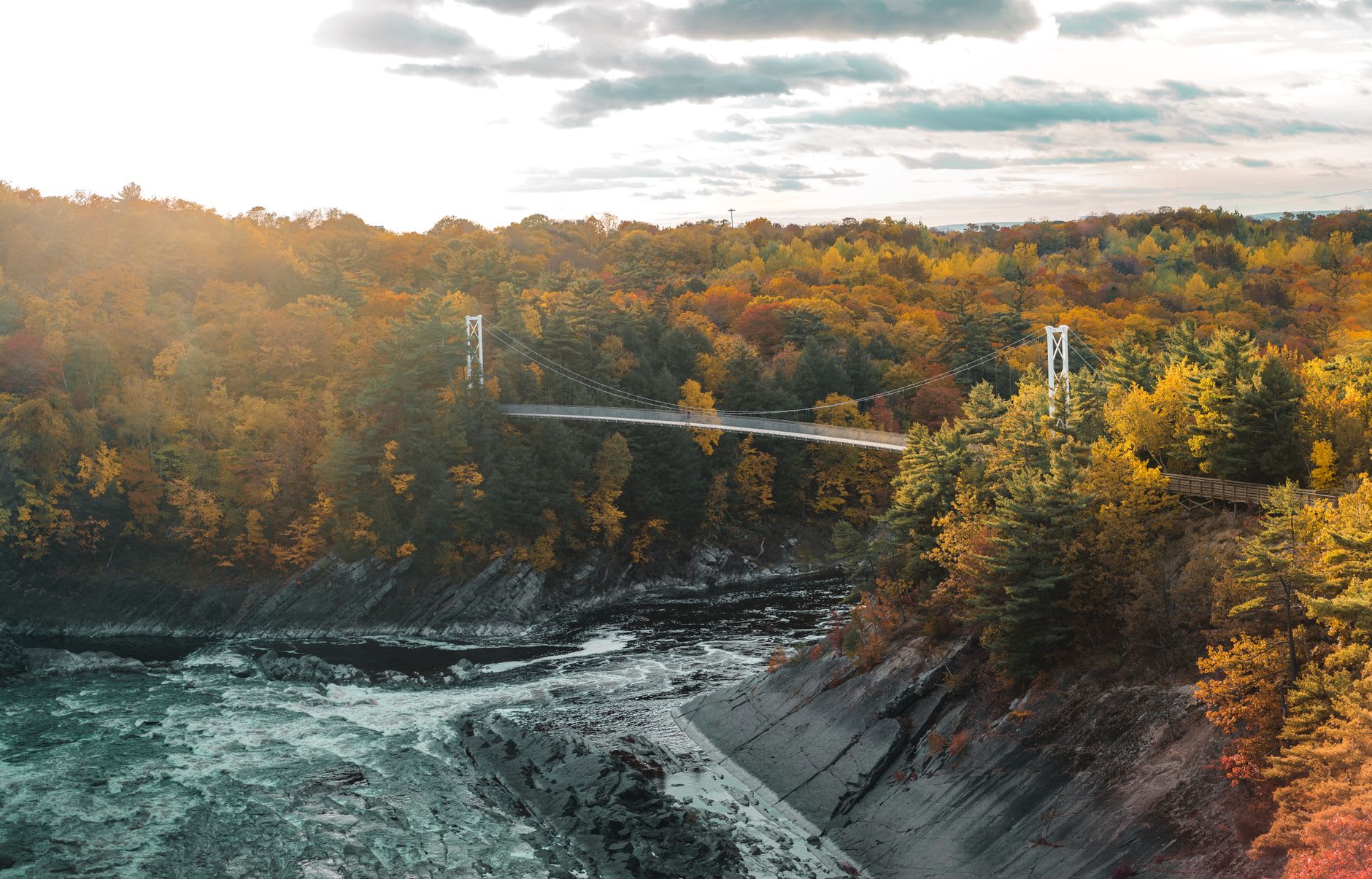
Montmorency Falls is 30 metres taller than Niagara — Québécois people mention this fact with a particular satisfaction, a kind of regional pride that doesn’t require your validation but quietly expects it. The falls drop in a single uninterrupted curtain from the plateau above into the narrow gorge of the Montmorency River just before it joins the St. Lawrence, and the volume of water moving through that aperture creates its own weather system: permanent mist, a wind off the water that is several degrees colder than the surrounding air, rainbow prisms on clear days. The suspension bridge that crosses above the falls is one of those structures that tells you a great deal about yourself as a traveller — I crossed it while holding the railing in a way I’m not proud of.
The park around the falls is run by Sépaq, and the infrastructure is good: trails, platforms at various heights, a cable car that will take you up the cliff face if the staircase (408 steps) seems excessive. I took the staircase, which was excellent punishment. At the top, the Manoir Montmorency — a Victorian villa turned restaurant and reception venue — occupies the plateau with a terrace that overlooks both the falls and the point where the St. Lawrence begins to widen toward the sea. I had a coffee there and watched container ships pass below while the falls roared 20 metres to my left. The incongruity of it was genuinely enjoyable.
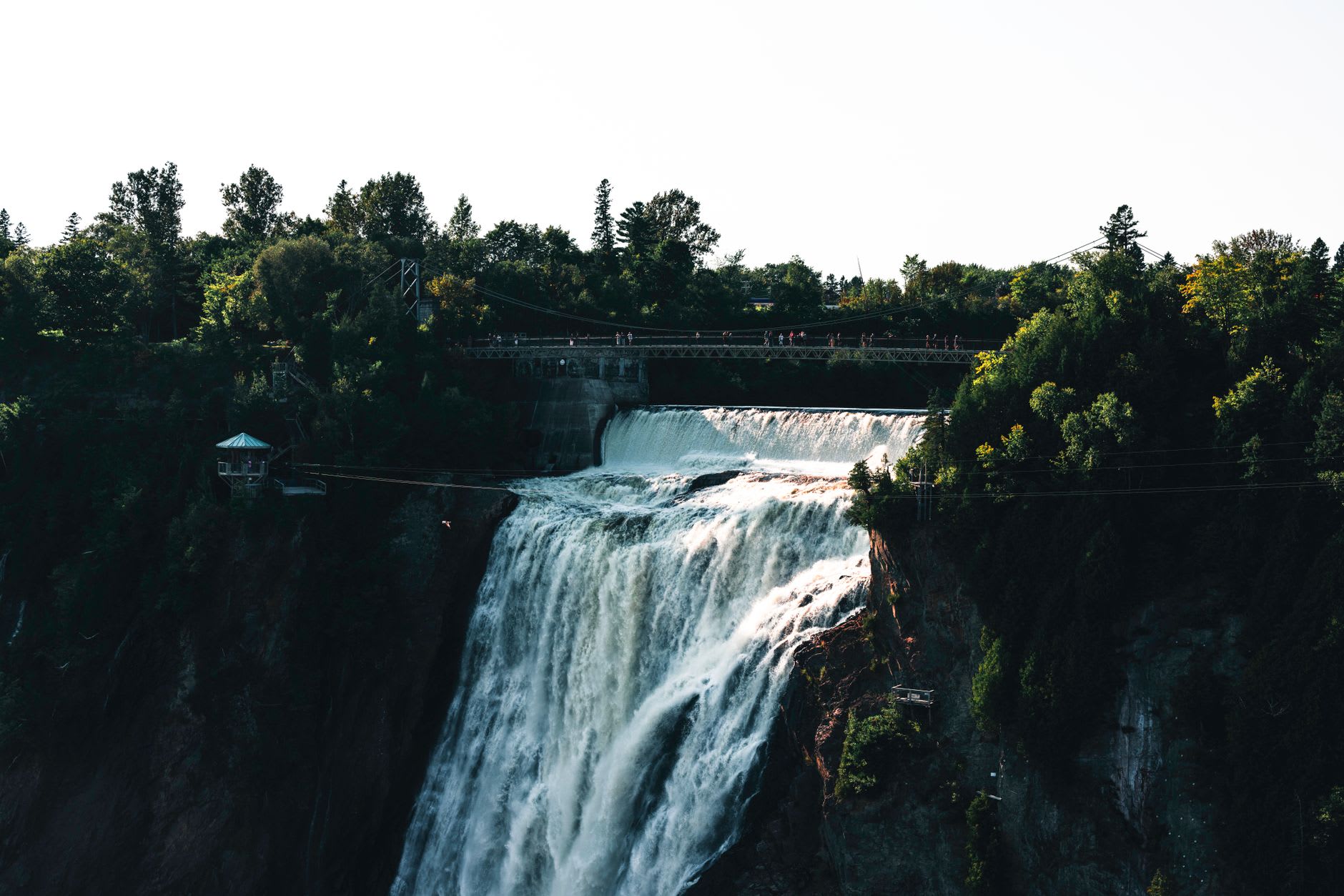
In February, Montmorency Falls partially freezes into a cone of ice — a volcanic-looking formation that ice climbers ascend with axes, which is possibly the most Quebec City activity that exists. The cone grows through the winter as the falls’ spray freezes in layers, and at its peak it can be 30 metres tall. Watching someone climb it from the viewing platform, in minus 20 temperatures, is one of those things I genuinely did not expect to find moving.
When to go: Spring (April–May) for maximum water volume after snowmelt. Winter (January–February) for the ice cone and climbing spectacle. Summer is the busiest, but the picnic area above the falls in July — warm, loud with the falls, the St. Lawrence below — is genuinely wonderful.