Dune du Sud
"Dune du Sud is the beach that made me understand why the Magdalen Islands' cliffs are red — iron, wind, and no hurry at all."
A ribbon of red-cliffed beach on Havre-aux-Maisons where the Magdalen Islands stop being an archipelago and start feeling like the edge of the world.
We rented a car on Cap-aux-Meules and drove the short causeway to Havre-aux-Maisons mostly because Lia had seen one photograph of red cliffs online and refused to leave the archipelago without finding them in person. Dune du Sud delivered more than the photograph promised. The beach runs for kilometres beneath sandstone cliffs the color of terracotta, streaked darker where water seeps through the rock, and the whole formation drops straight into a sea that shifts from turquoise in the shallows to a deep, cold blue further out. I have stood on beaches that were more famous. I have not stood on many that were stranger, in the sense that the color combination felt almost artificial, like a beach designed rather than eroded.
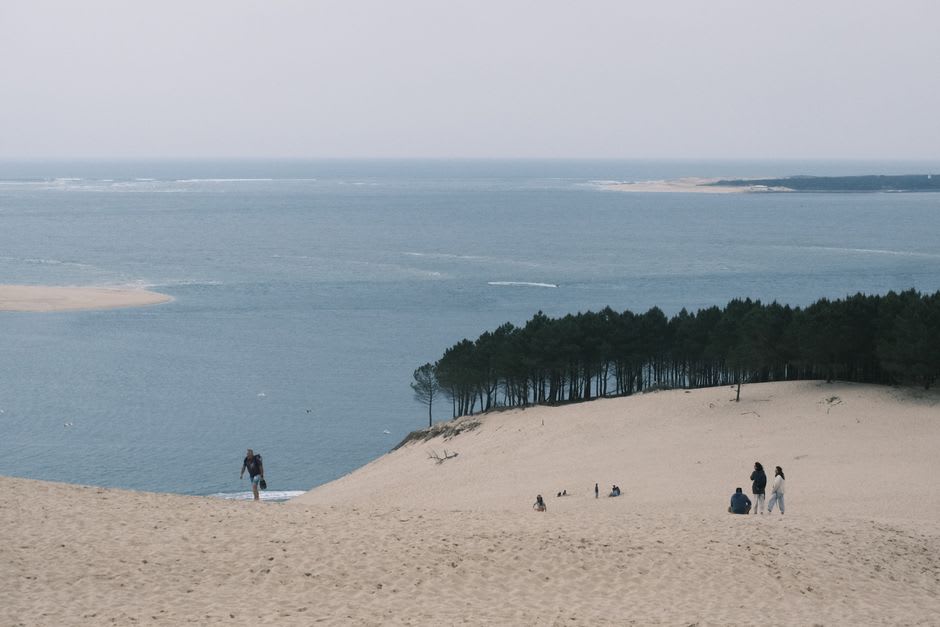
The cliffs are soft — literally, geologically soft, made of a sandstone that erodes at a rate you can almost watch happen, which is why the Magdalen Islands lose a measurable amount of coastline every year and why several structures built too close to the edge decades ago have since had to be moved or abandoned. Walking the base of the cliffs at low tide, I found sea caves and small arches that a local we met later told us hadn’t existed in that shape ten years earlier. There’s something clarifying about a landscape that admits, this openly, that it’s temporary.
What struck me most was the silence. No boardwalk, no snack stand, no crowd — just the beach, the cliffs, and a handful of other visitors spread out far enough that everyone seemed to be having a private experience of the same place. Lia found a piece of driftwood shaped like a whale’s tail and carried it back to the car like a trophy. We still have it.
When to go: July through early September for swimmable water and long daylight for the walk along the base of the cliffs. Go at low tide specifically — the sea caves and arches at the cliff base disappear underwater as the tide comes in.