Museum of Islamic Art
"The atrium light at noon tells you more about Islamic geometry than any text panel ever could."
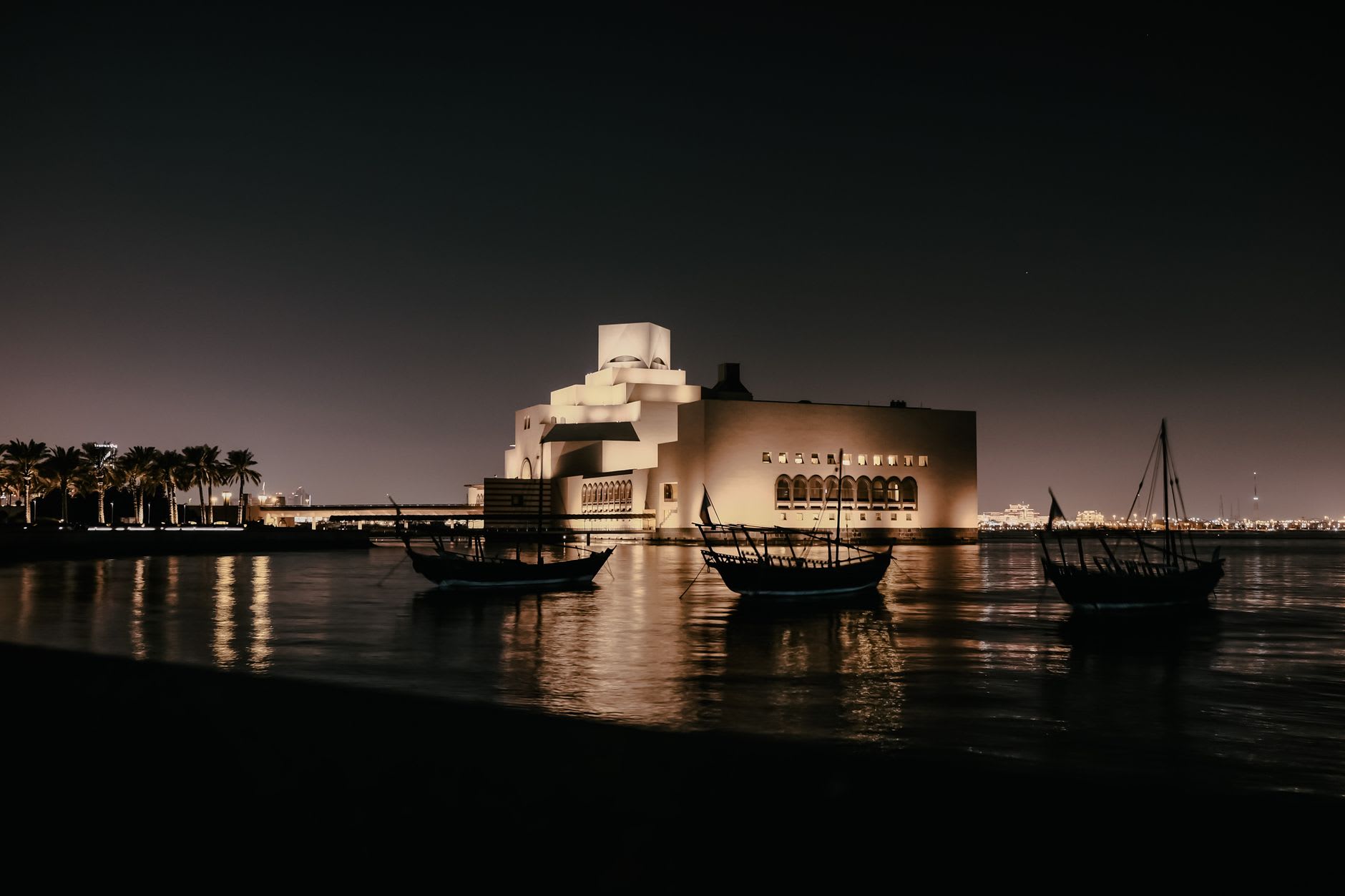
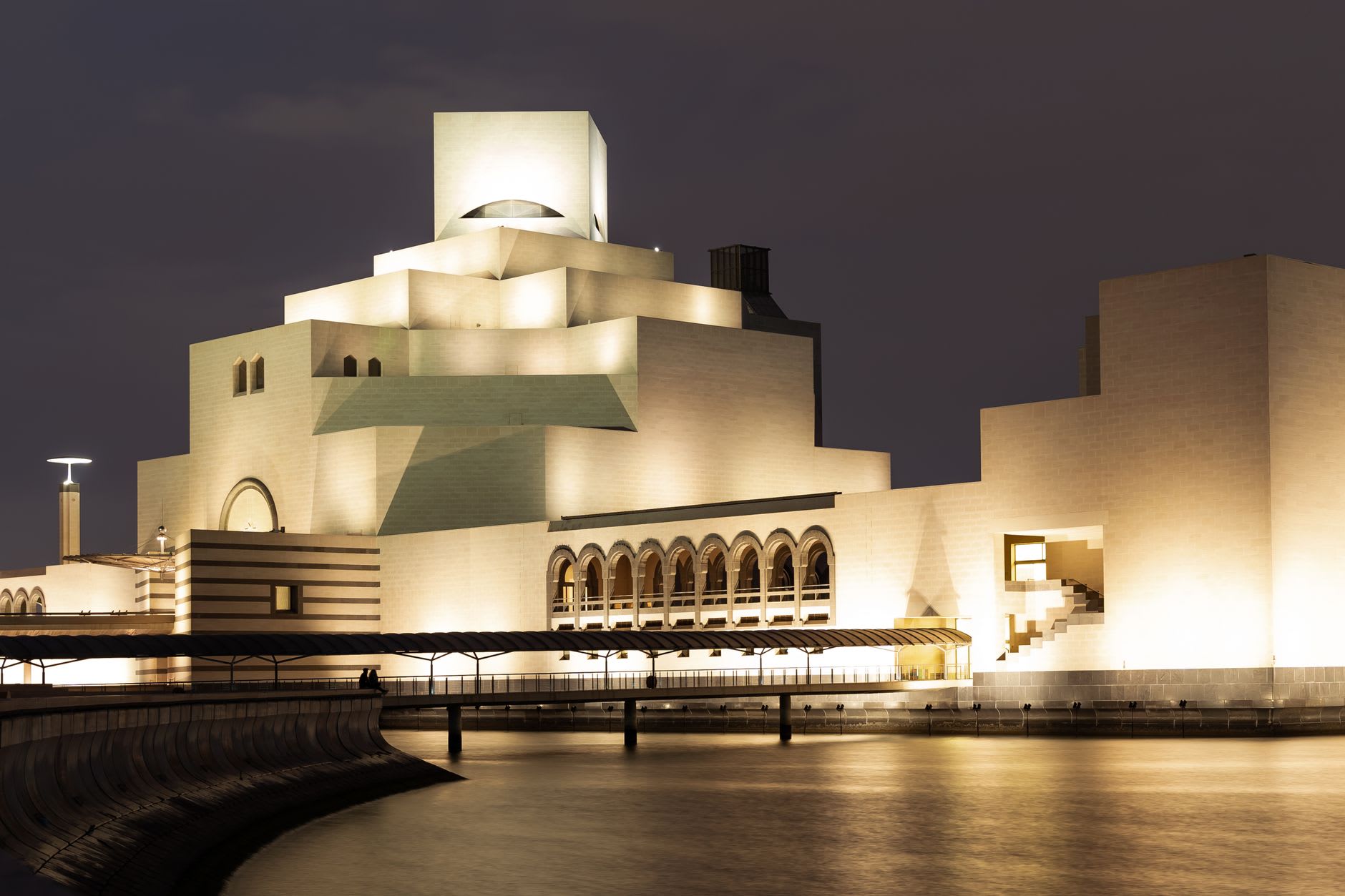
I went to the Museum of Islamic Art on a Thursday morning in December, early enough that I had the ground floor almost entirely to myself. The building sits on its own artificial peninsula jutting into Doha Bay, and the taxi driver dropped me at the causeway and I walked the rest of the way across water on both sides, the Doha skyline visible behind me through the morning haze. Pei designed the building in his late eighties, and you can feel in it a kind of distilled clarity — he visited Egypt to study ancient Islamic architecture before drawing a single line, and what emerged is something that could have been built in no other era and yet feels genuinely ancient. The exterior is white limestone from France, and in the morning light it holds the sun with a dusty warmth that stone walls are supposed to have.
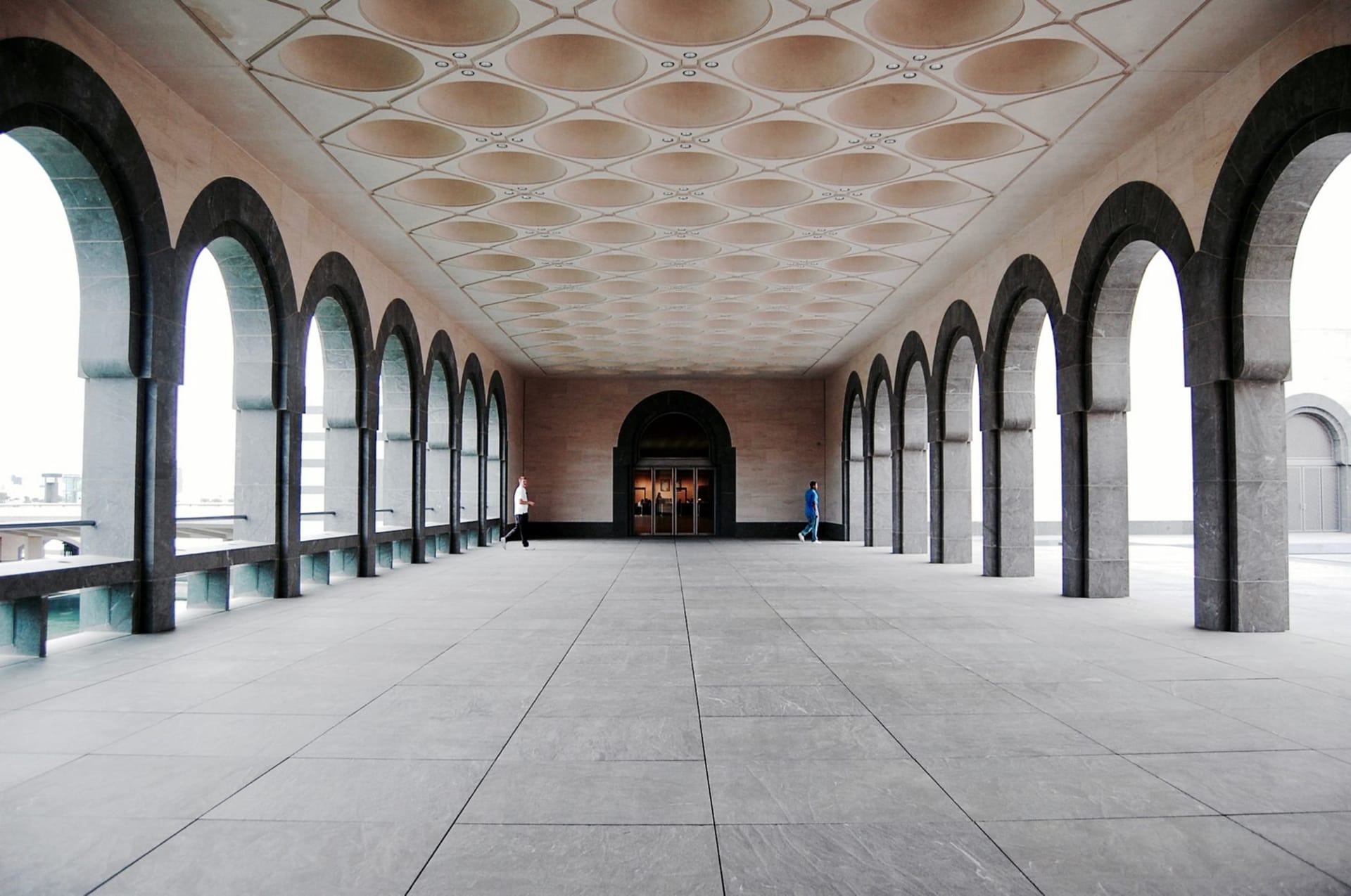
The atrium is where the building announces itself. It rises five stories to an octagonal lantern skylight, and the geometry of the interior — the muqarnas brackets, the layered arches, the way the light falls in angled columns across the stone floor — is not decorative but structural, a demonstration of the mathematical thinking that runs through a thousand years of Islamic architecture and ornament. I stood in it for longer than I intended, watching the light move. Then I went upstairs and spent two hours with the collection.
The objects on display span from Spain to Central Asia, from the seventh century to the nineteenth, and they include things that stopped me in my tracks: a brass astrolabe from twelfth-century Iran so precisely engraved that it looks like a piece of modern graphic design, a Mamluk Quran in an illuminated box the size of a room, Mughal jewelry that makes you understand why empires bothered with trade routes. The museum is not arranged chronologically but thematically — astronomy, medicine, trade, the court — and the effect is to make you understand Islamic civilization as a connected world rather than a sequence of dynasties.
What surprised me was how uncrowded it felt. The Louvre has a Vermeer problem — too many people pressing toward the famous thing to actually see it. The MIA has no such problem, partly because Qatar is not on most people’s tourist map and partly because the museum is large enough to absorb a crowd without collapsing into chaos. I ate lunch at the ground-floor café looking out at the bay and the glass towers of the West Bay across the water, and the architectural contrast — medieval geometry against postmodern glass — felt like the entire Qatar question compressed into a single view.
When to go: The museum is open year-round, but the November-to-March window makes the walk along the waterfront genuinely pleasant. Thursday mornings before 11am are the quietest. The café terrace on the bay is worth sitting at regardless of the season.