Luquillo
"The best meal I had in Puerto Rico cost eight dollars and came from a window in a concrete kiosk."
Luquillo is thirty miles east of San Juan, close enough to do in an afternoon and far enough to feel like somewhere different. The town is small, the beach is long, and the food kiosks at the western end of the beach — Los Kioskos de Luquillo — are the reason I drove out there three times during a single week. I had planned to stay two hours the first time. I stayed until dark.
The kiosks are a row of perhaps sixty small stalls arranged in a permanent market structure, each one specializing in different variations of the same essential Puerto Rican beach food. The logic is clear and correct: you arrive at the beach, you are hungry, and within fifty meters you have every option the island’s coastal food culture can offer. Alcapurrias — fritters made from mashed plantain or yucca, stuffed with ground beef or crab — are the essential first order. Bacalaítos, the salt cod fritters, come second: each cook’s batter has its own proportion of salt and garlic, and the differences matter. Piononos (sweet plantain stuffed with ground beef and fried until the outside caramelizes), surullitos (cornmeal sticks with a honey-mustard dip), caldo de pollo that sounds simple and restores something you didn’t know needed restoring. I ate at four different kiosks in one visit and experienced no conflict about this.

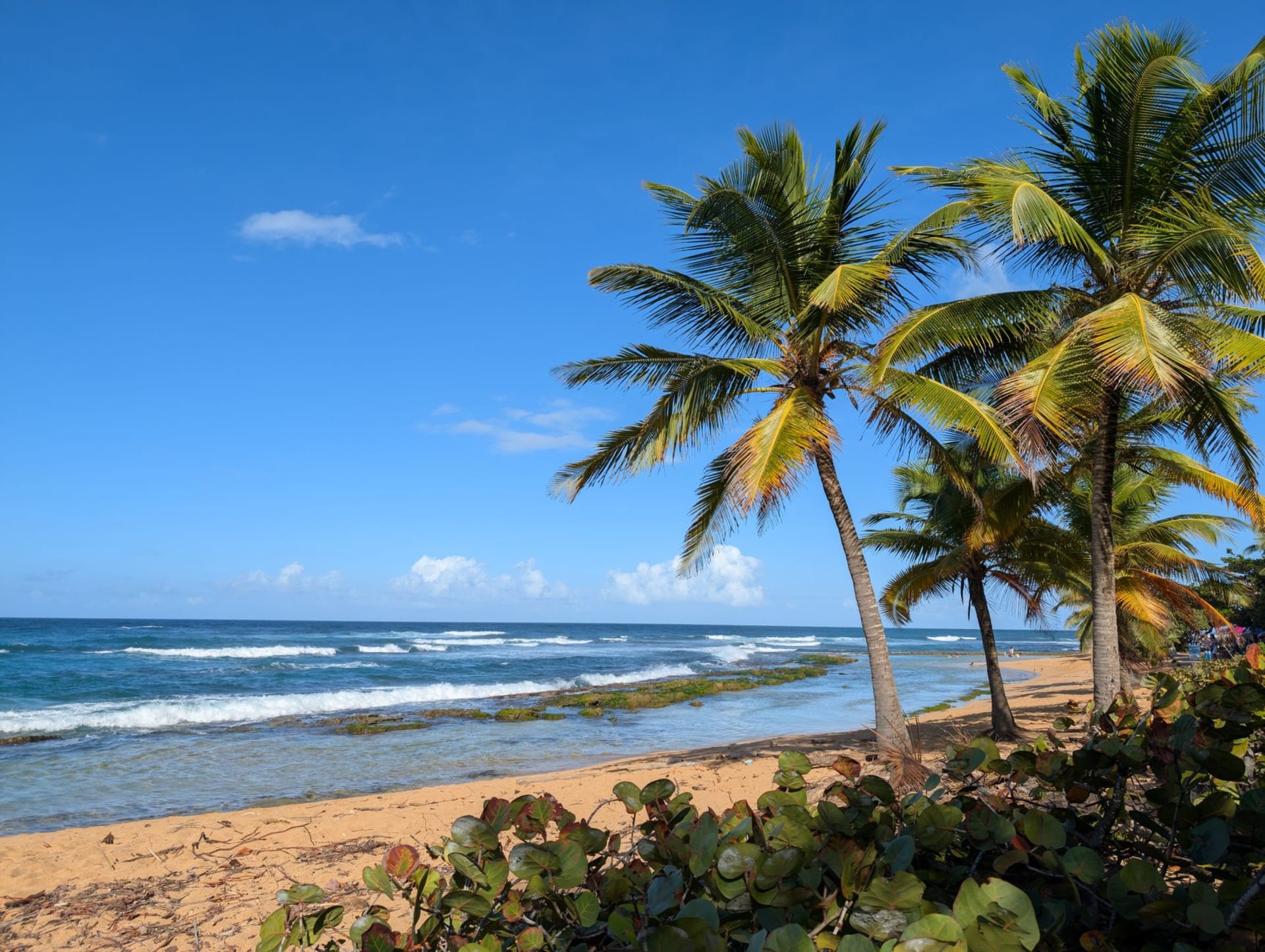
The beach itself is serious in the way that beaches with good reputations and regular use tend to be: a crescent of pale sand under coconut palms, facing a bay where the reef offshore breaks most of the Atlantic swell before it reaches shore. The water at Luquillo is some of the calmest on Puerto Rico’s north coast, which makes it the family beach of choice for residents of San Juan and the surrounding municipalities. On weekends, the parking lot fills before nine in the morning. On weekday mornings in January, I walked the entire length of it with a handful of joggers and the pelicans, who maintained a respectful distance and an attitude of profound indifference to my presence.
El Yunque is visible from the beach — the dark green mountains rising from the coastal plain a few miles to the west, trailing clouds even on the sunniest days. Between the beach and the mountains, the town of Luquillo has a plaza with the usual cathedral and the slightly slower rhythm of a place that has been a weekend destination for San Juan residents for generations rather than a discovery for outside visitors. I ate at a family restaurant near the plaza one evening — the kind with no menu signage in English and a room full of people speaking Spanish to each other with the volume that comes from actually being among friends. The mofongo was made properly, with a pestle in a wooden pilón, and arrived with a clear chicken broth on the side that I drank like medicine and considered ordering again.

La Pared, just east of the main beach, is a beach break that produces consistent waves through the winter and draws a local surf crowd that has been gathering there long enough to have strong opinions about the best tides. La Selva Nature Reserve, between Luquillo and Fajardo, is a coastal mangrove and reef system that offers kayaking and snorkeling through a guide service — quieter and less crowded than El Yunque and a good option if the forest is at capacity.
When to go: Weekdays in December through April are the ideal combination — the beach is calm, the kiosks are open and not overrun, the skies are clear, and you don’t compete for space with the entire metropolitan area. Weekend afternoons at the kiosks are the fuller, louder, more representative experience of how Puerto Ricans actually use this beach. Arrive early enough to park; by ten on a Saturday morning, the lot is full and the options involve walking farther than you’d like with your cooler.