Vaison-la-Romaine
"The Romans paved these streets, the Counts of Toulouse built over them, and on Tuesdays there's a market."
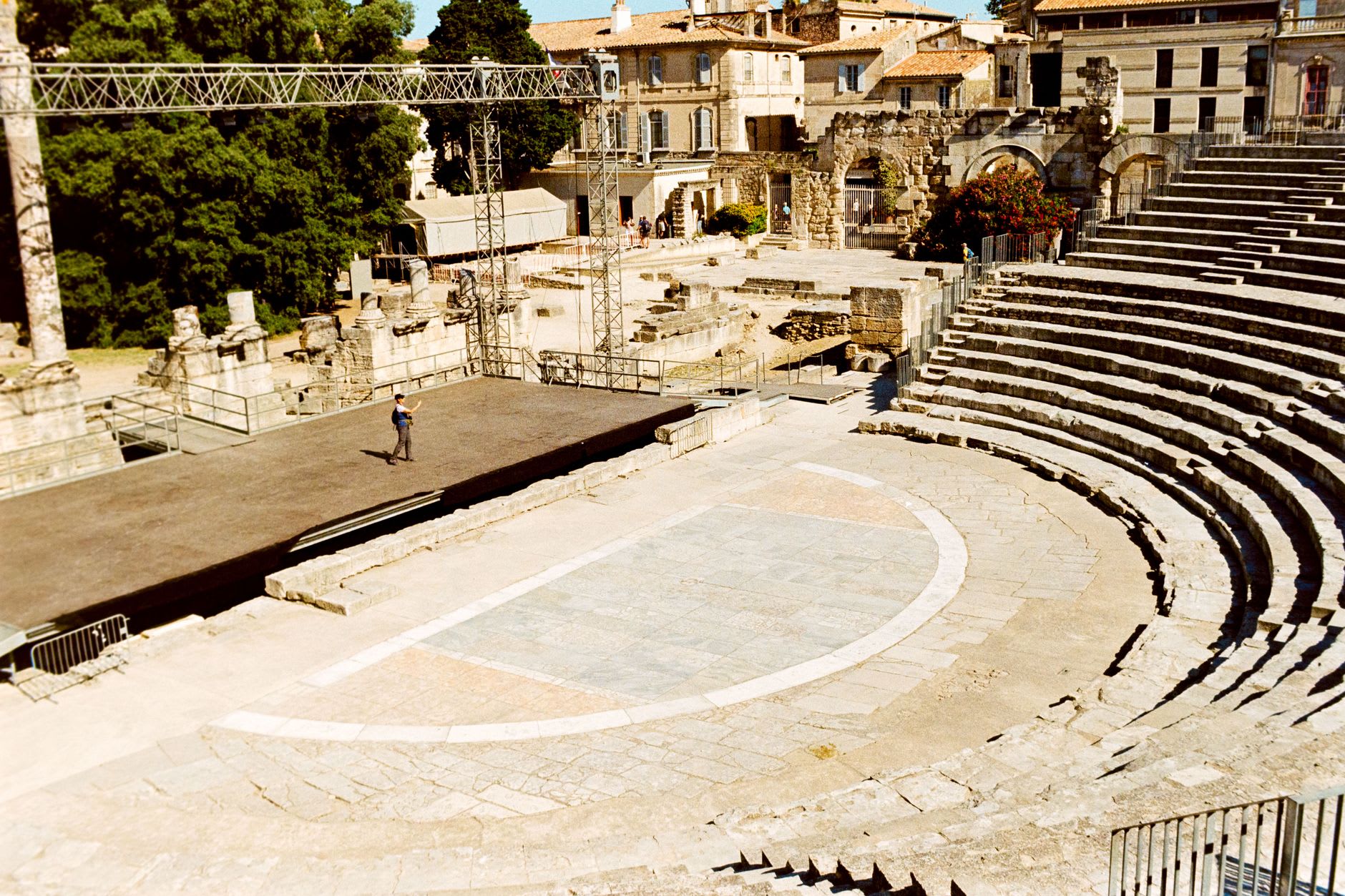
There is a Roman road in Vaison-la-Romaine that you can walk on, not beside — directly on the original basalt paving stones, worn smooth by two thousand years of foot traffic, with the wheel ruts from Roman carts still clearly visible in the surface. I walked it on a Tuesday morning, stepping over a drainage channel the Romans cut, past the foundation of a villa whose mosaic floors are still partially in situ under a protective shelter, and ended up at the open-air theatre where a school group was eating their lunch on seats first occupied by citizens of the Roman province of Narbonensis. The theatre seats a few thousand and still holds performances in summer. The acoustics, as I tested by dropping a coin on the stage and hearing it clearly from the top tier, are as good as any I have encountered.
The Roman bridge — a single arch of dressed stone spanning the Ouvèze river, built in the first century AD and still carrying pedestrians — links the lower Roman town to the medieval haute-ville that climbs the opposite bank. The bridge is the kind of engineering that makes you acutely aware of how contingent modern infrastructure feels: it survived a catastrophic flood in 1992 that destroyed two modern concrete bridges upstream and left Vaison divided for months. Only the Roman bridge held. Walking across it, I had the peculiar sensation of trusting the judgement of an engineer who died before Christ.
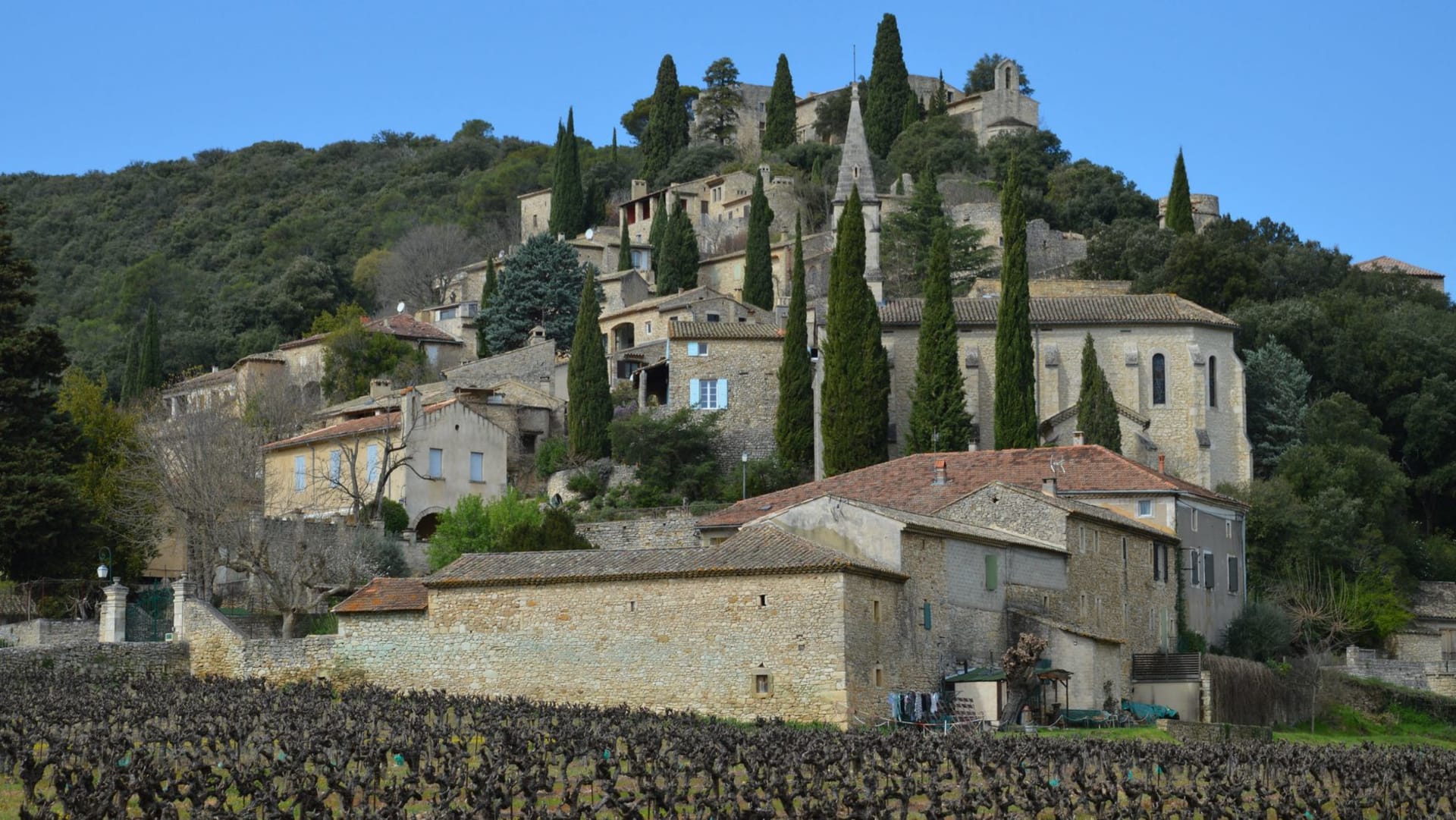
The haute-ville on the cliff above the river is a medieval quarter so intact it functions almost as a living relic — steep lanes of twelfth-century stone, a ruined château at the summit from which the Counts of Toulouse surveyed their territory, and a village population that apparently decided at some point in the twentieth century that the upper town suited them fine and saw no reason to modernise past a certain point. I ate lunch at a restaurant in a vaulted medieval cellar where the walls were a metre thick and the temperature was ten degrees cooler than outside, and the plat du jour was a lamb daube that had clearly been cooking since the previous evening. The owner brought it without being asked and refilled the bread basket twice without being asked either.
The Dentelles de Montmirail — the jagged limestone ridges visible south of Vaison, their silhouette resembling torn lace — are the backdrop that makes this part of northern Provence feel different from the Luberon’s rounder hills. In the foothills below them, the villages of Gigondas and Sablet and Séguret produce the wines of the Rhône’s southern flank: grenache-heavy reds with a structure that comes from altitude and limestone, and rosés that are a deeper, more serious colour than the Côtes de Provence pale. I did a tasting at a domaine outside Gigondas and came away with three bottles and a significantly altered understanding of what the southern Rhône can do.
When to go: The Tuesday market in Vaison is one of the finest in northern Provence and runs year-round, but it reaches full amplitude in spring and early summer. The Roman theatre hosts concerts and theatre through July and August. Spring — April through June — is the time I would go back: the Dentelles wildflowers, the quiet roads, and the wine country just waking up.