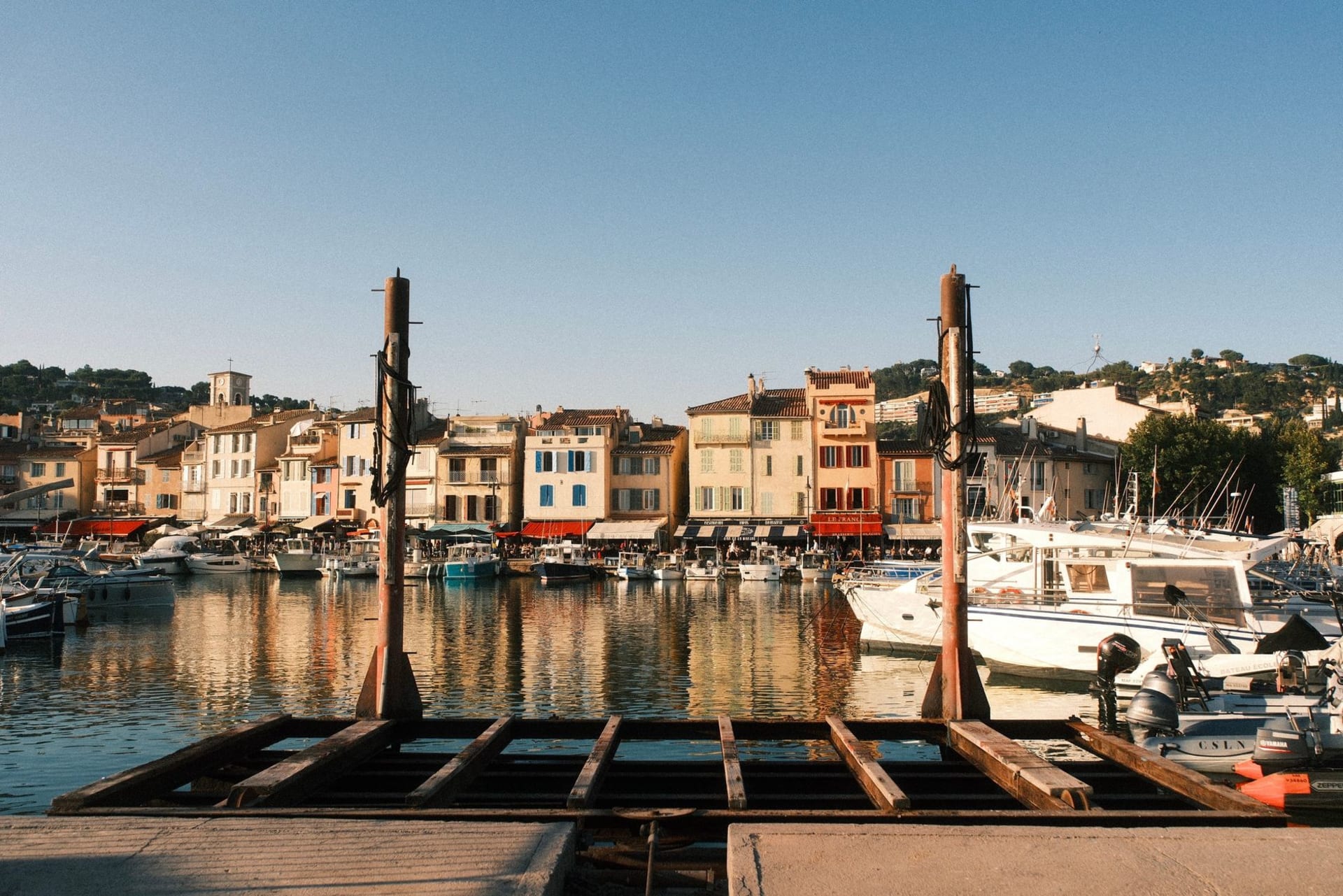
I took the boat from the Cassis harbour because the path along the cliffs was too hot and I am not a person who suffers heat stoically. The boat puttered west along the coast, the water shifting colour from turquoise to a deep cobalt depending on depth, and one by one the calanques appeared — narrow limestone fjords cutting back into the cliff, their walls vertical and white, the water inside them so still and clear you could see the weed on the bottom from the deck. The boatman killed the engine at Calanque d’En Vau and we floated in silence while the cliff swifts circled overhead and the light bounced between the limestone faces in ways I could not have predicted. Nobody spoke. The water made a small sound against the hull. It was one of those moments when tourism delivers exactly what it promises and you feel slightly guilty for having doubted it.

Cassis the town is built around its harbour in the cheerful, slightly ramshackle manner of a place that knows it has a good thing and hasn’t tried too hard to improve it. The fishing boats still go out in the morning — fewer than before, but still enough to supply the restaurants around the port with sea bass and rascasse and the rockfish that go into bouillabaisse. The debate about whose bouillabaisse is better — Cassis or Marseille, twenty minutes up the coast — is the kind of argument that French fishing towns conduct with a seriousness usually reserved for elections. I ate it in Cassis at a restaurant where the terrine of fish was presented before the main broth in its own small pot, and the bread for mopping was so good I asked where they sourced it and was told, with some dignity, that they made it themselves.
The white wine of Cassis — AOC Cassis, one of France’s oldest appellations — is the local secret that nearly everyone who visits takes home and then cannot find again. Made from clairette and marsanne and ugni blanc, it is pale, dry, mineral, and has a faint scent of white flowers that the producers will tell you comes directly from the limestone soils. It is not an easy wine to export because the volumes are tiny and the demand is local, which means drinking it in Cassis itself, with a plate of grilled mullet at a quayside table, is essentially the only way to do it correctly. I ordered a carafe at lunch and then another and spent the afternoon at the table watching the harbour traffic without any desire to move.

Cap Canaille, the highest maritime cliff in France, rises four hundred metres directly above the village to the east, and the road over it to La Ciotat provides one of those vistas that the Riviera does well when it stops being crowded: the entire Marseille coastline laid out below you, the Frioul archipelago in the middle distance, and on clear days the outline of Toulon forty kilometres east. I drove it in the late afternoon and pulled over at the corniche viewpoint, where a couple from Germany were arguing about something and a man was walking a greyhound that looked like it had places to be.
When to go: May and June, before the calanques boats are booked solid and the harbour restaurants require reservations weeks in advance. September is equally good — the sea temperature peaks in August and stays warm through October, and the crowds thin after the French summer holidays end. Come for the calanques, but allow a full day for the harbour, the wine, and the general business of doing very little in a beautiful place.