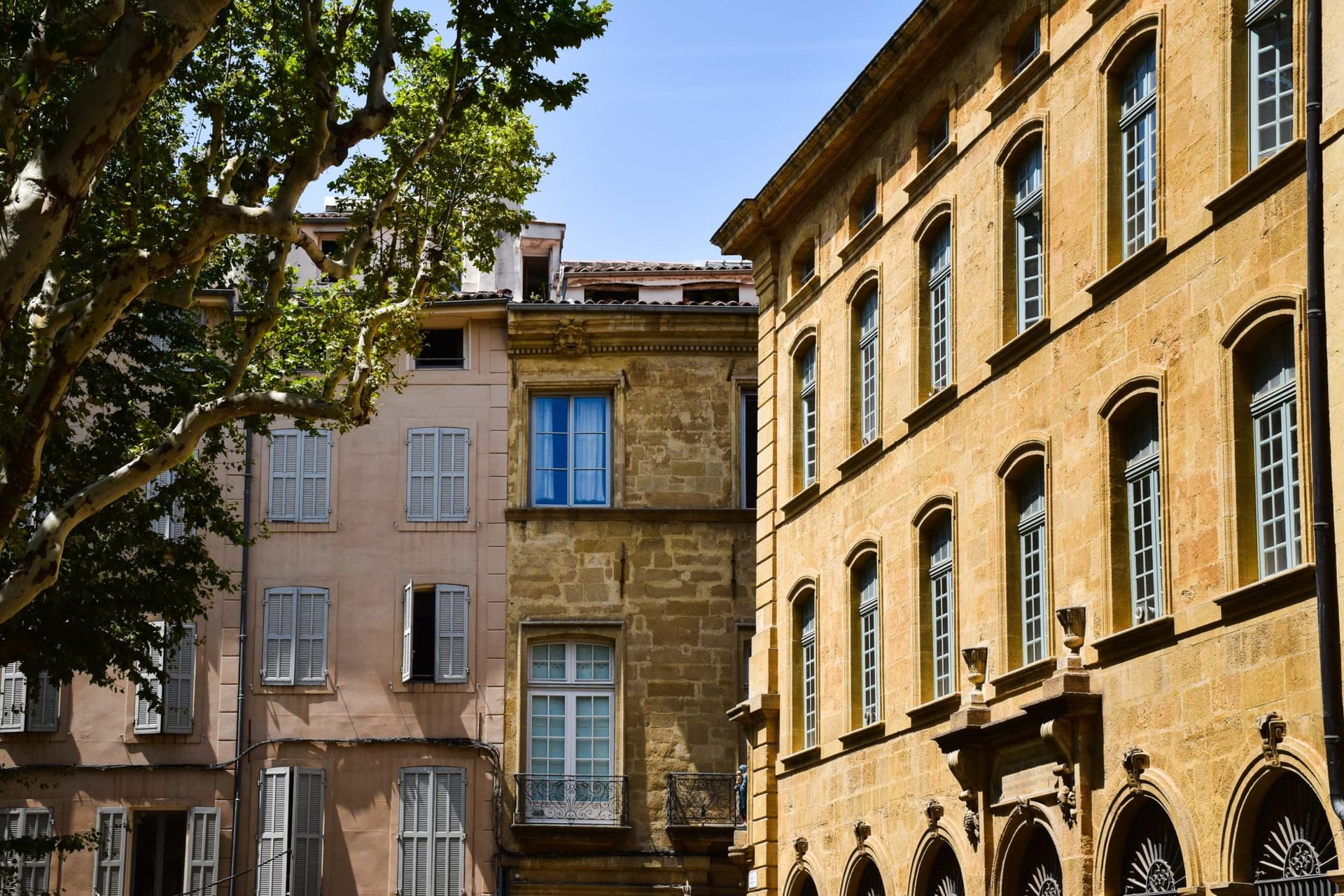
Aix-en-Provence
"Every fountain in Aix is older than the republic. You drink the water and feel the centuries go down."
Aix announced itself through my car window as a canopy of plane trees so old their trunks had fused into a continuous arch above the Cours Mirabeau. I had come from a week in the Luberon and the transition was sharp: Gordes and Roussillon are villages that time and tourism have turned into something approximating a film set, but Aix is a city, with all the resistance to prettification that implies. University students cycled past with bags of books. A woman argued with a parking attendant in the particular key that French arguments reach when both parties know the bureaucracy will win. A café was serving lunch to a table of men in suits who looked like they had been sitting there since 1987.

The Saturday market along the Cours Mirabeau is the one I return to in my memory most often. Not because of any single thing on sale, but because of the accumulation: the light filtering through the plane trees onto stalls of dried herbs, the smell of rotisserie chicken and herbes de Provence mingling with the mineral cool of the fountains that run the length of the boulevard, the old women with their wheeled carts who navigate through tourists with the efficiency of long practice. I spent a ridiculous amount of time at a stall selling nothing but calissons — the almond and melon confection that Aix claims as its own, shaped like a small boat, coated in white royal icing, with a flavour that sits halfway between marzipan and something more floral. I bought a box for someone back in Mexico and ate most of it by afternoon.
Cézanne’s studio, the Atelier des Lauves, sits in a quiet street above the old city and is exactly as he left it in 1906: the skull on the windowsill, the wine bottles arranged in still-life formation, the apples in a bowl that are clearly descendants of the apples he painted four hundred times. What stays with me is the light. The north-facing window floods the room with a flat, even illumination that explains everything about his obsession — this is not dramatic light, not Caravaggio’s theatrical darkness. It is simply the most reliable, patient light I have ever seen in a room. The mountain he kept painting, the Sainte-Victoire, rises at the edge of the city and changes color every hour of the day.

The old quarter of Aix — the Mazarin district and the medieval lanes behind the cathedral — rewards walking without a particular destination. The fountains are everywhere, some of them trickling, some of them gushing, most of them so covered in moss that they look geological rather than architectural. At dusk the bars on the Rue de la Verrerie fill with students and the terraces stay busy well past eleven. This is a city that takes its leisure seriously, in the very specific Provençal sense of sitting somewhere comfortable and refusing to be hurried.
When to go: Spring — April through June — is Aix at its most agreeable: the market is at full stretch, the Cours Mirabeau is not yet choked with summer visitors, and the light on the Sainte-Victoire in the late afternoon is extraordinary. September and October bring the harvest and a return to the city’s own pace after the August tourist surge.