
Viseu
"Viseu doesn't need the ocean. It has granite, Dão wine, and a painter who saw the whole country before anyone else did."
A granite city on a plateau in the Dão wine country, where a Renaissance painter's ghost and unhurried café terraces make you forget the coast exists at all.
I drove up from Coimbra without much of a plan, and Viseu caught me off guard — a city built entirely in grey granite, cool and severe under a July sun, sitting on a high plateau ringed by vineyards instead of the beaches everyone else was chasing that week. The Rossio square was doing its evening thing when I arrived: old men on wrought-iron benches, kids on scooters weaving around the fountain, the smell of grilled sardines drifting from a café that clearly hadn’t changed its menu since the seventies. Nobody around me was a tourist. That, more than any monument, told me I’d found somewhere real.
The Painter Who Saw Portugal First
The Museu Grão Vasco sits right beside the cathedral, in the old bishop’s palace, and it holds the work of Vasco Fernandes — Grão Vasco, “Vasco the Great” — the sixteenth-century painter who more or less invented Portuguese portraiture as its own thing, distinct from the Flemish and Italian imports everyone else was copying. His “Saint Peter” altarpiece stopped me cold: the saint’s face is unmistakably a real Portuguese peasant of the 1530s, weathered and specific, not some idealized Mediterranean saint. A retired teacher next to me, there for what she said was her monthly visit, told me Grão Vasco used local models because Viseu was too far from Lisbon’s patronage to bother pretending otherwise. I liked that explanation whether or not it was strictly true.

Next door, the Sé cathedral is granite through and through, its facade a blunt, fortress-like Baroque front that gives way inside to a Manueline ceiling knotted with carved rope patterns, and a quiet cloister where I sat for twenty minutes doing absolutely nothing, which felt like the correct way to experience it.
Dão Wine, No Performance Required
What I didn’t expect was how the wine snuck up on me. Viseu sits at the heart of the Dão region, whose reds get overshadowed by the Douro’s fame but which locals will defend with real conviction — structured, a little austere, grown on granite soil at altitude, which apparently gives them a mineral edge port country can’t match. I ended up at a tasca off a side street where the owner poured me a glass of a producer I’d never heard of, unlabeled almost, and refused to let me pay more than three euros for it. He seemed almost offended I’d asked.
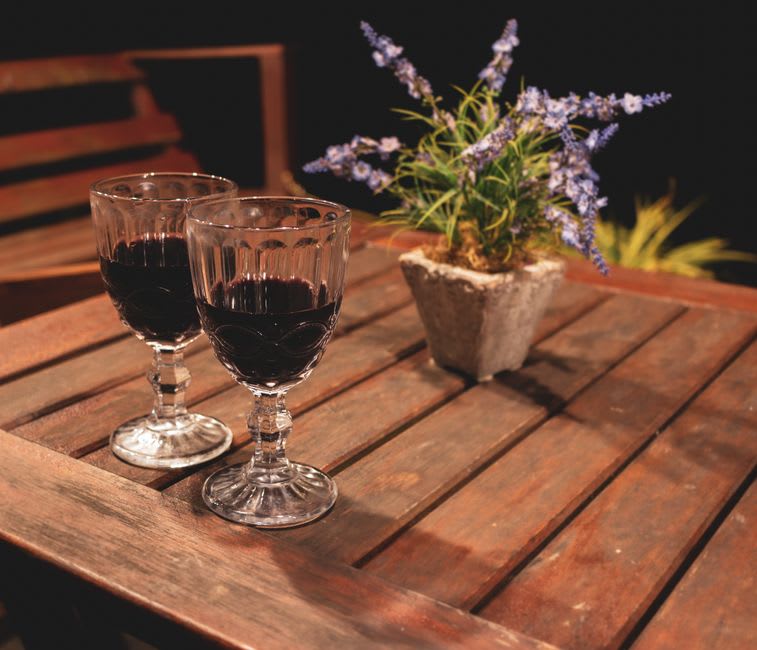
I left the next morning still thinking about that wine, and about a city that never once tried to sell itself to me.
When to go: September, when the Dão harvest is underway and the Feira de São Mateus — one of Portugal’s oldest fairs, running since the 1400s — fills the city with stalls, wine, and noise that feels earned rather than staged.