
Vila Real
"Everyone's seen this building on a rosé bottle without knowing it — I finally saw it for real, and it's better in person."
Perched on a gorge above two rivers, this Trás-os-Montes town is the gateway to a Baroque palace of gardens and statues that's spent decades quietly proving it's more than just a wine label.
I’d been drinking Mateus rosé at cheap dinner parties for years without registering that the pink-tinted building on the label was a real place, so arriving in Vila Real and driving three kilometers out to the actual Casa de Mateus felt like discovering a familiar face had a whole life I knew nothing about. The Baroque manor, all curling granite pediments and a facade so symmetrical it looks almost drawn rather than built, sits mirrored in a long reflecting pool exactly the way the wine label promised, and standing at the edge of that pool at midday, watching the whole building double itself in the still water, I understood why some marketing executive decided this image alone could sell wine to the entire world.
A Palace, a Cedar Tunnel, and a City on a Cliff
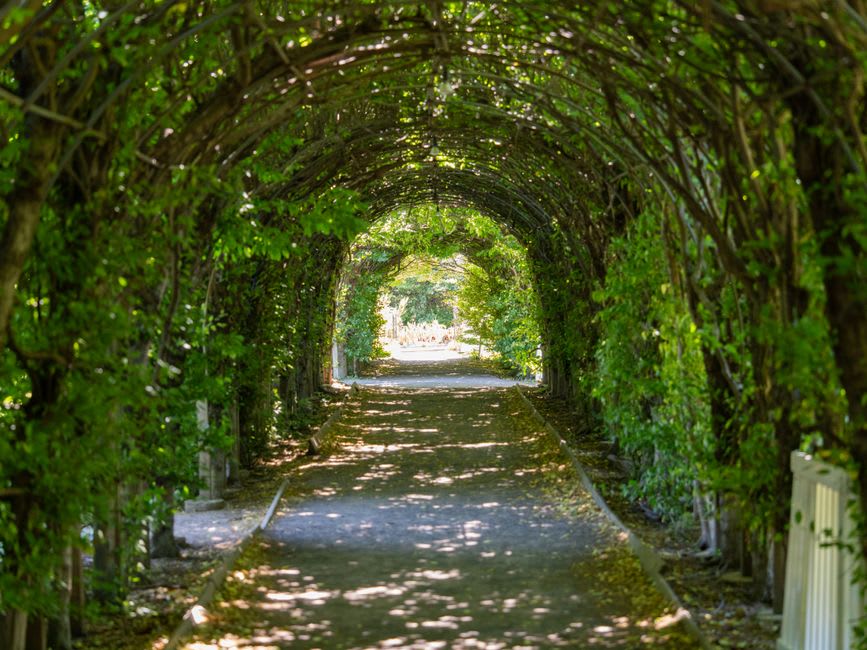
The house itself, still privately owned by descendants of the family who built it in the 1740s, is only part of the visit — the gardens are the real spectacle, laid out in the formal Portuguese-Baroque style with clipped boxwood parterres, statues at every turn, and a extraordinary tunnel of interwoven cedar trees, planted more than a century ago and trained into a dense green corridor that filters the sunlight into moving coins on the gravel path below. I walked it twice, slowly, mostly because it was the only genuinely cool, shaded spot on an otherwise scorching Trás-os-Montes afternoon.
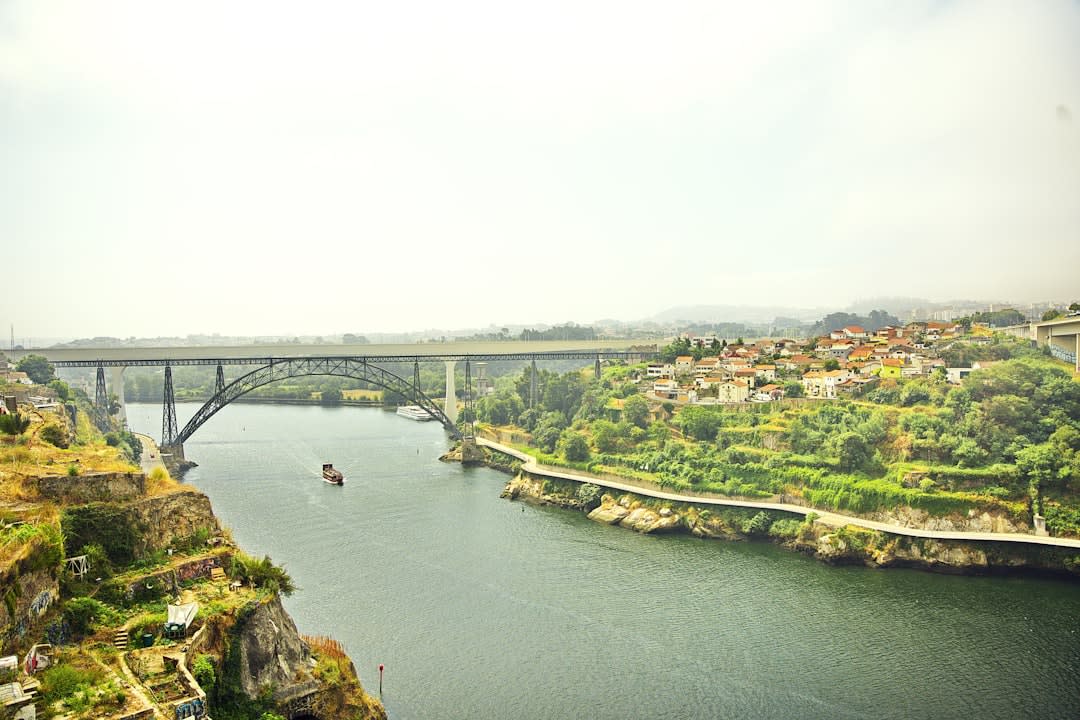
Vila Real itself, back in town, earns its name — “royal town” — from a granite-heavy old quarter perched dramatically on a spur between two river gorges, the Corgo and the Cabril, which meet just below the city in a confluence you can see from the Panorâmica viewpoint near the cathedral. I stood there at dusk watching swallows dive into the gorge below the cliff-edge houses, genuinely unsettled by how close some of the older buildings sit to a two-hundred-foot drop, a closeness that apparently worried city engineers enough over the decades to reinforce entire streets.
That evening I ate at a small tasca near the cathedral, a plate of alheira and roasted chestnuts, and the owner — noticing my accent — poured me a glass of Douro red instead of the rosé I’d half-expected, telling me firmly that the good stuff from this region doesn’t come in a curvy bottle.
When to go: September and October bring the grape harvest to the surrounding Douro hills, and the gardens at Mateus are at their best in late spring when the roses and wisteria are in full bloom.