
Vila do Conde
"Vila do Conde builds things — ships, lace, an aqueduct that shouldn't exist for a town this size."
A shipbuilding town on Portugal's northern coast where lacemakers still work bobbins by hand beneath a Baroque convent's monumental aqueduct.
Vila do Conde sits where the Ave River meets the Atlantic, a twenty-minute train ride north of Porto that most visitors skip entirely in favor of Braga or Guimarães, which is their loss. I got off at the small station and walked toward the water past shipyards that have been building vessels here since the Age of Discovery — this town sent caravels down the coast and eventually across oceans, and the maritime habit never really left. There’s still an active shipbuilding tradition along the riverbank, alongside a permanent exhibit of a reconstructed sixteenth-century caravel, the Nau Quinhentista, moored where locals can walk aboard and feel how absurdly cramped conditions were for the sailors who crossed the Atlantic in vessels barely bigger than a large fishing boat.
Lace, Nuns, and an Aqueduct That Shouldn’t Fit
The other thing Vila do Conde is known for, less loudly, is bobbin lace — renda de bilros — a craft brought here centuries ago and still practiced by a dwindling group of local women, some of whom demonstrate it in the small lace museum near the center of town. I watched one woman’s hands move a dense cluster of wooden bobbins so fast I genuinely couldn’t follow the pattern forming underneath them, and she told me, without looking up, that she’d learned from her grandmother as a child, the way most lacemakers here did before it became rare enough to need a museum dedicated to keeping it alive.

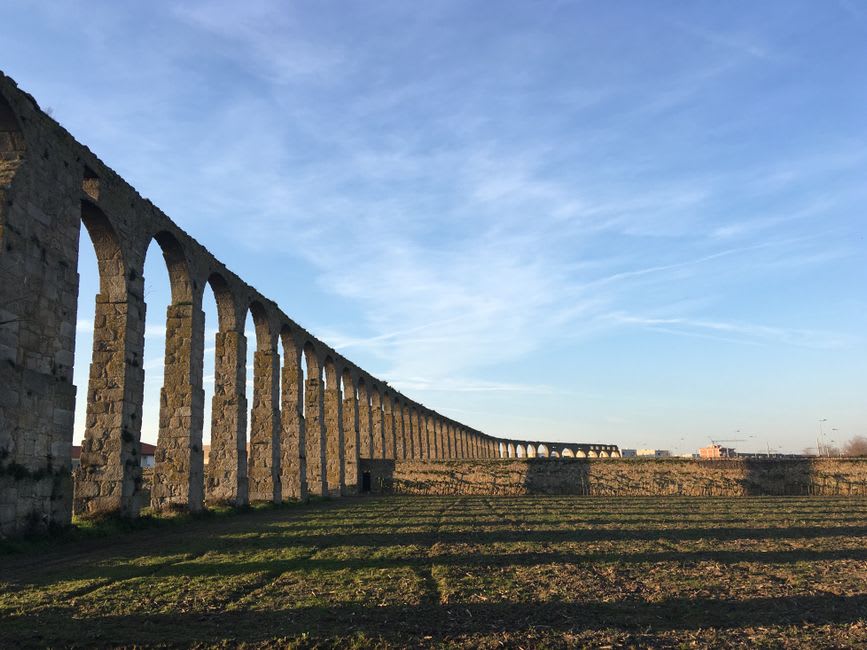
Above the town looms the Mosteiro de Santa Clara, a Baroque convent founded in the fourteenth century and rebuilt more grandly in the eighteenth, but what actually stops you in your tracks is the aqueduct built to supply it with water — a two-kilometer run of stone arches striding across the landscape toward the hills, wildly oversized for the convent it served, the kind of engineering flex that only makes sense once you learn how much royal money and ambition went into this town during Portugal’s maritime peak. I walked a stretch of it at dusk, arches marching off into fields, and it felt like stumbling on a smaller, quieter cousin of Segovia’s aqueduct that almost nobody outside the region seems to know about.
When to go: Late August, when the Festas de São João e São Bernardo fill the streets with folk dancing, fireworks over the river, and a burst of civic pride that a quiet lace-and-shipbuilding town otherwise saves for one week a year.