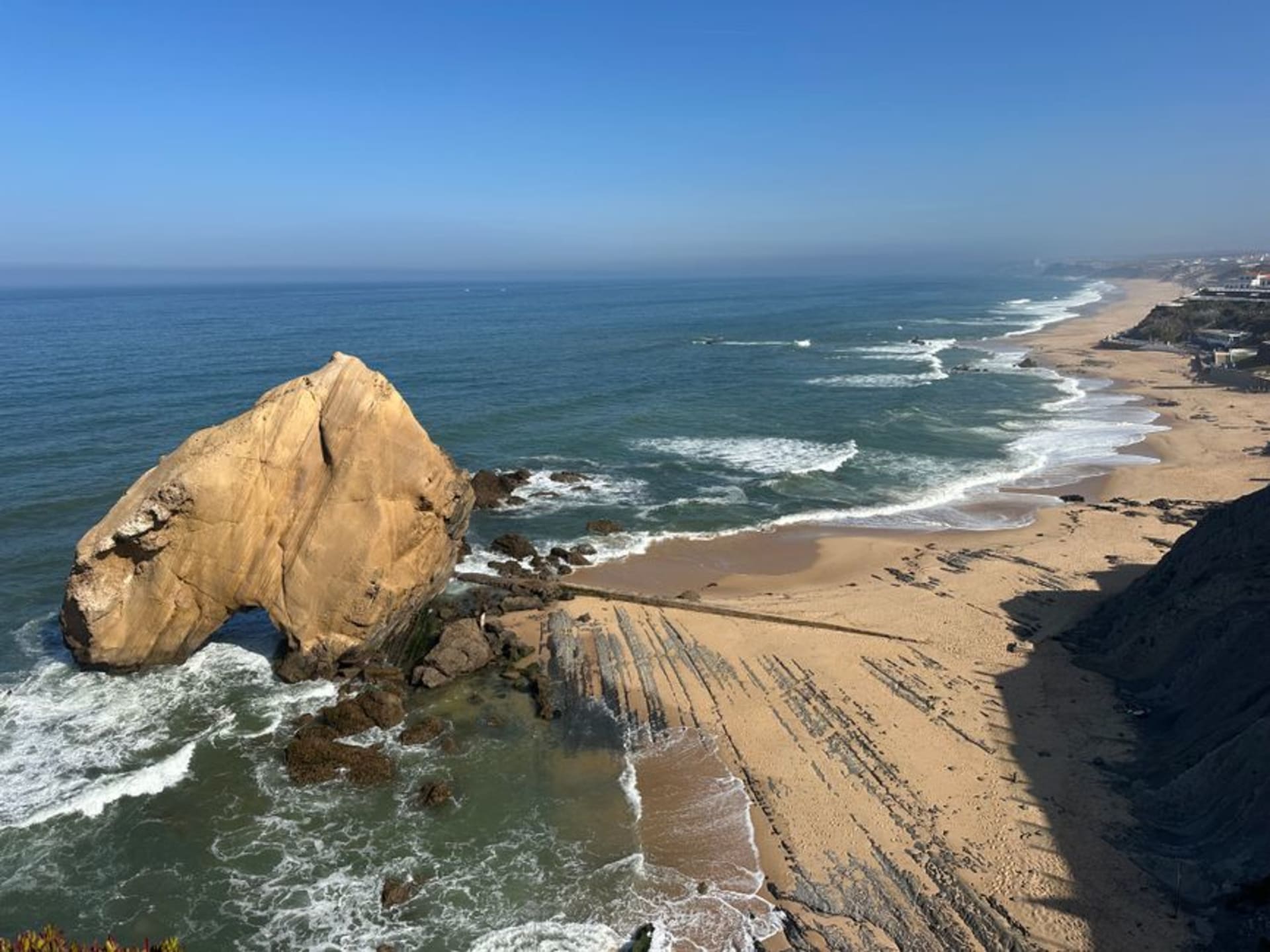
Torres Vedras
"Torres Vedras spent two centuries pretending to be a sleepy wine town, and it's still hiding an entire war under the vineyards."
A market town forty minutes from Lisbon that hides an entire war in its hills, where a chain of forgotten forts once starved Napoleon's army into retreat.
I almost skipped Torres Vedras. It’s the kind of place that shows up on a map as a highway exit before Óbidos, and I nearly treated it that way — a fuel stop, nothing more. Then I climbed the steps behind the market to the old castle walls and looked out over a landscape of gentle hills stitched with vineyards, and a local selling honey at a folding table told me, almost offhand, that every one of those hills used to have a fort on it. A hundred and fifty-two of them, built in total secrecy in 1810, to stop Napoleon. I’d driven past a war I didn’t know existed.
The Lines That Broke an Empire
The Linhas de Torres Vedras were Wellington’s masterstroke and one of the best-kept secrets of the Napoleonic Wars — a triple line of forts and redoubts stretching from the Tagus to the Atlantic, built so quietly that the French army under Masséna marched straight into them in 1810 without warning. Rather than fight, Wellington’s plan was crueler and smarter: he evacuated and burned the countryside ahead of the French advance, so that by the time Masséna’s men hit the Lines, they were already starving. They sat outside Torres Vedras for a month, then retreated, having never breached a single fort. What’s left today are grass-covered earthworks and stone redoubts scattered across the hills — the Forte de São Vicente is the best preserved, and I spent an hour there alone, tracing the gun emplacements with my hand, thinking about how close Lisbon came to falling and how few people outside Portugal have ever heard this story.

Back in town, the war feels almost incidental to daily life. The Sunday market spills out from the medieval walls, all cabbage leaves and cheap sunglasses and a woman selling queijo fresco from a cooler, and the castle itself — Moorish foundations, rebuilt after the 1755 earthquake — mostly hosts kids playing football in its inner courtyard now.
Carnival Over Cannons
If you ask anyone in Torres Vedras what the town is actually known for, they won’t mention Wellington. They’ll say Carnival — this is one of Portugal’s most fiercely celebrated Carnival towns, with satirical floats, marchas, and a party that takes over the streets for nearly a week each February, rivaling anything in Rio in local pride if not scale. I happened to be there in the off season and still found confetti ground into the cobblestones by the town hall, six months old, refusing to fully wash away.

I left thinking about how a town can carry that much history — a war that reshaped Europe, a festival that defines its whole identity — so lightly, folded into ordinary Tuesday errands.
When to go: Come for Carnival in February if you want the town at its loudest, or in spring when the hills around the old forts turn green and the walking trails between redoubts are at their best.