
Sete Cidades
"Two lakes, one crater, and a legend that makes the color difference feel less like geology and more like heartbreak."
Twin volcanic lakes, one blue and one green, filling a collapsed caldera on São Miguel — and a doomed love story locals still tell to explain why the water refuses to match.
I’d seen the photos so many times before arriving that I half-expected the real thing to disappoint me the way overphotographed places sometimes do. It didn’t. I drove up from Ponta Delgada in a fog thick enough that I couldn’t see past the hood of the rental car, parked at the Vista do Rei viewpoint convinced I’d wasted the trip, and then the cloud lifted in the space of about ninety seconds, peeling back like a curtain to reveal the entire caldera below — two lakes cupped inside a collapsed volcano, one distinctly blue, one distinctly green, separated by a narrow strip of land with a single road and bridge crossing between them. A group of German tourists next to me actually gasped, and I don’t think I’ve ever heard strangers do that in unison before.
A Legend That Explains the Colors
The lakes don’t actually differ in color for any dramatic geological reason — it’s mostly a trick of light, mineral content, and depth — but nobody on São Miguel tells you that version first. Instead you get the legend: a blue-eyed prince and a green-eyed shepherdess fell in love, forbidden by the king to marry, and wept so hard at their final parting that their tears filled two separate lakes, each taking the color of the eyes that cried them. I heard three slightly different versions of this story from three different locals over two days, and none of them seemed bothered by the inconsistencies, because the point was never historical accuracy — it was giving a volcanic crater a heart.
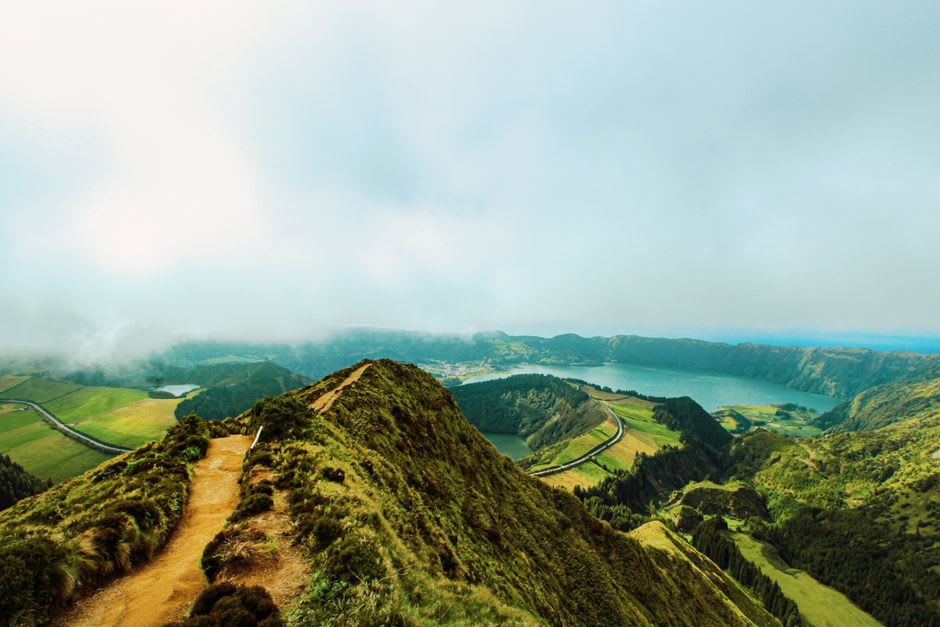
I hiked down into the caldera itself the next morning, along a trail that drops through pastureland dotted with grazing cows who clearly could not care less about the view they live inside, down to the small village of Sete Cidades that sits directly between the two lakes. There’s a church, a handful of houses, a small café, and an odd sensation of being inside the postcard rather than looking at it. I rented a kayak on the blue lake, paddled out into water so still it barely registered my wake, and looked back up at the crater rim where I’d been standing an hour earlier, now impossibly far away.
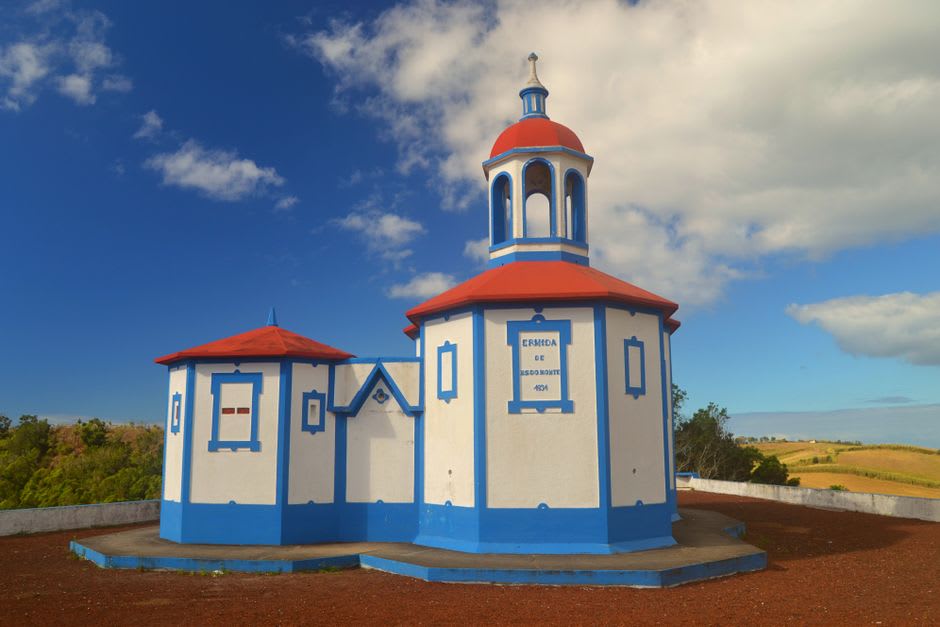
Driving back out along the rim road as the afternoon fog started rolling back in — as it does most days, sometimes several times — I understood why locals check the sky obsessively before recommending a viewpoint. This is a place the weather owns, and you’re only ever a lucky guest.
When to go: Aim for early morning, before the daily fog rolls in from the coast, and build in a spare day if you can, since the caldera can stay socked in entirely on unlucky visits.