São Jorge Island
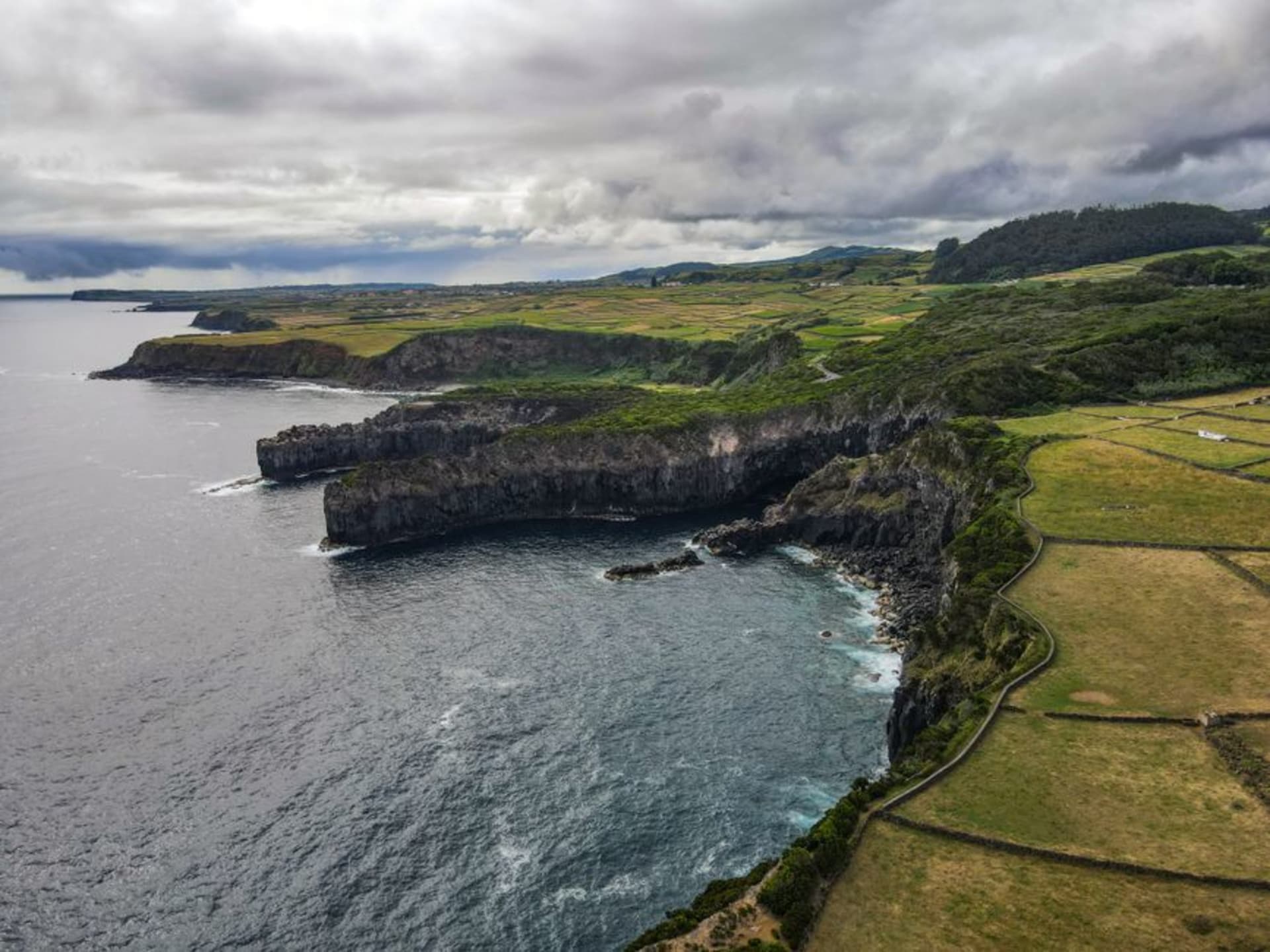
"São Jorge is a mountain range that someone sliced in half and left the raw edge facing the sea."
A knife-edge island of sheer cliffs and lava-flat fajãs at the waterline, famous for a pungent, centuries-old cheese and some of the loneliest, most dramatic coastal hiking in the Azores.
Nothing prepared me for the shape of this island. São Jorge is long and narrow, a spine of volcanic peaks running almost its entire forty-something kilometers, and its coastline doesn’t so much meet the sea as fall into it — sheer green cliffs, some over 300 meters high, dropping straight down to narrow flat platforms of old lava and landslide debris called fajãs, which sit right at the waterline like the island shrugged off small pieces of itself over the centuries and decided to keep living on them anyway. I hiked down to Fajã dos Vimes on a trail that switchbacked through hydrangea hedges and passionfruit vines, my knees aching by the bottom, and arrived at a tiny settlement of maybe a dozen houses squeezed onto the flat land between cliff and ocean, utterly cut off by road until relatively recently.
The Cheese That Names the Island
Fajã dos Vimes is also home to one of the smallest cheese producers on São Jorge, a family operation where I watched an older woman stir raw cow’s milk in a battered pot over a wood fire, exactly the way her mother had taught her. São Jorge cheese — the DOP-protected queijo that’s arguably the island’s most famous export — is aged for months into something sharp, crumbly, and distinctly peppery, a world away from the mild cheeses more common on the mainland. She let me try a sliver straight off the wheel, still slightly warm, and it was strong enough that I understood immediately why islanders eat it in thick slabs rather than delicate slivers, usually alongside spicy Azorean pimenta da terra paste that makes the whole combination borderline dangerous on an empty stomach.

Getting anywhere on São Jorge means either a long, winding drive along the ridge road with views that make you genuinely nervous about the drop, or one of the famous fajã hiking trails, most of which were originally cattle paths connecting the coastal flats to villages up on the plateau before roads existed at all. I met a farmer at Fajã do Ouvidor herding cows along a trail barely wide enough for one person, who told me his grandfather used to walk cattle down these same switchbacks twice a day, something that sounded to me less like farming and more like an extreme sport nobody had bothered naming yet.

By evening, sitting at Fajã do Ouvidor watching waves smash into a natural lava pool the locals swim in, I felt further from anywhere than I had at any other point in the Azores — which, on an archipelago already this remote, is saying something.
When to go: Come in early summer for the best hiking weather and to catch the hydrangeas blooming along the fajã trails, and budget a full day for each fajã you want to properly reach and leave before dark.