
Santana
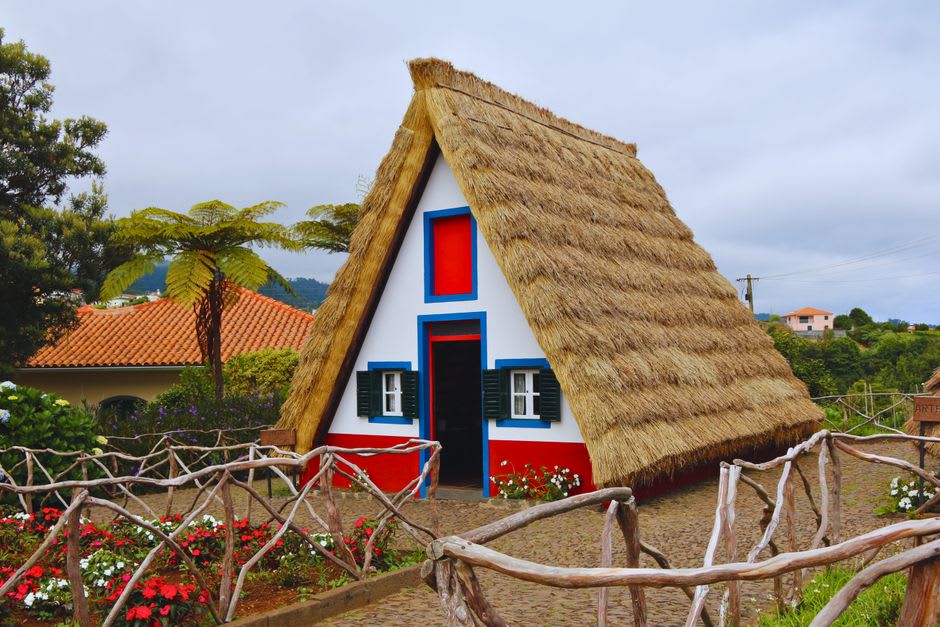
"Santana's little A-frame houses look like a postcard until you realize people actually lived that low to the ground."
On Madeira's rugged north coast, triangular thatched-roof houses still stand as a living record of how islanders once built to survive the wind and rain.
I’d seen photos of Santana’s triangular houses in every Madeira brochure before I ever set foot on the island, and I went in half-expecting a manufactured tourist village, the kind of place built for the picture rather than for people. It isn’t that. The palheiros — steep, triangular thatched-roof houses painted in red, blue, and yellow with whitewashed walls — are genuinely how farming families on this stretch of Madeira’s north coast built their homes for generations, low and narrow with the roof running almost to the ground, shaped that way specifically to shed the heavy rain and resist the wind that batters this coastline more than almost anywhere else on the island. A handful still stand as private homes; a cluster near the center has been preserved as a small open-air museum you can walk into.
A House Built Against the Weather
Standing inside one of the preserved palheiros, I understood the design better than any caption could explain it. The ceiling is barely tall enough to stand under at the center and drops to nothing at the eaves, the thatch — traditionally rye straw — pitched steep enough that rain never has a chance to pool. A single room usually held the whole family, animals sometimes sheltered in an attached lean-to, and the thick walls kept the worst of the Atlantic storms out. It’s a humble, almost severe way to live, and it made the postcard version of Santana feel a lot more honest once I’d seen the inside of one.
Santana is also the gateway to some of Madeira’s wildest interior scenery — the road toward Pico das Pedras and the trailheads for Queimadas and the Caldeirão Verde levada start right at the edge of town, laurel forest closing in almost immediately. I stopped for lunch at a small tasca on the way out, ate espetada off its traditional skewer hung from an iron hook above the table, and watched clouds roll in off the ocean and snag on the hills the way they do almost every afternoon here — Santana’s rainfall is exactly why those roofs are built the way they are.
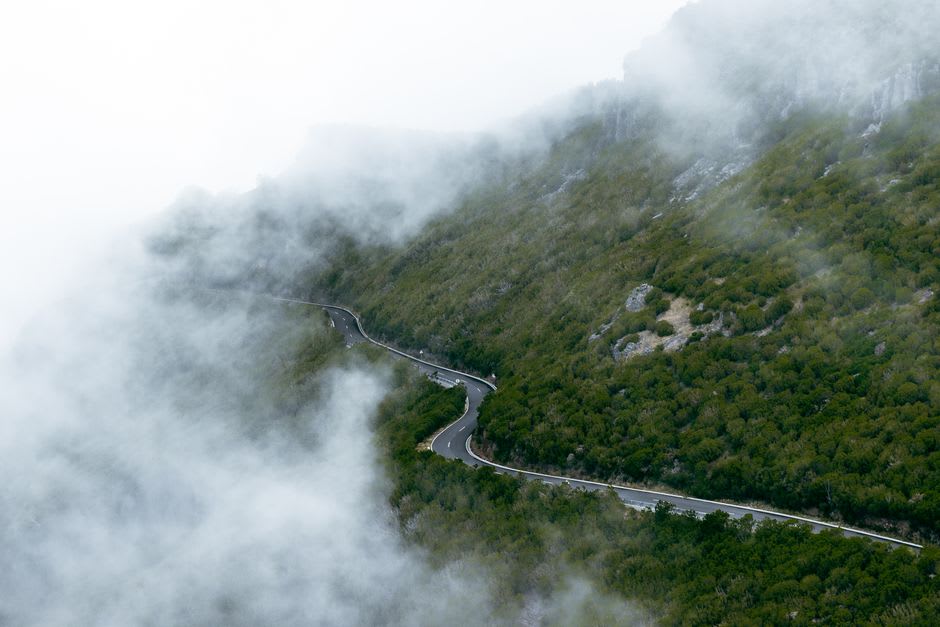
When to go: Spring (April–May), when the surrounding hills are at their greenest and the levada trails nearby are running full without the peak-summer crowds at the museum houses.