
The oldest and sunniest of the Azores, where Columbus once anchored and red volcanic sand gives the beaches a color found nowhere else in the archipelago.
Everyone told me the Azores meant green cliffs, fog, and rain jackets, and mostly they were right — until Santa Maria. I flew in from São Miguel expecting more of the same and instead landed under a sky so clear it felt like a different archipelago entirely. Santa Maria is the oldest island geologically, worn down and gentler than its younger volcanic siblings, and it gets more sun than anywhere else in the Azores, which the locals will tell you within the first five minutes of any conversation, with the pride of people used to being the exception. The island has a warmth to its stone too — pale limestone rather than black basalt, the only place in the Azores where you’ll see fossilized seashells embedded in cliffs that used to be seabed.
Where Columbus Dropped Anchor
Vila do Porto, Portugal’s oldest settlement in the Atlantic, still remembers that Christopher Columbus stopped here in 1493 on his way back from the Americas, sending a crew ashore to fulfill a religious vow — an episode commemorated with a small statue and plaque near the harbor that most cruise-ship visitors walk straight past. I found the story more interesting standing on the cliffs above the harbor than reading it off the plaque: this scrap of an island, easy to miss on a map, was quite literally where the news of a new world first touched European soil. I had a coffee at a café overlooking the same bay and tried, without much success, to picture caravels instead of the handful of fishing boats bobbing below.

Praia Formosa is the beach that gets photographed, and it earns it — a long curve of reddish-gold volcanic sand, unusual in an archipelago known mostly for black-pebble coves, backed by low cliffs and calm enough water that families were wading in with toddlers when I visited in August. I swam out past the flags and floated for a long time looking back at the sand’s odd rust color, a product of the iron-rich volcanic rock eroding into it, and thought it was the closest thing to a conventional beach holiday the Azores offers, minus the crowds you’d get anywhere comparable in the Algarve.
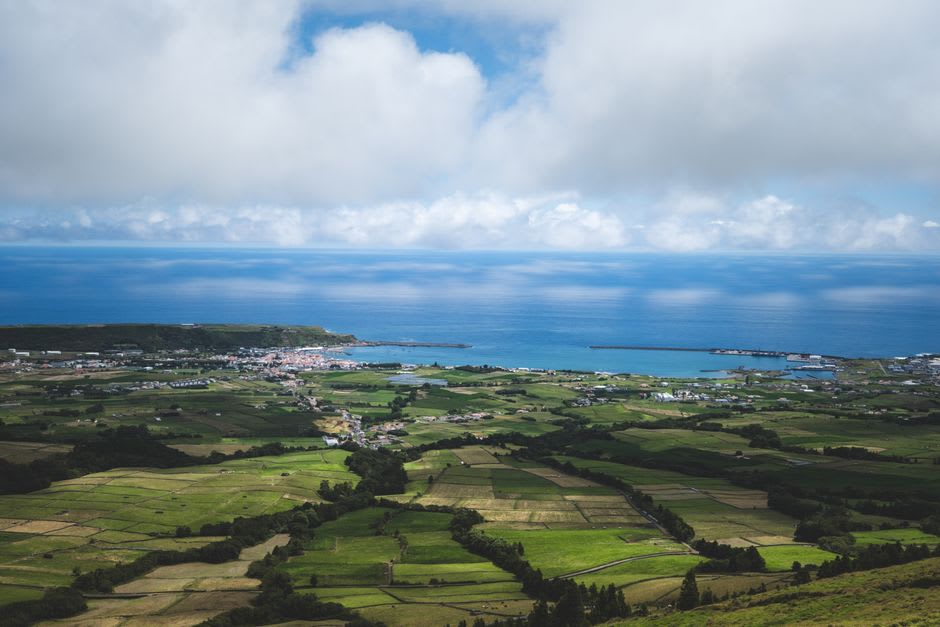
When to go: July and August, when Santa Maria’s reputation as the sunniest Azorean island is at its most true and Praia Formosa’s water is warm enough to actually enjoy rather than endure.