
Sabugal
"Sabugal's castle has a heart-shaped keep, and no one in town lets you leave without pointing that out at least twice."
A border town with a heart-shaped castle keep above the Côa river, so literally shaped that the town's whole identity has quietly become about that one improbable detail.
I’ll admit I went to Sabugal specifically because someone told me the castle keep is shaped like a heart, and I wanted to see if that was a tourist-brochure exaggeration or actually true. It’s true. Standing below it on the bluff over the Côa river, the tower’s unusual pentagonal-into-curved profile does genuinely read, from the right angle, as a heart — locals will tell you this is either a happy structural accident of medieval military engineering or a deliberate flourish, and I heard both explanations from different people within the same afternoon.
A Fortress on the Frontier
Sabugal’s castle was built in the thirteenth century under King Dinis as part of the string of frontier fortifications guarding this stretch of border with Castile, the same defensive logic that produced Almeida and Castelo Rodrigo nearby, and it saw real use — the town changed hands during border conflicts for centuries and was fought over again during the Peninsular War, when British and French forces clashed near here in 1811 at the Battle of Sabugal, a lesser-known but genuinely consequential engagement in Wellington’s pursuit of Masséna’s retreating army. What survives today is the keep itself, that famous heart shape, along with sections of curtain wall you can walk, looking down at the Côa river cutting through granite below — a landscape that feels more rugged and remote than the gentler hills around Trancoso or Linhares.
Down in the town itself, life moves at the pace of a place that isn’t performing for anyone. I found a small tasca off the main square serving a heavy bean and pork stew that the owner called, without much ceremony, “just what we eat,” and ate it slowly at a table looking out at the castle silhouette while a group of old men argued good-naturedly over dominoes at the next table.
The River Below
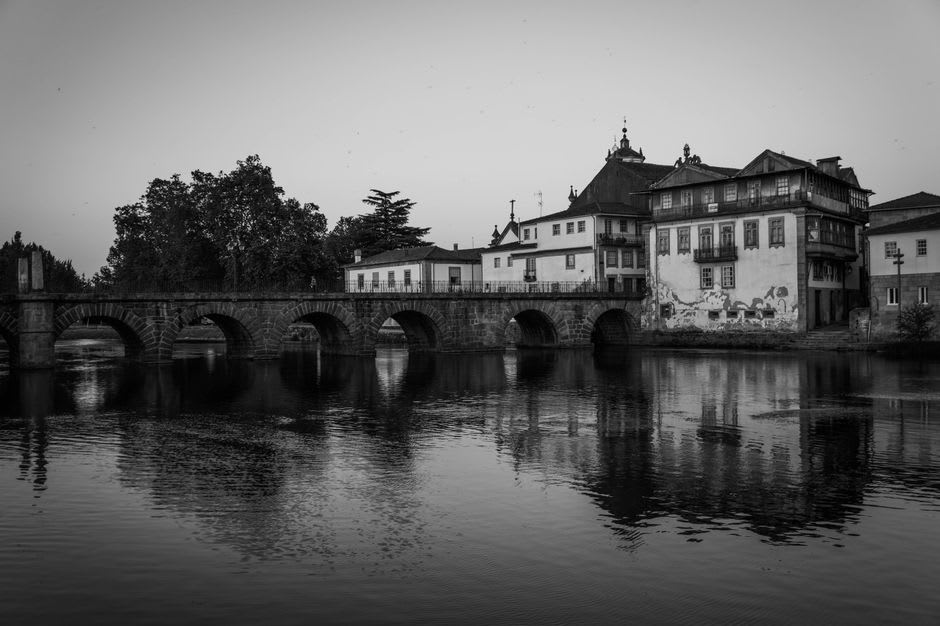
I walked down from the castle to the Côa’s edge in the late afternoon, past a Roman-era bridge still carrying local traffic, water moving fast and clear over granite boulders, kids from town swimming in a shaded pool a bit further downstream.
When to go: Summer, when the Côa river below the castle is warm enough to swim and the surrounding granite hills hold the day’s heat well into a long, slow evening.