
A hidden lagoon world of barrier islands, salt pans, and tidal channels behind Faro, where flamingos wade through the shallows and the Algarve's best oysters grow in silence.
Everyone lands at Faro airport and heads for the beach towns further west, and I get it — I did the same thing my first year in Portugal. It took a friend dragging me onto a small boat out of Faro’s marina to understand that the real attraction was right there behind the airport runway the whole time: the Ria Formosa, a sprawling natural park of lagoons, salt marshes, and barrier islands that runs nearly sixty kilometers along the coast, protecting the mainland from the Atlantic like a moat nobody bothers to mention. The boat cut the engine somewhere in the middle of a wide channel, and in the sudden quiet I heard birds I couldn’t identify and watched a flock of flamingos lift off from a sandbank, pink against grey mud, entirely unbothered by us.
Salt, Oysters, and a Landscape That Breathes
The Ria Formosa isn’t a single lagoon but a whole system that changes shape with the tide — at low water it’s mostly exposed mudflats and sandbanks, channels shrinking to trickles; at high tide the same landscape becomes a maze of navigable waterways. Our guide, a lifelong Faro local, cut the engine near a set of wooden frames strung with what looked like ropes and explained they were oyster lines, part of the aquaculture that’s quietly made this lagoon one of Europe’s best sources of oysters and clams — much of what lands on plates in Lisbon’s fancier restaurants started life right here, filtering water a few kilometers from the airport departure lounges.

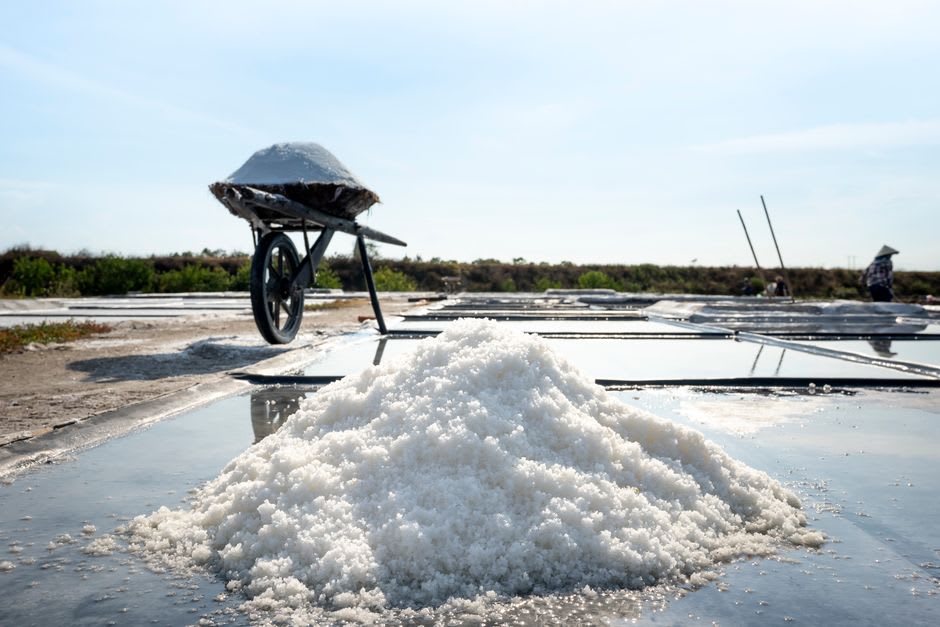
We stopped at one of the old salt pans, still worked by hand the traditional way, where a woman raking crystallized sea salt into small white pyramids told me the flor de sal — the delicate top layer skimmed off before it touches the pan floor — sells for absurd prices in Lisbon delis but here it’s just what her family has always done every summer, heat and evaporation doing most of the work while she just watches and rakes. The park itself is a fragile thing, a shifting system of barrier islands — Culatra, Armona, Barreta — that migrate and reshape themselves over decades, protecting Faro and the towns behind it from storms that would otherwise flood straight in.
By the time we turned back toward the marina, the light had gone that particular late-afternoon gold that makes even mudflats look cinematic, and I remember thinking that this was the most Algarve had surprised me since I’d first arrived in the region years earlier expecting only beach clubs and golf courses.
When to go: Spring and autumn bring the best birdwatching, with migratory flamingos, herons, and spoonbills passing through, and a boat trip near low tide lets you see the sandbanks and channels at their most dramatic.