Pico Island
"Pico is a mountain first and an island second, and everything on it, including the wine, seems to know that."
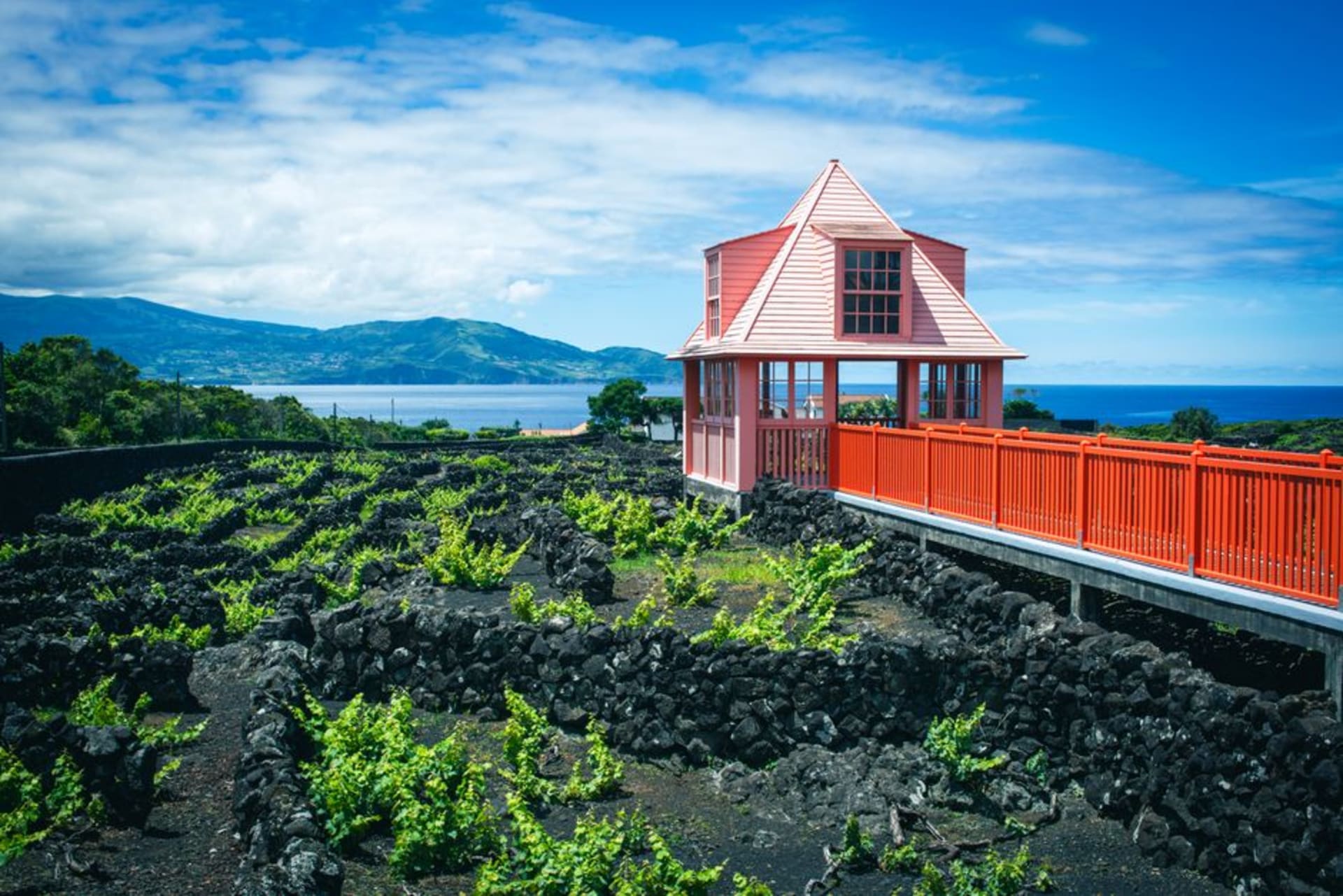
Portugal's tallest peak rises straight out of the Atlantic on Pico, above a black lava coastline gridded with stone-walled vineyards that somehow coax wine out of solid rock.
You see Pico long before you land there, its volcanic cone visible from Faial across the channel on any clear morning, a genuinely improbable 2,351 meters rising directly out of the sea — mainland Portugal’s tallest mountain is barely half that. But what stayed with me longer than the summit itself was the coastline underneath it: kilometer after kilometer of black basalt lava, cracked into flat plates by centuries of Atlantic waves, gridded with thousands of small rectangular stone enclosures that from a distance look almost like a giant’s crossword puzzle laid across the shore.
Wine Grown in Stone Cages
Those enclosures are currais — low walls of stacked black volcanic rock, built without mortar, that farmers here have used for centuries to grow grapevines in conditions that should make wine impossible. There’s no real soil to speak of, just cracked lava, and no natural shelter from wind that comes off the open Atlantic with nothing to slow it down for three thousand kilometers. So islanders built thousands of these small rock corrals by hand, each one sheltering a handful of vines from the salt-heavy wind while the black stone absorbs daytime heat and radiates it back at night, creating a kind of accidental greenhouse. UNESCO recognized the whole landscape — around 987 hectares of it — as a World Heritage Site, and walking through the maze of currais near the coastal village of Criação Velha, I kept losing my sense of direction in a landscape that looks identical in every direction and yet, up close, is entirely handmade.
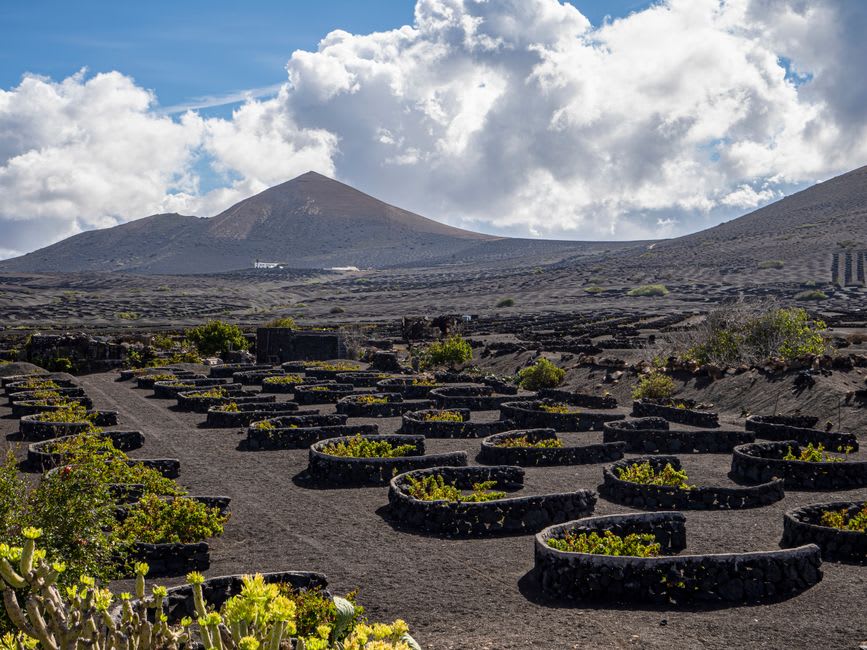
I stopped at a small adega near Madalena run by a family who’ve farmed the same currais for four generations, and the woman pouring tastings told me the grape variety, Verdelho, nearly vanished from the island after phylloxera and a volcanic eruption devastated the vines in the nineteenth century, and that what’s grown now comes largely from replanted cuttings and sheer stubbornness. The wine itself was mineral and briny in a way I hadn’t tasted before, something that seemed to carry the black rock and the ocean spray directly into the glass.
I didn’t attempt the summit myself — it requires an early start, a guide, and weather nobody can guarantee — but I watched two exhausted hikers come down at dusk, sunburned and grinning, describing a crater at the top still faintly warm underfoot. That was enough to convince me the mountain, not the wine, is still what really runs this island.
When to go: Come between June and September if you want a real shot at a clear summit climb, but visit the vineyards any time from spring through the September harvest, when the currais are at their most alive.