
Nazaré
"I came for the waves. I stayed for the women selling dried fish in seven skirts."
Nazaré has two faces, and I fell for both of them. There is the Nazaré of the giant waves — the one you’ve seen in the videos, where surfers the size of ants get towed into walls of water taller than apartment blocks. And there is the older Nazaré: a working fishing town where widows still wear seven petticoats and lay out racks of fish to dry in the sun on the beach. Lia and I drove up from Lisbon expecting the first and were quietly captured by the second.
The wave that eats the cliff
We went in November, which is when the Atlantic gets serious. The big-wave spot is at Praia do Norte, below the headland crowned by the Forte de São Miguel Arcanjo and its little red lighthouse. There’s a geological reason the waves here are monstrous: an underwater canyon, nearly five kilometers deep, funnels Atlantic swell and amplifies it into the towering peaks that have made Nazaré a pilgrimage site for big-wave surfers. The records broken here are measured in stories of a building.
The day we visited, the sea wasn’t at its biggest, but it was still terrifying — a grey churning thing that slammed the cliff and threw spray up over the lighthouse walls. I stood at the railing with a crowd of Germans and Brazilians, everyone silent, watching one lunatic on a jet ski circle the impact zone. Lia gripped my arm. We didn’t speak for a while. The ocean does that to you here; it shuts you up.
The funicular and the upper town
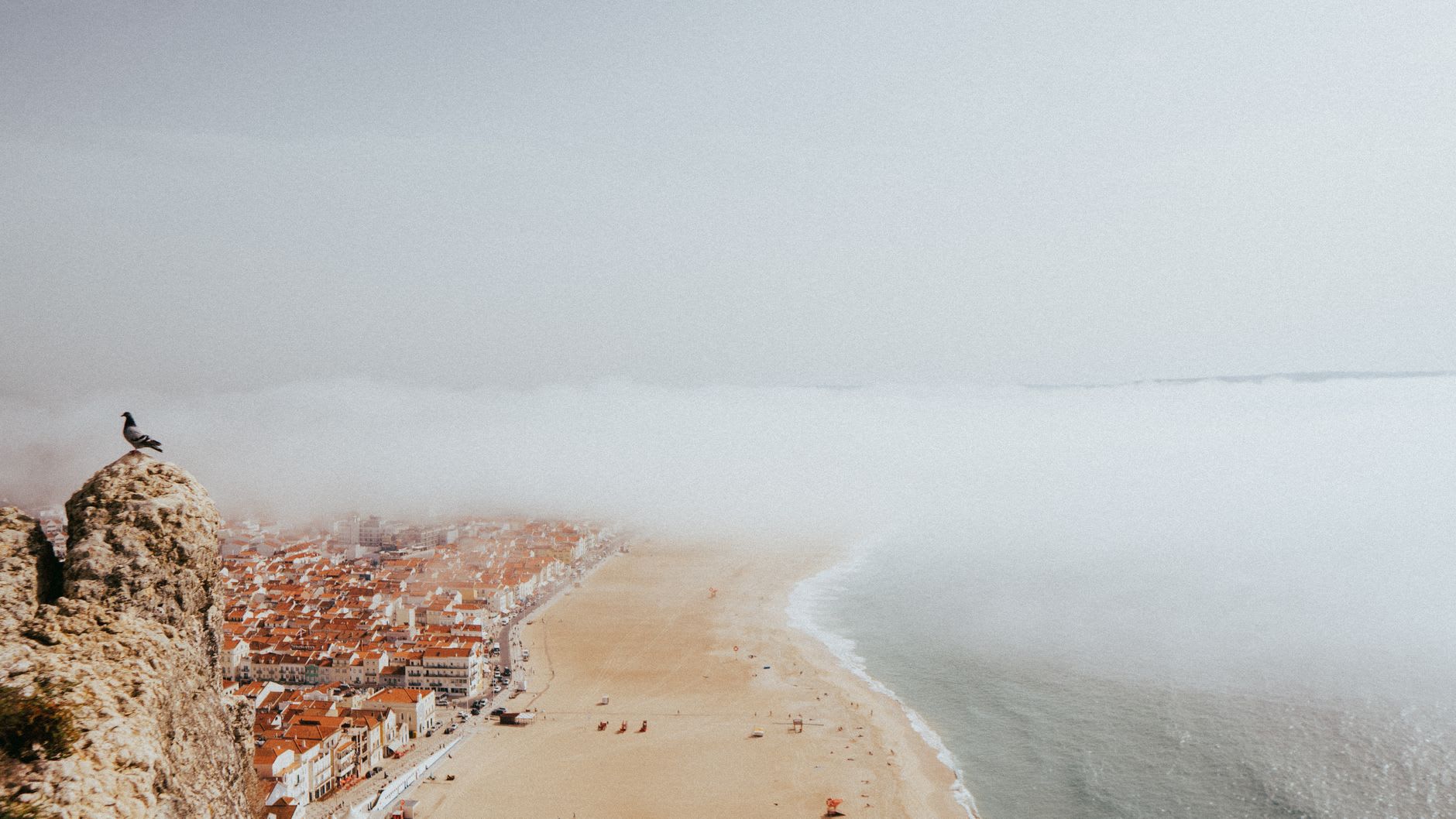
The town splits into the beachfront — Praia — and the old quarter on the clifftop, called Sítio, connected by a funicular that’s been clanking up and down since 1889. Take it. The view from the top, with the whole crescent of beach laid out below and the canyon-fed swells rolling in, is the kind of thing that justifies the trip on its own.
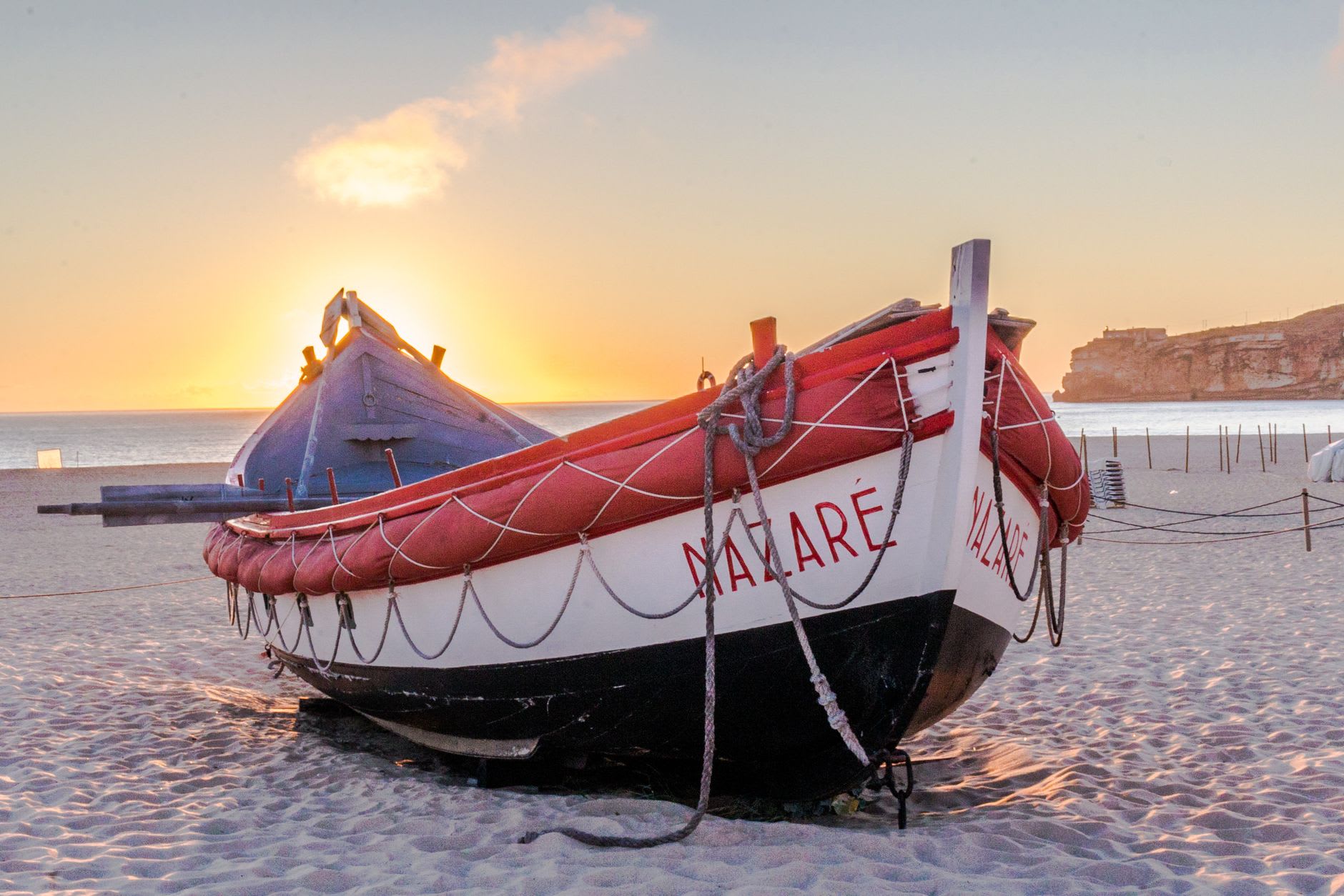
Up in Sítio I found the Nazaré I’ll actually remember. Old women in the traditional seven skirts sat outside their doorways selling dried mackerel and sardines, the racks laid out along the cliff edge. One of them sold me a bag, eyed Lia’s bare arms with frank disapproval of the cold, and refused to be photographed without a small negotiation involving coins. The fish, eaten later grilled with olive oil and bread, was extraordinary.
Down on Praia we ate caldeirada — a fisherman’s stew of whatever the boats brought in — at a place with plastic chairs and no menu in English, which is always the sign you’ve found the right one. The owner argued with us about whether French people understand seafood. He may have had a point.
Going, practically
Come in autumn or winter for the giant surf — the season runs roughly October to March, and the truly enormous days depend on storms far out in the Atlantic, so watch the forecasts. Summer is calmer, hotter, and packed with Portuguese families. The clifftop is windy and cold even when the beach below looks sunny, so bring a jacket. And eat the fish dried in the sun. It tastes like the whole town.