
Monsaraz
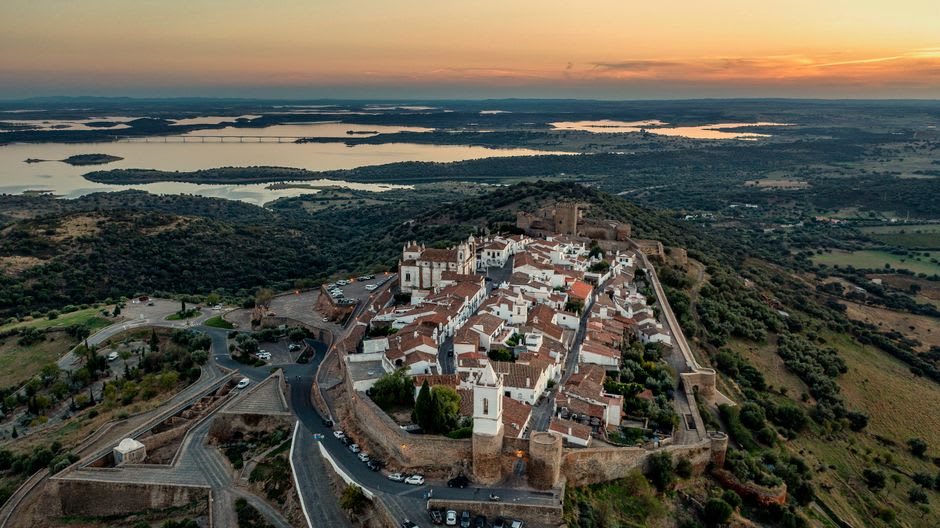
"Monsaraz has maybe eighty full-time residents and one main street, and somehow neither fact makes it feel small."
A whitewashed fortress village on an Alentejo ridge, looking down over Europe's largest artificial lake, where time seems to have simply stopped somewhere around the Middle Ages.
I drove up to Monsaraz along a straight Alentejo road with cork oaks on either side and Lake Alqueva flashing into view every few kilometers, an inland sea so vast it barely looks real in a country this defined by its coastline. The village itself sits on a narrow ridge, walled and whitewashed, one main cobbled street running its whole length flanked by low houses with flowerpots on every windowsill. I arrived at dusk, and the light did something to the white walls I hadn’t seen anywhere else in Portugal — a soft orange wash that made the whole place look, for about twenty minutes, like it was glowing from within.
A Lake Where a River Used to Be
Alqueva is the largest artificial lake in Western Europe, formed when the Guadiana river was dammed in 2002, and standing on Monsaraz’s castle walls looking down at that huge, still expanse of water, it’s genuinely hard to picture what this landscape looked like before it existed — dry Alentejo hills and a modest river, now replaced by something closer to a fjord. A local vintner I met at a wine bar told me the dam flooded old villages and Roman ruins along with the valley floor, a trade some locals still resent even twenty years on, in exchange for irrigation that transformed this part of the Alentejo from parched scrubland into vineyards and olive groves. Whatever the cost, the view from the walls at golden hour, water reflecting the last light while sheep bells clanked somewhere below, was one of the quietest, most complete moments of my whole trip.
A Bullring Shaped Like a Square
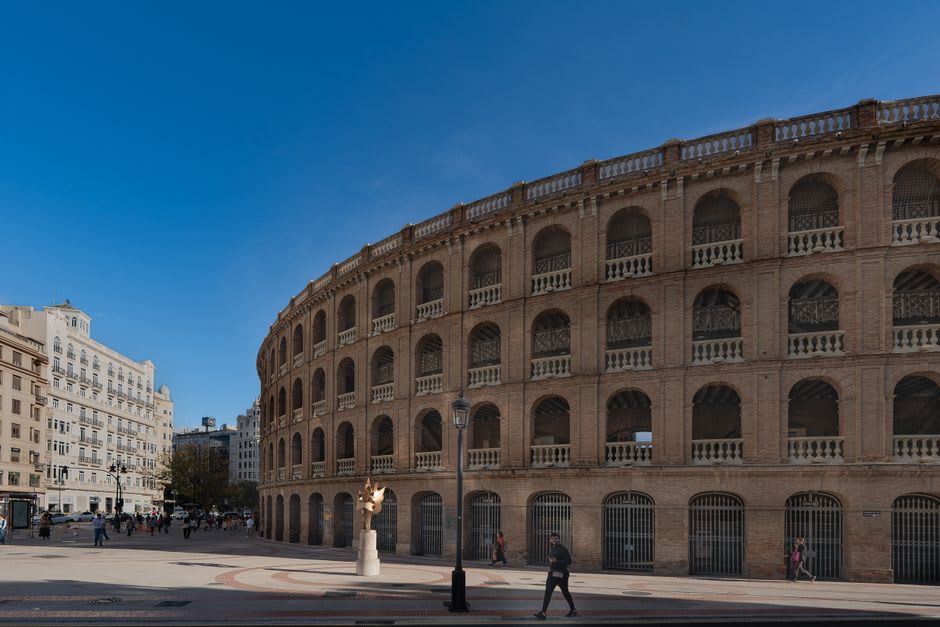
Monsaraz’s other oddity is its praça de touros, a small bullring built directly into a corner of the main square, ringed by stone rather than a purpose-built arena, used only a handful of times a year during local festivals. I found it empty and locked, but a woman selling local wine and olive oil from a tiny shop nearby described the festa in detail — the whole village turning out, folding chairs dragged into the square, a night that apparently ends with everyone eating together at long tables regardless of how the bullfighting went. It was the kind of detail that made a village this small feel like it held an entire, self-contained world.
When to go: Late afternoon into sunset, any season, is non-negotiable for the light on the walls and the lake — but come in spring if you want the surrounding hills green rather than the scorched gold of summer.