
Monchique
"Forty minutes from the beach, I put on a sweater — Monchique is a different Algarve entirely."
A misty mountain town above the Algarve's coastal heat, where thermal springs, handmade woodwork, and a fierce homemade firewater define a completely different pace of life.
It took forty minutes of driving uphill from Portimão for the temperature to drop, the eucalyptus and chestnut forest to thicken, and the coastal haze to give way to actual mist curling around the road. I hadn’t expected to need a light jacket in the Algarve in July, but Monchique sits high enough in the Serra de Monchique — the range that includes Fóia, the highest point in the whole region — that it runs its own climate, cooler and wetter than the coast a short drive below. Locals joke that the Algarve has two seasons, beach season and Monchique season, and after a few hours there I understood the joke wasn’t really a joke.
Firewater and Woodsmoke
The thing everyone in Monchique wants you to try is medronho, a fierce, clear brandy distilled from the fruit of the strawberry tree that grows wild all over these hills, and I made the mistake of accepting a full shot from a roadside stall owner rather than the sip I’d intended. It burns on the way down in a way that makes total sense once you learn it’s often distilled in backyard copper stills using techniques passed down through families rather than any formal process — every producer swears theirs is the good stuff, and every batch tastes noticeably different. I bought a small unlabeled bottle from a woman selling it beside handmade wooden spoons and folk crafts at a market stall, the kind of transaction that happens on trust rather than branding.
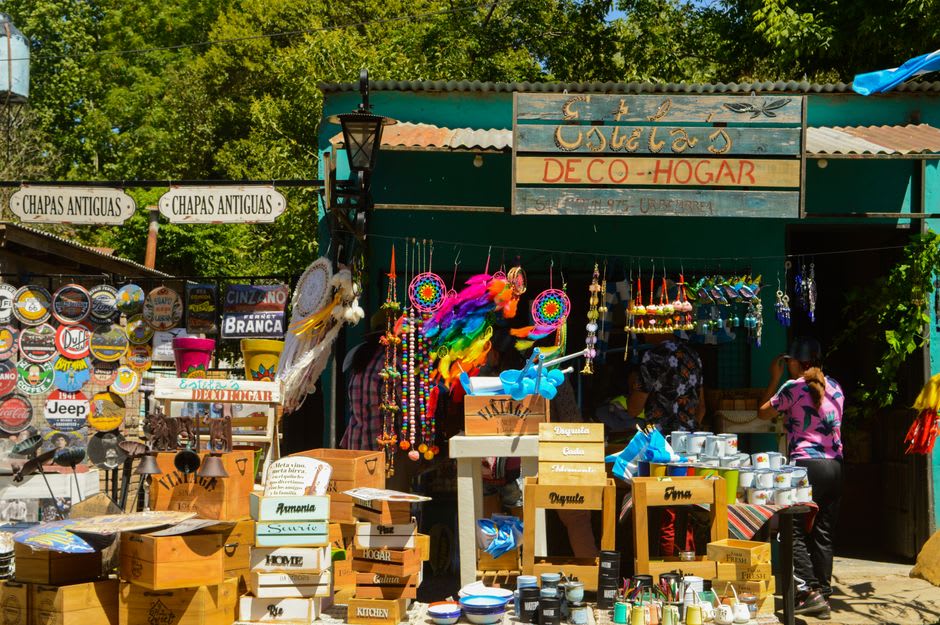
Monchique has been a spa town since Roman times, and the thermal springs at nearby Caldas de Monchique — a tiny cluster of belle-époque buildings tucked into a wooded ravine below the main town — still draw people for the sulfurous, supposedly therapeutic waters, bottled commercially and sold across Portugal. I skipped the full spa treatment but wandered the little spa village at dusk, its faded pastel buildings and quiet fountains feeling like a stage set nobody had struck after the last performance. Up in Monchique proper, woodworkers still carve the traditional wooden folk items sold at the Thursday market, and I watched one elderly craftsman shape a spoon with a hand tool his father had apparently used before him.
When to go: Autumn brings the medronho harvest and distilling season into full swing, and cooler mountain air makes it a natural escape from the coastal heat of July and August.